ثبت نام / ورود
0
ثبت نام / ورود
0
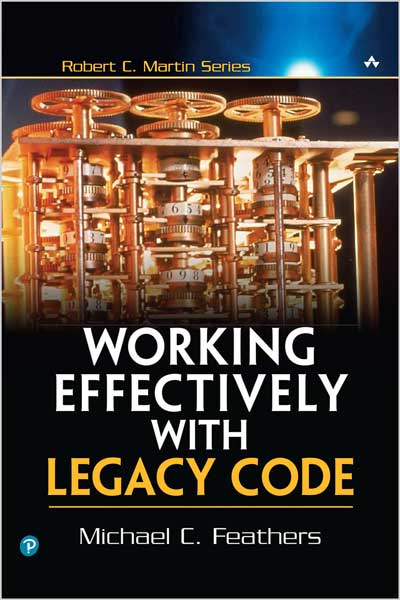
Michael C. Feathers
#Java
#C++
#Csharp
#UML
This book provides programmers with the ability to cost effectively handle common legacy code problems without having to go through the hugely expensive task of rewriting all existing code. It describes a series of practical strategies that developers can employ to bring their existing software applications under control.
The author provides useful guidance about how touse these strategies when refactoring or making functional changes to codebases. One of the book's key points is that it teaches developers to write tests that can be used to make sure they are not unintentionally changing the application as they optimize it. Examples are provided in Java, C++, and Csharp ,and the book assumes that the reader has some knowledge of UML notation.
Strategies using UML and code in C++ and Java primarily while language independent advice will be delivered in side bars and appendices for language specific users.
Must-Read for Every Programmer and Developer
This classic, endorsed by Robert "Uncle Bob" Martin (author of Clean Code), is on many must-read lists for programmers and developers including lists featured on Guru99, DZone, Built In, Dev Community (dev.to), and more.
"The book is important, as almost every developer at some point in career, has to work with a legacy system and it still represents the most challenging problems for many companies. The book goes deep into understanding the general process of a software change like adding features, fixing bugs, optimizing performances, etc."
—Milan Milanovic, DZone, November 2021
Get more out of your legacy systems: more performance, functionality, reliability, and manageability
Is your code easy to change? Can you get nearly instantaneous feedback when you do change it? Do you understand it? If the answer to any of these questions is no, you have legacy code, and it is draining time and money away from your development efforts.
In this book, Michael Feathers offers start-to-finish strategies for working more effectively with large, untested legacy code bases. This book draws on material Michael created for his renowned Object Mentor seminars: techniques Michael has used in mentoring to help hundreds of developers, technical managers, and testers bring their legacy systems under control.
The topics covered include
This book also includes a catalog of twenty-four dependency-breaking techniques that help you work with program elements in isolation and make safer changes.
© Copyright Pearson Education. All rights reserved.
MICHAEL C. FEATHERS works for Object Mentor, Inc., one of the world's top providers of mentoring, skill development, knowledge transfer, and leadership services in software development. He currently provides worldwide training and mentoring in Test-Driven Development (TDD), Refactoring, OO Design, Java, C#, C++, and Extreme Programming (XP). Michael is the original author of CppUnit, a C++ port of the JUnit testing framework, and FitCpp, a C++ port of the FIT integrated-testing framework. A member of ACM and IEEE, he has chaired CodeFest at three OOPSLA conferences.