ثبت نام / ورود
0
ثبت نام / ورود
0
Shenghui Cheng
#Web3
#Application
#Blockchain
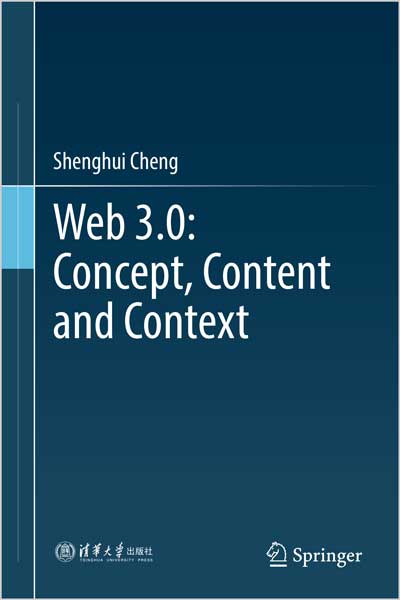
As technology continues to advance, the Internet is evolving into what is often referred to as Web 3.0. This book aims to achieve three main objectives, first, it introduces Web 3.0 systematically and comprehensively, providing readers with a foundational understanding of its concepts and characteristics. Second, it analyzes the inevitability and development necessity of Web 3.0, as well as its potential future possibilities and transformative effects. Finally, it explores Web 3.0 through comparative analysis, discussing its relationship with the metaverse as well as how individuals and organizations can seize the opportunities presented by Web 3.0.
Various topics related to Web 3.0, including its infrastructure, development facilities, scenario applications, technology stacks, and industry applications such as decentralized applications (DApps) and Software-as-a-Service (SaaS) platforms are presented in the book. It delves into the ecosystem of Web 3.0, discussing decentralized autonomous organizations (DAOs), open finance (DeFi), cryptocurrencies, token economy, digital identity, creator economy, attention economy, and cyber-physical and human systems. Additionally, it addresses governance issues, security challenges, development challenges, and legal and regulatory aspects associated with Web 3.0.
Overall, Web 3.0: Concept, Content and Context provides readers with a comprehensive understanding of Web 3.0, its potential implications, and the opportunities for new industry models and business opportunities in the evolving Internet era.
Table of Contents
1 Big Change: Web 3.0 Era
2 The Underlying Technology Stack of Web 3.0
3 The Extended Technology Stack of Web 3.0 4 Ecological Construction of Web 3.0
5 Applications of Web 3.0
6 Web 3.0 and SaaS Platform
7 Code of Conduct for Web 3.0
8 Application Challenges of Web 3.0
9 Future of Web 3.0
About The Author
Dr. Shenghui Cheng is a Westlake fellow and the director of the Intelligent Visu-alization Lab, Westlake University, China. He obtained a Ph.D. in computer science from the State University of New York at Stony Brook (Stony Brook University) and conducted research at Brookhaven National Laboratory and Harvard Medical School, US. He also served as a consultant for the World Bank, a mentor of the Stanford Artificial Intelligence Global Executive Leadership Program, the executive chairman of the CSIG-VIS Big Data Summit Forum, and the program committee member of the IEEE VIS, IEEE Pacific Vis, and Chinavis, etc.