ثبت نام / ورود
0
ثبت نام / ورود
0
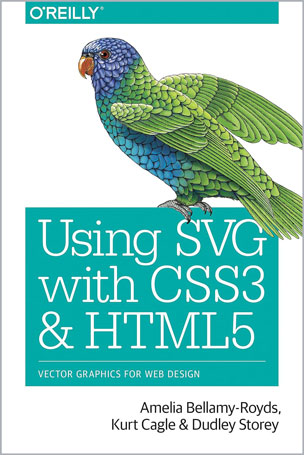
Vector Graphics for Web Design
Amelia Bellamy-Royds, Kurt Cagle, Dudley Storey
#SVG
#CSS3
#HTML5
#Web_Design
#Vector_Graphics
Using Scalable Vector Graphics (SVG) for illustrations only scratches the surface of this format’s potential on the web. With this practical guide, you’ll learn how to use SVG not only for illustrations but also as graphical documents that you can integrate into complex HTML5 web pages, and style with custom CSS. Web developers will discover ways to adapt designs by adding data based graphics, dynamic styles, interaction, or animation.
Divided into five parts, this book includes:
Table of Contents
Part I. SVG on the Web
Chapter 1. Graphics from Vectors
Chapter 2. The Big Picture
Chapter 3. A Sense of Style
Chapter 4. Tools of the Trade
Part II. Drawing with Markup
Chapter 5. Building Blocks
Chapter 6. Following Your Own Path
Chapter 7. The Art of the Word
Part Ill. Putting Graphics in Their Place
Chapter 8. Scaling Up
Chapter 9. A New Point of View
Chapter 10. Seeing Double
Chapter 11. Transformative Changes
Part IV. Artistic Touches
Chapter 12. Filling Up to Full
Chapter 13. Drawing the Lines
Chapter 14. Marking the Way
Chapter 15. Less Is More
Chapter 16. Playing with Pixels
Part V. SVG as an Application
Chapter 17. Beyond the Visible
Chapter 18. Drawing on Demand
Chapter 19. Transitioning in Time
Chapter 20. Good Manners
Kurt Cagle worked as a member of the SVG Working Group, and wrote one of the first SVG books on the market in 2004. Currently an Invited Expert with the W3C Xforms working group, Kurt Cagle is also XML Data Architect for the Library of Congress, after having worked in that role for the US National Archives. He was a regular contributor to O'Reilly Media since 2003, and an online editor in 2008-2009.