ثبت نام / ورود
0
ثبت نام / ورود
0
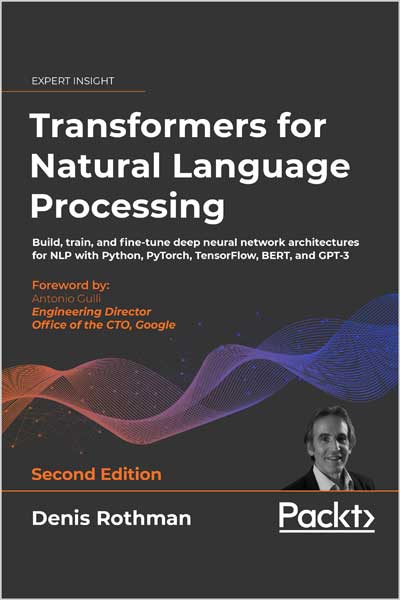
Build, train, and fine-tune deep neural network architectures for NLP with Python, PyTorch, TensorFlow, BERT, and GPT-3
Denis Rothman
#NLP
#Python
#PyTorch
#TensorFlow
#BERT
#RoBERTa
#GPT-2
#GPT-3
#OpenAI
💡 این روزها ترنسفورمرها واقعاً دارن جهان هوش مصنوعی رو دگرگون میکنن. مدلها و پلتفرمهای زیادی هستن – از Hugging Face گرفته تا OpenAI – ولی سؤال اصلی اینه: کدومشون دقیقاً به درد پروژهی تو میخوره؟
این کتاب هم راهنمای انتخاب پلتفرمها و مدلهاست، هم یک آموزش گامبهگام برای کار عملی با معماری ترنسفورمر. از ساخت دیتاست و Pretrain کامل یک مدل RoBERTa از صفر گرفته، تا Fine‑Tune مدلهای قدرتمندی مثل GPT‑3 برای یاد گرفتن منطق دیتای خاص خودت.
🏗 پیشآموزش (Pretrain) یک مدل BERT-Based با Hugging Face از صفر.
🔧 فاینتیون مدلهای قوی، از جمله GPT‑3، روی دیتای خودت.
🕵 تحلیل ریشهای مشکلات سخت NLP مثل یک کارآگاه AI.
🌍 مثالهای عملی از Machine Translation، Speech‑to‑Text، Text‑to‑Speech، QA و غیره.
📸 استفاده از پلتفرمهایی مثل OpenAI برای رفتن فراتر از متن (Vision، Codex).
📚 همزمان با یاد گرفتن معماری ترنسفورمر، با Hugging Face کار میکنی، دیتاست رو میسازی، Data Collator تعریف میکنی، و مدل رو از صفر آموزش میدی. بعدش میری سراغ Fine‑Tune روی مدلهای آماده.
💡 کتاب از پردازش زبان، ترجمه ماشینی، تحلیل گفتار عادی (Casual Speech)، خلاصهسازی اسناد حقوقی و مالی، تا تحلیل خبر جعلی رو پوشش میده. حتی یاد میگیری با مدلهای ViT و CLIP روی تصاویر برچسبگذاری کنی، یا با DALL‑E تصویر بسازی.
در حرف آخر، با مقایسه خروجیهای GPT‑3، T5، GPT‑2 و مدلهای BERT‑Based، به درک عمیقی از نقاط قوت و ضعف هر معماری میرسی، و یاد میگیری در Production چطور بهرهوریشون رو بسنجی.
🖼 برچسبگذاری تصویر با ViT و CLIP، حتی وقتی تصویر تار باشه!
✍ تولید تصویر از یک جمله با DALL‑E.
⚖ مقایسه خروجی GPT‑3 با T5، GPT‑2 و خانواده BERT.
🗂 انجام Sentiment Analysis، Summarization، Translation و غیره با TensorFlow، PyTorch، GPT‑3.
📊 اندازهگیری عملکرد مدلها برای تعیین محدوده و ظرفیتشون در محیط عملیاتی.
دنیس راثمن (Denis Rothman) – فارغالتحصیل دانشگاه سوربن و پاریس‑دیدرو، سازنده اولین word2matrix Embedding ثبتشده و Agentهای مکالمهای هوش مصنوعی ثبتشده. شروع کارش با ساخت یکی از نخستین Chatbotهای شناختی NLP بهعنوان معلم زبان خودکار برای شرکت Moët et Chandon بود. بعدها به IBM و صنعت پوشاک سیستم AI Resource Optimizer داد، و سپس راهکار پیشرفته APS طراحی کرد که حالا بهصورت جهانی استفاده میشه.
Learn how to use and implement transformers with Hugging Face and OpenAI (and others) by reading, running examples, investigating issues, asking the author questions, and interacting with our AI/ML community
• Pretrain a BERT-based model from scratch using Hugging Face
• Fine-tune powerful transformer models, including OpenAI's GPT-3, to learn the logic of your data
• Perform root cause analysis on hard NLP problems
Transformers are...well...transforming the world of AI. There are many platforms and models out there, but which ones best suit your needs?
Transformers for Natural Language Processing, 2nd Edition, guides you through the world of transformers, highlighting the strengths of different models and platforms, while teaching you the problem-solving skills you need to tackle model weaknesses.
You'll use Hugging Face to pretrain a RoBERTa model from scratch, from building the dataset to defining the data collator to training the model.
If you're looking to fine-tune a pretrained model, including GPT-3, then Transformers for Natural Language Processing, 2nd Edition, shows you how with step-by-step guides.
The book investigates machine translations, speech-to-text, text-to-speech, question-answering, and many more NLP tasks. It provides techniques to solve hard language problems and may even help with fake news anxiety (read chapter 13 for more details).
You'll see how cutting-edge platforms, such as OpenAI, have taken transformers beyond language into computer vision tasks and code creation using Codex.
By the end of this book, you'll know how transformers work and how to implement them and resolve issues like an AI detective!
• Find out how ViT and CLIP label images (including blurry ones!) and create images from a sentence using DALL-E
• Discover new techniques to investigate complex language problems
• Compare and contrast the results of GPT-3 against T5, GPT-2, and BERT-based transformers
• Carry out sentiment analysis, text summarization, casual speech analysis, machine translations, and more using TensorFlow, PyTorch, and GPT-3
• Measure the productivity of key transformers to define their scope, potential, and limits in production
If you want to learn about and apply transformers to your natural language (and image) data, this book is for you.
You'll need a good understanding of Python and deep learning and a basic understanding of NLP to benefit most from this book. Many platforms covered in this book provide interactive user interfaces, which allow readers with a general interest in NLP and AI to follow several chapters. And, don't worry if you get stuck or have questions; this book gives you direct access to our AI/ML community and author, Denis Rothman. So, he'll be there to guide you on your transformers journey!
1. What are Transformers?
2. Getting Started with the Architecture of the Transformer Model
3. Fine-Tuning BERT Models
4. Pretraining a RoBERTa Model from Scratch
5. Downstream NLP Tasks with Transformers
6. Machine Translation with the Transformer
7. The Rise of Suprahuman Transformers with GPT-3 Engines
8. Applying Transformers to Legal and Financial Documents for AI Text Summarization
9. Matching Tokenizers and Datasets
10. Semantic Role Labeling with BERT-Based Transformers
11. Let Your Data Do the Talking: Story, Questions, and Answers
12. Detecting Customer Emotions to Make Predictions
13. Analyzing Fake News with Transformers
14. Interpreting Black Box Transformer Models
(N.B. Please use the Look Inside option to see further chapters)
Denis Rothman graduated from Sorbonne University and Paris-Diderot University, designing one of the very first word2matrix patented embedding and patented AI conversational agents. He began his career authoring one of the first AI cognitive Natural Language Processing (NLP) chatbots applied as an automated language teacher for Moet et Chandon and other companies. He authored an AI resource optimizer for IBM and apparel producers. He then authored an Advanced Planning and Scheduling (APS) solution used worldwide.