ثبت نام / ورود
0
ثبت نام / ورود
0
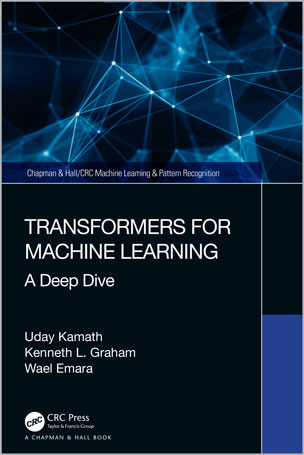
A Deep Dive
Uday Kamath, Kenneth L. Graham, Wael Emara
#Machine_Learning
#Algorithm
#Network_architecture
🧠 ترنسفورمرها این روزها ستون فقرات خیلی از معماریهای Neural Network شدن. از NLP گرفته تا Speech Recognition، تحلیل Time Series و Computer Vision، همه جا حضور دارن. این کتاب اولین مرجع جامع و منظمیه که همهی تغییرات، نسخهها و معماریهای ترنسفورمر رو یکجا توضیح میده.
📚 مرجع تمامعیار با توضیح دقیق الگوریتمها و تکنیکهای مرتبط با ترنسفورمر.
🔍 پوشش بیش از ۶۰ معماری ترنسفورمر بهصورت کامل.
🌍 کاربرد ترنسفورمرها در Speech، Text، Time Series و Computer Vision.
💡 نکات عملی و ترفندهای هر معماری برای استفاده در پروژههای واقعی.
💻 Case Studyهای دستبهکد با مثالهای آماده اجرا در Google Colab.
این کتاب هم بخش آکادمیک و عمیق داره (برای دانشجویان ارشد و پژوهشگران) با بحث کامل معماریهای پیشرفته،
و هم بخش عملی با کد و سناریوهای قابل اجرا (به درد کارشناسان، توسعهدهندهها و حرفهایها میخوره) تا راحت وارد پروژه بشن.
اودهی کاماث – بیش از ۲۰ سال تجربه ساخت محصولات آنالیتیک، نویسنده چند کتاب شاخص مثل XAI: An Introduction to Interpretable AI و Deep Learning for NLP and Speech Recognition. فعلاً Chief Analytics Officer در Smarsh و صاحب چندین پتنت در AI.
وائل امارا – دکترای مهندسی کامپیوتر و علوم کامپیوتر با تمرکز روی ML و AI، فعال در حوزه Signal/Image Processing، Computer Vision و Medical Imaging؛ الان Senior Research Engineer در Digital Reasoning.
کنته گراهام – دکترای فیزیک ماده چگال، متخصص NLP و Cybersecurity، با تجربه بردن مدلهای NLP از تحقیق به تولید؛ الان Principal Research Engineer در Smarsh و صاحب ۵ پتنت NLP.
Transformers are becoming a core part of many neural network architectures, employed in a wide range of applications such as NLP, Speech Recognition, Time Series, and Computer Vision. Transformers have gone through many adaptations and alterations, resulting in newer techniques and methods. Transformers for Machine Learning: A Deep Dive is the first comprehensive book on transformers.
Key Features:
The theoretical explanations of the state-of-the-art transformer architectures will appeal to postgraduate students and researchers (academic and industry) as it will provide a single entry point with deep discussions of a quickly moving field. The practical hands-on case studies and code will appeal to undergraduate students, practitioners, and professionals as it allows for quick experimentation and lowers the barrier to entry into the field.
Table of Contents
CHAPTER 1: Deep Learning and Transformers: An Introduction
CHAPTER 2: Transformers: Basics and Introduction
CHAPTER 3: Bidirectional Encoder Representations from Transformers (BERD)
CHAPTER 4: Multilingual Transformer Architectures
CHAPTER 5: Transformer Modifications
CHAPTER 6: Pre-trained and Application-Specific Transformers
CHAPTER 7: lnterpretability and Explainability Techniaues for Transformers
Uday Kamath has spent more than two decades developing analytics products and combines this experience with learning in statistics, optimization, machine learning, bioinformatics, and evolutionary computing. Uday has contributed to many journals, conferences, and books, is the author of books like XAI: An Introduction to Interpretable XAI, Deep Learning for NLP and Speech Recognition, Mastering Java Machine Learning, and Machine Learning: End-to-End guide for Java developers. He held many senior roles: Chief Analytics Officer for Digital Reasoning, Advisor for Falkonry, and Chief Data Scientist for BAE Systems Applied Intelligence. Uday has many patents and has built commercial products using AI in domains such as compliance, cybersecurity, financial crime, and bioinformatics. Uday currently works as the Chief Analytics Officer for Smarsh. He is responsible for data science, research of analytical products employing deep learning, transformers, explainable AI, and modern techniques in speech and text for the financial domain and healthcare.
Wael Emara has two decades of experience in academia and industry. Wael has a PhD in Computer Engineering and Computer Science with emphasis on machine learning and artificial intelligence. His technical background and research spans signal and image processing, computer vision, medical imaging, social media analytics, machine learning, and natural language processing. Wael has 10 research publications in various machine learning topics and he is active in the technical community in the greater New York area. Wael currently works as a Senior Research Engineer for Digital Reasoning where he is doing research on state-of-the-art artificial intelligence NLP systems.
Kenneth L. Graham has two decades experience solving quantitative problems in multiple domains, including Monte Carlo simulation, NLP, anomaly detection, cybersecurity, and behavioral profiling. For the past nine years, he has focused on building scalable solutions in NLP for government and industry, including entity coreference resolution, text classification, active learning, and temporal normalization. Kenneth currently works at Smarsh as a Principal Research Engineer, researching how to move state-of the-art NLP methods out of research and into production. Kenneth has five patents for his work in natural language processing, seven research publications, and a Ph.D. in Condensed Matter Physics.