ثبت نام / ورود
0
ثبت نام / ورود
0
Henry A. Boorse and Lloyd Motz
#Atom
#Physics
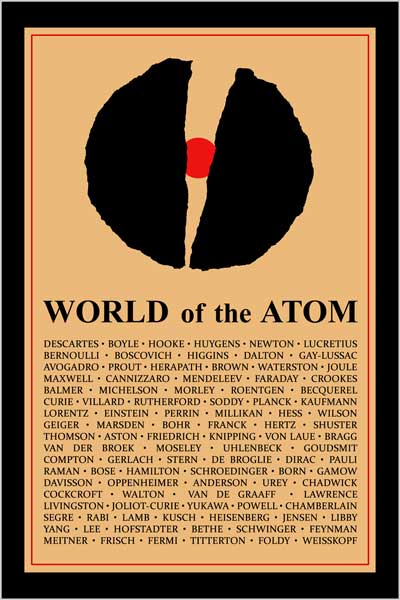
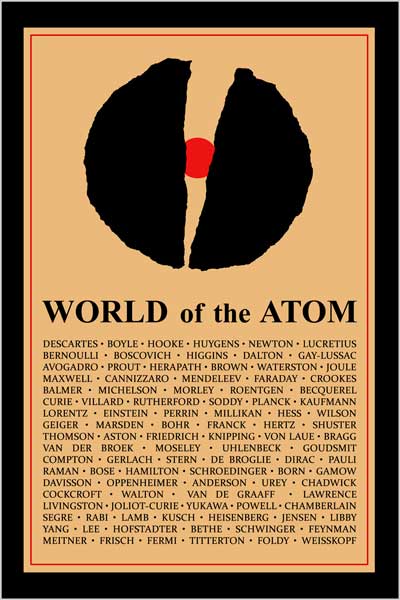
“The World of the Atom” is a fascinating collection of landmark documents in the history of atomic physics. Arranged chronologically, it allows readers to trace the growth of atomic science from ancient times to the present day. Each chapter begins with a description of its contents and a biography of its author. Through these commentaries and personal accounts, the evolving scientific subject becomes more vivid—a continuous human endeavor intertwined with the personalities of its innovators and shaped by diverse social and intellectual contexts.
Contrary to the notion that great scientists were distant superhumans, the biographies reveal their shared humanity. These investigators, hailing from various backgrounds, exhibit a wide range of traits and behaviors. While the biographies of prominent figures are extensive due to their significant contributions, lesser-known scientists’ stories are also captivating.
The included papers have all contributed to the development of atomic science, even when their relevance isn’t immediately apparent. For instance, Joule’s determination of the mechanical equivalent of heat played a crucial role in establishing the conservation of energy—a fundamental principle in atomic theory. Similarly, experiments with gases and gas theory were essential for atomic science’s evolution. However, it’s essential to note that this volume isn’t a comprehensive history of atomic theory; a more extensive analysis of scientists’ complete works would be necessary for such a purpose1. If you’re interested in exploring the world of atoms further, you might also enjoy Isaac Asimov’s book “Atom: Journey Across the Subatomic Cosmos” 2. It delves into the nature of atoms, light, gravity, and the electromagnetic force, providing a captivating journey through scientific discovery.
The evolution of atomism—from Newton to Bernoulli—reveals that “atoms” were initially speculative entities. It was only through Dalton’s discoveries in atomic chemistry, a century after Newton, that the experimental foundation for atomism was established. Once this breakthrough occurred, atomic ideas gained increasing prominence in developing theories of matter, with theory and experiment advancing rapidly. The insights from both theory and experiment are documented in the papers presented later in this work.
Throughout history, the desire to comprehend the seemingly infinite complexity of the observable world has driven inquiry. Philosophers and scientists alike have sought to identify the fundamental constituents underlying this complexity and formulate explanatory laws. This pursuit remains central to physics today. Investigating the structure of nucleons—protons and neutrons—has taken atomism to a deeper level, revealing still lesser entities in the hierarchy of elementary particles.
Interestingly, our study has come full circle. Atoms, once thought to be indivisible entities composing material reality, are now the gross phenomena that modern physics seeks to understand at a more subtle, elementary level. To explore this further, you might enjoy reading Isaac Asimov’s book “Atom: Journey Across the Subatomic Cosmos” 1. Asimov traces the path of discovery, from ancient speculations to contemporary revelations about the nature of atoms, light, gravity, and the electromagnetic force.
Lastly, the editors express gratitude to those who contributed to this volume, including Mrs. Janet Halebsky, Mrs. Hannah Simon, Mrs. Diane James, Mrs. Joy Robertson, Mrs. Barbara Murry, Miss Sarah K. Thomson, and Professor Renée Geen. Their assistance and dedication enriched the exploration of atomism in this work.