ثبت نام / ورود
0
ثبت نام / ورود
0
Michael Moran, Martin Rein, Robert E. Goodin
#Public_Policy
#Business
#Politics
#Economic
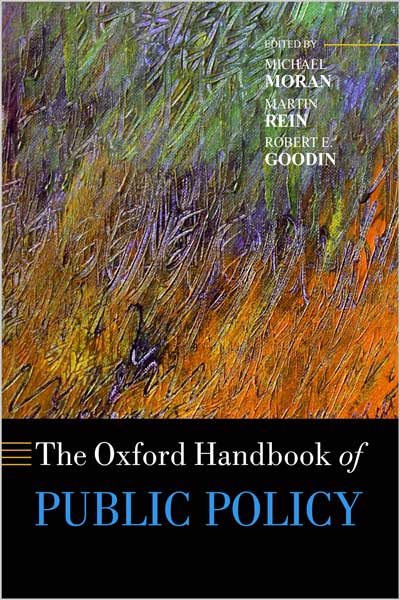
Public policy is the business end of political science. It is where theory meets practice in the pursuit of the public good. Political scientists approach public policy in myriad ways. Some approach the policy process descriptively, asking how the need for public intervention comes to be perceived, a policy response formulated, enacted, implemented, and, all too often, subverted, perverted, altered, or abandoned. Others approach public policy more prescriptively, offering politically-informed suggestions for how normatively valued goals can and should be pursued, either through particular policies or through alternative processes for making policy. Some offer their advice from the Olympian heights of detached academic observers, others as 'engaged scholars' cum advocates, while still others seek to instill more reflective attitudes among policy practitioners themselves toward their own practices. The Oxford Handbook of Public Policy mines all these traditions, using an innovative structure that responds to the very latest scholarship. Its chapters touch upon institutional and historical sources and analytical methods, how policy is made, how it is evaluated and how it is constrained. In these ways, the Handbook shows how the combined wisdom of political science as a whole can be brought to bear on political attempts to improve the human condition.
Table of Contents
PART I INTRODUCTION
1. The Public and its Policies
PART II INSTITUTIONAL AND HISTORICAL BACKGROUND
2. The Historical Roots of the Field
3. Emergence of Schools of Public Policy: Reflections by a Founding Dean
4. Training for Policy Makers
PART III MODES OF POLICY ANALYSIS
5. Policy Analysis as Puzzle Solving
6. Policy Analysis as Critical Listening
7. Policy Analysis as Policy Advice
8. Policy Analysis for Democracy
9. Policy Analysis as Critique
PART IV PRODUCING PUBLIC POLICY
10. The Origins of Policy
11. Agenda Setting
12. Ordering through Discourse
13. Arguing, Bargaining, and Getting Agreement
14. Policy Impact
15. The Politics of Policy Evaluation
16. Policy Dynamics
17. Learning in Public Policy
18. Reframing Problematic Policies
PART V INSTRUMENTS OF POLICY
19. Policy in Practice
20. Policy Network Analysis
21. Smart Policy?
22. The Tools of Government in the Information Age
23. Policy Analysis as Organizational Analysis
24. Public–Private Collaboration
PART VI CONSTRAINTS ON PUBLIC POLICY
25. Economic Constraints on Public Policy
26. Political Feasibility: Interests and Power
27. Institutional Constraints on Policy
28. Social and Cultural Factors: Constraining and Enabling
29. Globalization and Public Policy
30. Distributive and Redistributive Policy
31. Market and Non-Market Failures
32. Privatization and Regulatory Regimes
33. Democratizing the Policy Process
PART VIII COMMENDING AND EVALUATING PUBLIC POLICIES
34. The Logic of Appropriateness
35. Ethical Dimensions of Public Policy
36. Economic Techniques
37. Economism and its Limits
38. Policy Modeling
39. Social Experimentation for Public Policy
40. The Unique Methodology of Policy Research
41. Choosing Governance Systems: A Plea for ComparativeResearch
42. The Politics of Retrenchment: The US Case
43. Reflections on How Political Scientists (and Others)
Might Think about Energy and Policy
44. Reflections on Policy Analysis: Putting it Together Again
"Judging by this collection on public policy...the policy community is on to a winner academically...I cannot live without the book."--John Uhr, Australian Journal of Political Science"Under the general editorship of Robert E. Goodin, a large group of intellectually attractive authors has charted the entire field of political science in an unbiased multi-paradigmatic way. Minerva's owl would make a nice logo for this monumental collective work of the Oxford Handbooks: what moves us forward is looking back at what we know."--Claus Offe, Professor of Political Science, Hertie School of Governance, Berlin and Institute for Social Science, Humboldt University, Berlin"Spanning all of the major substantive areas and approaches in modern political science, this blockbuster set is a must-have for scholars and students alike. Each volume is crafted by a distinguished set of editors who have assembled critical, comprehensive, essays to survey accumulated knowledge and emerging issues in the study of politics. These volumes will help to shape the discipline for many years to come."--Theda Skocpol, Victor S. Thomas Professor of Government and Sociology, and Dean of the Graduate School of Arts and Sciences, Harvard University"A treasure-trove of useful information..Get this Handbook and its companion volumes...You will find it very thought-provoking!"--Energy Bar Association Update
Written by an illustrious team of international contributors, this volume covers and critiqes all the key approaches to public policy from the detached observer to the engaged practitioner
Michael Moran is W.J.M. Mackenzie Professor of Government at the University of Manchester.
Martin Rein is Professor in the Department of Urban Studies and Planning at Massachusetts Institute of Technology.
Robert E. Goodin is Distinguished Professor of Social and Political Theory and Philosophy at the Research School of Social Sciences at Australian National University.