ثبت نام / ورود
0
ثبت نام / ورود
0
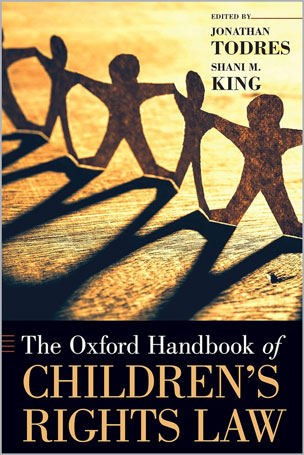
Jonathan Todres, Shani M. King
#Children
#Rights
#Law
#CRC
Children's rights law is a relatively young but rapidly developing discipline. The U.N. Convention on the Rights of the Child, the field's core legal instrument, is the most widely ratified human rights treaty in history. Yet, like children themselves, children's rights are often relegated to the margins in mainstream legal, political, and other discourses, despite their application to approximately one-third of the world's population and every human being's first stages of life. Now thirty years old, the Convention on the Rights of the Child (CRC) signalled a definitive shift in the way that children are viewed and understood--from passive objects subsumed within the family to full human beings with a distinct set of rights. Although the CRC and other children's rights law have spurred positive changes in law, policies, and attitudes toward children in numerous countries, implementation remains a work in progress. We have reached a state in the evolution of children's rights in which we need more critical evaluation and assessment of the CRC and the large body of children's rights law and policy that this treaty has inspired. We have moved from conceptualizing and adopting legislation to focusing on implementation and making the content of children's rights meaningful in the lives of all children. This book provides a critical evaluation and assessment of children's rights law, including the CRC. With contributions from leading scholars and practitioners from around the world, it aims to elucidate the content of children's rights law, explore the complexities of implementation, and identify critical challenges and opportunities for children's rights law.
Table of Contents
Part I: HISTORICAL AND THEORETICAL FRAMEWORK
Chapter 1: I mag es toward the Emancipation of Children in Modern Western Culture
Chapter 2: The Evolution of the Children's Rights Movement
Chapter 3: Taking Children's Human Rights Seriously
Chapter 4: The Interrelated and Interdependent Nature of Children's Rights
Part II: PERSPECTIVES AND METHODS
Chapter 5: A Child-Centered Approach to Children's Rights Law: Living Rights and Translations
Chapter 6: A Socioecological Model of Children's Rights
Chapter 7: Crit ical Race Theory and Children's Rights
Chapter 8: Feminist LegalTheory and Children's Rights
Chapter 9: lntersectionality and Children's Rights
Part Ill: SUBSTANTIVE LEGAL AREAS
Chapter 10: The Best Interests of the Child
Chapter 11: Citizenship and Rights of Children
Chapter 12: The Child's Right to Family
Chapter 13: Child Participation
Chapter 14: Juvenile Justice
Chapter 15: Placing Children's Freedom from Violence at the Heart of the Policy Agenda
Chapter 16: Continuing dilemmas of International Adoption
Chapter 17: Economic and Labor Rights of Children
Chapter 18: The Health Rights of Children
Chapter 19: Revisiting the Three 'R'S in Order to Realize Children's Educational Rights: Relationships, Resources, and Redress
Chapter 20: Poverty and Children's Rights
Chapter 21: Situating the Rights versus Culture Binary within the Context of Colonial History in Sub-Saharan Africa
Chapter 22: Climate Change and Children's Rights
Part IV: SELECTED INDIVIDUAL AND INSTITUTIONAL ACTORS
Chapter 23: Taking Part, Joiningin, and Being Heard?: Ethnographic Explorations of Children's Participation
Chapter 24: National Human Rights Institutions for Children
Chapter 25:Examining the UN Committee on the Rights of the Child through the Lens of Caste- and Descent-Based Discrimination
Part V: SELECTED POPULATIONS
Chapter 26: Embracing Our LGBTQ Youth: A Child Rights Paradigm
Chapter 27: Indigenous Children
Chapter 28: Children with Disabilities: Achievements, Prospects, and Challenges Ahead
Chapter 29: Independent Children
Chapter 30: Trafficked Children
Chapter 31: Children in Armed Conflict
Chapter 32: Working Toward Recognition of the Rights of Migrant and Refugee Children
Part IV: CONCLUSION
Chapter 33: Human Rights Education Education about Children's Rights
Chapter 34: Children's Rights in the Twenty-First Century: Challenges and Opportunities
Jonathan Todres is Distinguished University Professor and Professor of Law at Georgia State University College of Law.
Shani M. King is Professor of Law and the Director of the Center on Children and Families at the University of Florida Levin College of Law.