ثبت نام / ورود
0
ثبت نام / ورود
0
Michael A. Day
#Oppenheimer
#atomic
#history
#nuclear
#revolution
#philosophical
#Energy
#biography
"This book is the first full-scale study to focus on Oppenheimer's non-technical writings and speeches."
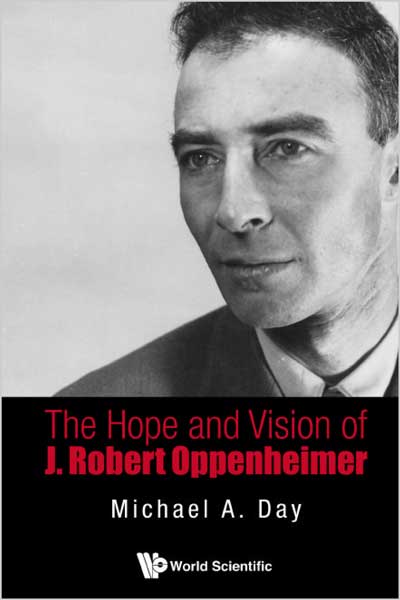
Professor David C Cassidy Hofstra University "The compilation of the writings in one place make it a useful resource for readers interested in the history of atomic policy and in learning about how science can shape politics and foreign policies . . . Summing up: Highly recommended." Choice Connect Incorporating elements from history, science, philosophy and international relations theory, this book takes a fresh look at the life and thought of Robert Oppenheimer. The author argues that not only are Oppenheimer's ideas important, engaging and relevant, but also more coherent than generally assumed.
He makes a convincing case that Oppenheimer has much to say about 21st century issues, and his voice should be brought back into the public forum. The book recovers and reconstructs what Oppenheimer said and wrote during the 1940s, 50s and 60s (i.e., his hope and vision) with the goal of identifying what might be of general philosophical interest today. It considers not only Oppenheimer's thought, but also his life using philosophical ideas developed by contemporary philosophers. In addition, to deepen and broaden the discussion and demonstrate the relevance of Oppenheimer's vision for the present, the author analyzes his views using contemporary international relations theory with a special emphasis on nuclear nonproliferation and disarmament. This examination reveals ways in which Oppenheimer's reasoning was prescient of current work being carried out to control, and possibly move beyond, the nuclear revolution.
Incorporating elements of history, science, philosophy, and international relations theory, this book explores the life and thought of Robert Oppenheimer.
The book takes the form of "philosophical biography" and moves in two dimensions. First, it recovers and reconstructs what Oppenheimer said during the 1940s, 50s, and 60s (i.e., his hope and vision) with the goal of finding what might be of general philosophical interest today. Second, the book considers not only Oppenheimer's thought but also his life using philosophical ideas developed by contemporary philosophers. Interestingly, connections arise between these two complementary dimensions that serve in illuminating and assessing both Oppenheimer and his worldview. Central to any discussion of Oppenheimer, of course, is the nuclear revolution, and the possibility of transcending the resulting crisis. In order to deepen and broaden this discussion and demonstrate the relevance of his vision for today, his views are also analyzed using contemporary international relations theory with special emphasis on nuclear nonproliferation and disarmament. This examination reveals ways in which Oppenheimer's reasoning was prescient of work being done today to control, and possibly move beyond, the nuclear revolution. The overall thesis of the book is that Oppenheimer's ideas are important, engaging, relevant, and more coherent than generally assumed. Hence, his voice needs to be brought back into the public forum.
Table of Contents
1. Introduction
2. Oppenheimer's Hope and Vision 1957-1959
3. MacLeish, Oppenheimer, and "The Conquest of America"
4. Rabi, Oppenheimer, and the Universal Culture of Science
5. International Control of Atomic Energy
6. Complementarity in Atomic Physics
7. Oppenheimer - Philosophical Exploration I
8. Oppenheimer - Philosophical Exploration II 9. Oppenheimer and International Relations 10. Oppenheimer and the Nuclear Revolution
"This book is the first full-scale study to focus on Oppenheimer's non-technical writings and speeches." --Professor David C Cassidy, Hofstra University
"The compilation of the writings in one place make it a useful resource for readers interested in the history of atomic policy and in learning about how science can shape politics and foreign policies ... Summing up: Highly recommended." --CHOICE Connect
"Michael Day’s insightful ‘philosophical biography’ of J Robert Oppenheimer stands out from other works on the so-called ‘father of the atomic bomb’ by its focus on the post-war period and by the depth of its philosophical engagement with his humanistic thought on science and culture." --Centaurus Review
Michael A Day is a professor of physics at Lebanon Valley College of Pennsylvania. He has two PhDs from the University of Nebraska ― one in physics and one in philosophy. In 2010, he was elected a Fellow of the American Physical Society for his research and publications on American Cold War physicists and their views on science and society.