ثبت نام / ورود
0
ثبت نام / ورود
0
Strategies for Scaling Teams and Yourself
Cate Huston

#Engineering
#Leader
#career
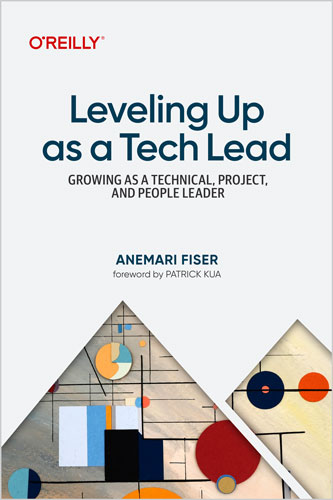
Great engineers don't necessarily make great leaders--at least, not without a lot of work. Finding your path to becoming a strong leader is often fraught with challenges. It's not easy to figure out how to be successful, empathetic, and caring yet tough. Whether you're on the management or individual contributor track, you need to develop strong leadership skills.
This book guides you on the path to becoming a well-rounded and resilient engineering leader. The first half focuses on you, and how you can develop the self-management skills needed to survive and thrive in a leadership role. The second half focuses on teams, including the necessary components of team functioning that will empower and support your teams and the individuals within them. You'll learn how to create and balance both individual and team growth.
By exploring these two tenets of leadership, Cate Huston, engineering director at DuckDuckGo, helps you:
Table of Contents
Part I. You
DRling Your Career
Chapter 1. Career Decisions and Optimizations
Chapter 2. Setting and Executing on Career Goals
Chapter 3. Embracing Growth
Chapter 4. Moving Forward
Section 1 Summary
Self-Management
Chapter 5. Energy Management
Chapter 6. Defining and Adapting Your Role
Chapter 7. Expanding Your Leadership Range
Section 2 Summary
Part II. Team
Scaling Teams
Chapter 8. Hiring That Scales
Chapter 9. Making People Successful
Chapter 10. Building a Bench
Section 3 Summary
Self-Improving Teams
Chapter 11. Mission and Strategy
Chapter 12. Tactics and Execution
Chapter 13. Driving Improvement
Section 4 Summary
Part III. Conclusion
Chapter 14. What Good Looks Like
Appendix A. Team Strategy
Appendix B. Reading List
Who the Book Is For
This book is for two main types of people. It’s for leaders—folks who manage engineering teams. It’s also for individual contributors (ICs)—the folks who do the day-to-day work of writing code, shipping products, and so on. Whether you’re in a leadership role or an IC role, whichever way you slice it, you’re still the manager of yourself. The guidance in this book is written to help you navigate your career, your organization, your team—and to make the best of what you have around you, whatever that is, in the different forms it comes in.
For managers, this book is my attempt to help you find that model of what “good” leadership looks like, finding something to go toward—something beyond the tactical list of things you’re responsible for or the tasks you’re expected to accomplish. I encourage you to develop that model in terms of not only what it means to lead a team but also—perhaps even more important—what career growth even means and how to find it independent of job titles and leveling frameworks.
For ICs, understanding more about how things work can be invaluable for identifying what questions to ask, where to exert pressure, and what kind of constructive feedback to give. The first half of the book was written to be applicable to you as an individual and as a leader, and the second half will help you gain context to better understand what goes on around you, both on your team and in the larger context of the organization and your career.
In my coaching practice, I often find that ICs lack the context that places their frustrations in perspective; the more I rise through the org chart and understand a greater context, the more I wish I could revisit my past-Cate self and help her understand this. My hope is to provide ICs with more of this perspective that will help you gain additional insights to navigate challenges and grow your career more effectively.
Even if you are lucky enough to have a manager who does care about your career growth and tries to help, your career will be bigger than your current role. Your goals may eventually come into conflict with what your current role can offer you, and you will need to decide what to do about that. Developing your own point of view and a broader base of support can make you more resilient to the inevitable reorgs, layoffs, and disappointing review cycles.
Cate Huston has had a global career in technology, focused on scaling teams and leaders within fast-growing engineering organizations. She currently works as an Engineering Director at DuckDuckGo, and previously worked at Automattic (the company behind WordPress.com), both globally distributed companies. She is also a CoActive trained engineering leadership coach, a Limited Partner in the Acquired Wisdom VC fund, and an advisor at Glowforge.
Cate holds a BSc (hons) in Computer Science from the University of Edinburgh, and started her career as a Software Engineer at Google. She speaks internationally, writes regularly for Quartz, and her writing has also appeared in Lifehacker, the Daily Beast, LeadDev and in the collections 97 Things Every Engineering Manager Should Know, Living by the Code and The Architecture of Open Source Applications. Cate appeared in the books The Manager's Path, Coders and Brotopia, and as a tech industry expert on The Today Show (US) and the Channel 4 News (UK).