ثبت نام / ورود
0
ثبت نام / ورود
0
Ron Sun
#Psychology
#Cognitive
#Behavioral_flexibility
#Mind
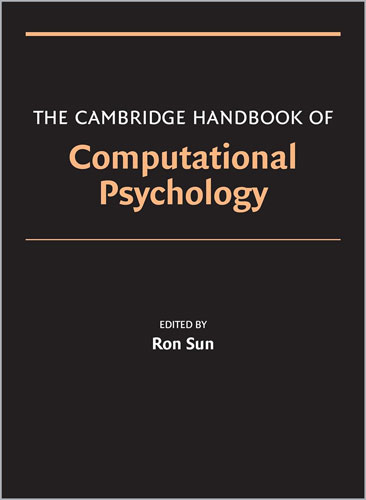
This book is a definitive reference source for the growing, increasingly more important, and interdisciplinary field of computational cognitive modeling, that is, computational psychology. It combines breadth of coverage with definitive statements by leading scientists in this field. Research in computational cognitive modeling explores the essence of cognition and various cognitive functionalities through developing detailed, process-based understanding by specifying computational mechanisms, structures, and processes. Given the complexity of the human mind and its manifestation in behavioral flexibility, process-based computational models may be necessary to explicate and elucidate the intricate details of the mind. The key to understanding cognitive processes is often in fine details. Computational models provide algorithmic specificity: detailed, exactly specified, and carefully thought-out steps, arranged in precise yet flexible sequences. These models provide both conceptual clarity and precision at the same time. This book substantiates this approach through overviews and many examples.
Table of Contents
Part I Introduction
Chapter 1. Introduction to computational cognitive modeling
Part II Cognitive Modeling Paradigms
Chapter 2. Connectionist models of cognition
Chapter 3. Bayesian models of cognition
Chapter 4. dynamical systems approaches to cognition
Chpater 5. Declarative/logic-based cognitive modeling
Chapter 6 Constraints in cognitive architectures
Part Ill Computational Modeling of Various Cognitive Functionalitiesand Domains
Chapter 7. Computational models of episodic memory
Chapter 8. Computational models of semantic memory
Chapter 9. Models of categorization
Chapter 10. Micro-process models of decision making
Chapter 11. Models of inductive reasoning
Chapter 12. Simulations of human deductive reasoning
Chapter 13. Computational models of skill acquisition
Chapter 14. Computational models of implicit learning
Chapter 15. Computational models of attention and cognitive control
Chapter 16. Computational models of developmental psychology
Chapter 17. Computational models of psycholinguistics
Chapter 18. Computational models in personality and social psychology
Chapter 19. Cognitive social simulation
Chapter 20. Models of scientific explanation
Chapter 21. Cognitive modeling for cognitive engineering
Chapter 22. models of animal and human learning
Chapter 23. Computational modeling of visual information processing
Chapter 24. Models of motor control
Part IV Concluding Remarks
Chapter 25. Computational modeling in cognitive science
Chapter 26. Putting the pieces together again
"--With the publication of The Cambridge Handbook of Computational Psychology, the newly emerging, interdisciplinary field of computational cognitive modeling has come of age...a cutting-edge overview of classic and current work in computational psychology. This handbook stakes out this important and promising area of cognitive science...a definitive reference source for the rapidly growing, increasingly important, and strongly interdisciplinary field of computational cognitive modeling...The Cambridge Handbook of Computational Psychology represents a milestone, marking a number of important contributions to the larger field of cognitive science."
--Howard T. Everson, PsycCRITIQUES [May 20, 2009, Vol. 54, Release 20, Article 5]
"[...] This edited volume by Sun (Rensselaer Polytechnic Institute) comprises two sections:[...] The first section will attract broader interest, especially from students, because of its juxtaposition of distinct approaches including connectionist, Bayesian, and logical modeling. The second section covers a range of topics, from memory and learning to decision making and cognitive control. [...] Given that the application chapters are largely independent of the methodological chapters, a dedicated instructor could cover more extensive ground by selecting primary papers on a desired topic. However, researchers who use computational approaches, or who want to become better consumers of computational psychology literature, may find this to be a valuable compilation of major ideas in this area. Recommended.
--S.A. Huettel, Duke University CHOICE
Dr. Ron Sun is Professor of Cognitive Science at Rensselaer Polytechnic Institute. A well-known researcher in the field of cognitive science, Sun explores the fundamental structure of the human mind and aims for the synthesis of many interesting intellectual ideas into one coherent model of cognition. The goal is to form a generic cognitive architecture that captures a variety of cognitive processes in a unified way and thus to provide unified explanations for a wide range of cognitive data. To do so, for the past two decades, he has been advocating the use of hybrid connectionist-symbolic systems in developing cognitive models and he has been developing theories of human skill learning and human everyday reasoning as the centerpieces of the cognitive architecture.