ثبت نام / ورود
0
ثبت نام / ورود
0
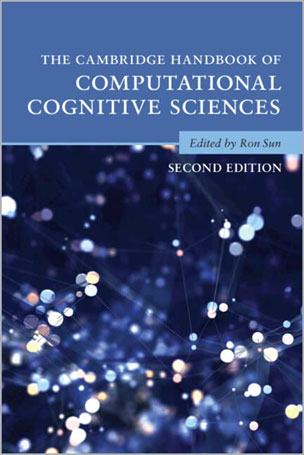
Ron Sun
#Cognitive
#Psychology
#Neuroscience
#Cognition
#Deep_Learning
The Cambridge Handbook of Computational Cognitive Sciences is a comprehensive reference for this rapidly developing and highly interdisciplinary field. Written with both newcomers and experts in mind, it provides an accessible introduction of paradigms, methodologies, approaches, and models, with ample detail and illustrated by examples. It should appeal to researchers and students working within the computational cognitive sciences, as well as those working in adjacent fields including philosophy, psychology, linguistics, anthropology, education, neuroscience, artificial intelligence, computer science, and more.
Part I: Introduction
1 An Overview of Computational Cognitive Sciences
Part II: Cognitive Modeling Paradigms
2 Connectionist Models of Cognition
3 Bayesian Models of Cognition
4 Symbolic and Hybrid Models of Cognition
5 Logic-Based Modeling of Cognition
6 Dynamical Systems Approaches to Cognition
7 Quantum Models of Cognition
8 Constraints in Cognitive Architectures
9 Deep Learning
10 Reinforcement Learning
Part III: Computational Modeling of Basic Cognitive Functionalities
11 Computational Models of Categorization
12 Computational Cognitive Neuroscience Models of Categorization
13 Models of Inductive Reasoning
14 Analogy and Similarity
15 Mental Models and Algorithms of Deduction
16 Computational Models of Decision Making
17 Computational Models of Skill Acquisition
18 Computational Models of Episodic Memory
19 Computational Neuroscience Models of Working Memory
20 Neurocomputational Models of Cognitive Control
21 Computational Models of Animal and Human Associative Learning
22 Computational Cognitive Models of Reinforcement Learning
Part IV: Computational Modeling in Various Cognitive Fields
23 Computational Models of Developmental Psychology
24 Computational Models in Personality and Social Psychology
25 Computational Modeling in Industrial-Organizational Psychology
26 Computational Modeling in Psychiatry
27 Computational Psycholinguistics
28 Natural Language Understanding and Generation
29 Computational Models of Creativity
30 Computational Models of Emotion and Cognition-Emotion Interaction
31 Computational Approaches to Morality
32 Cognitive Modeling in Social Simulation
33 Cognitive Modeling for Cognitive Engineering
34 Modeling Vision
35 Models of Multi-Level Motor Control
Part V: General Discussion
36 Model Validation, Comparison, and Selection
37 Philosophical Issues in Computational Cognitive Sciences
38 An Evaluation of Computational Modeling in Cognitive Sciences
Ron Sun is Professor of Cognitive Science at Rensselaer Polytechnic Institute, New York. He has published numerous papers and books in cognitive sciences, including The Cambridge Handbook of Computational Psychology (Cambridge University Press, 2008). He was the recipient of the 1991 David Marr Award from Cognitive Science Society and the 2008 Hebb Award from International Neural Networks Society. He is a fellow of APS, IEEE, and other professional organizations.