ثبت نام / ورود
0
ثبت نام / ورود
0
Olivier Houde, Gregoire Borst
#Cognitive_Development
#Adolescence
#Adulthood
#Childhood
#Neurocomputational
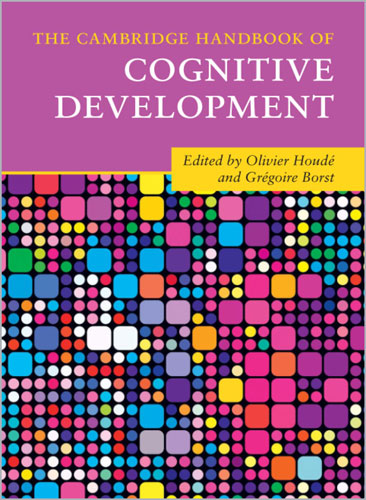
How does cognition develop in infants, children and adolescents? This handbook presents a cutting-edge overview of the field of cognitive development, spanning basic methodology, key domain-based findings and applications. Part One covers the neurobiological constraints and laws of brain development, while Part Two covers the fundamentals of cognitive development from birth to adulthood: object, number, categorization, reasoning, decision-making and socioemotional cognition. The final Part Three covers educational and school-learning domains, including numeracy, literacy, scientific reasoning skills, working memory and executive skills, metacognition, curiosity-driven active learning and more. Featuring chapters written by the world's leading scholars in experimental and developmental psychology, as well as in basic neurobiology, cognitive neuroscience, computational modelling and developmental robotics, this collection is the most comprehensive reference work to date on cognitive development of the twenty-first century. It will be a vital resource for scholars and graduate students in developmental psychology, neuroeducation and the cognitive sciences.
Table of Contents
Part I Neurobiological Constraints and Laws of Cognitive Development
1 How Life Regulation and Feelings Motivate the Cultural Mind: A Neurobiological Account
2 Epigenesis, Synapse Selection, Cultural Imprints, and Human Brain Development: From Molecules to Cognition
3 Mapping the Human Brain from the Prenatal Period to Infancy Using 3D Magnetic Resonance Imaging: Cortical Folding and Early Grey and White Maturation Processes
4 Development and Maturation of the Human Brain, from Infancy to Adolescence
5 Genetic and Experiential Factors in Brain Development: The Examples of Executive Attention and Self-regulation
6 The Brain Basis Underlying the Transition from Adolescence
Part II Fundamentals of Cognitive Development from Infancy to Adolescence and Young Adulthood
Introduction: Assembling the Building Blocks of Cognition in a Non-linear Dynamical System of Development to Adulthood
Subpart II.1 Infancy: The Roots of Human Thinking
7 Differences between Humans, Great Apes and Monkeys in Cognition, Communication, Language and Morality
8 Infants’ Physical Reasoning and the Cognitive Architecture that Supports It
9 Infant Categorization
10 Foundational Considerations: Does Primitive Number Sense Provide a Foothold for Learning Formal Mathematics?
11 How Sophisticated Is Infants’ Theory of Mind?
12 Social Cognition and Moral Evaluation in Early Human Childhood
13 Scientific Thinking and Reasoning in Infants and Young Children
14 Computational Approaches to Cognitive Development: Bayesian and Artificial-Neural-Network Models
Subpart II.2 Childhood and Adolescence: The Development of Human Thinking
15 Development of Qualitative Thinking: Language and Categorization
16 Development of Numerical Knowledge
17 Numerical Cognition and Executive Functions: Development As Progressive Inhibitory Control of Misleading Visuospatial Dimensions
18 Developing Theory of Mind and Counterfactual Reasoning in Children
19 Development of Executive Function Skills in Childhood: Relevance for Important Life Outcomes
20 Developing Cognitive Control and Flexible Adaptation during Childhood
21 Reasoning Bias and Dual Process Theory: Developmental Considerations and Current Directions
22 Social Cognitive Development: The Intergroup Context
23 Behavioral and Neural Development of Cognitive Control and Risky Decision-Making across Adolescence
24 The Triadic Neural Systems Model through a Machine-Learning Mill
Part III Education and School-Learning Domains
25 Linking Cognitive Neuroscientific Research to Educational Practice in the Classroom
26 Literacy: Understanding Normal and Impaired Reading Development through Personalized Large-Scale Neurocomputational Models
27 Reasoning in Mathematical Development: Neurocognitive Foundations and Their Implications for the Classroom
28 Children’s Scientific Reasoning Skills in Light of General Cognitive Development
29 Working Memory Training: From the Laboratory to Schools
30 Interventions for Improving Executive Functions during Development: Working Memory, Cognitive Flexibility, and Inhibition
31 Curiosity-Driven Learning in Development: Computational Theories and Educational Applications
32 Neurocomputational Methods: From Models of Brain and Cognition to Artificial Intelligence in Education
Olivier Houdé is Professor of Psychology at the University of Paris, where he is the honorary director of the Laboratory of Psychology at the Sorbonne. He is an academician at the Institut de France. One of the world's leading specialists of cognitive development, he is Editor in Chief of the Dictionary of Cognitive Science (2004).
Grégoire Borst is Professor of Psychology at the University of Paris, where he is the director of the Laboratory of Psychology at the Sorbonne. A rising star in the areas of cognitive development and neuroeducation, he is also a member of the board of the Journal of Experimental Child Psychology.