ثبت نام / ورود
0
ثبت نام / ورود
0
Patrick Riley
#Rousseau
#French_Revolution
#Anthropology
#Politics
#Psychology
#Education
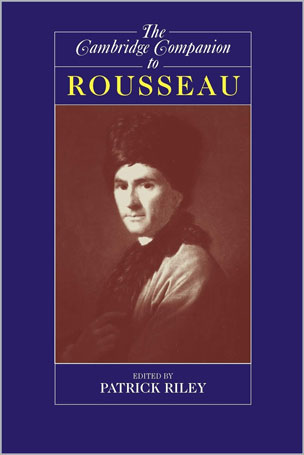
Rousseau, the great political theorist and philosopher of education, was an important forerunner of the French Revolution, though his thought was too nuanced and subtle ever to serve as mere ideology. This is the only volume that systematically surveys the full range of Rousseau's activities in politics and education, psychology, anthropology, religion, music, and theater. New readers will find this the most convenient and accessible guide to Rousseau currently available, while advanced students and specialists will find a conspectus of recent developments in the interpretation of Rousseau.
Table of Contents
1 Introduction: Life and Works of Jean-Jacques Rousseau (1 712-1778)
2 A General Overview
3 Rousseau, Voltaire, and the Revenge of Pascal
4 Rousseau, Fenelon, and the Quarrel between the Ancients and the Moderns
5 Rousseau's Political Philosophy: Stoic and Augustinian Origins
6 Rousseau's General Will
7 Rousseau's Images of Authority (Especially in La Nouvelle Helo'ise)
8 The Religious Thought
9 Emile: Learning to Be Men, Women, and Citizens
10 Emile: Nature and the Education of Sophie
11 Rousseau's Confessions
12 Music, Politics, Theater, and Representation in Rousseau
13 The Motto Vitam impendere vero and the Question of Lying
14 Rousseau's The Levite of Ephraim: Synthesis within a "Minor" Work
15 Ancient Postmodernism in the Philosophy of Rousseau