ثبت نام / ورود
0
ثبت نام / ورود
0
David Ebrey, Richard Kraut
#Plato
#Philosophy
#Epistemology
#Metaphysics
#Aesthetics
#Religion
#Mathematics
#Psychology
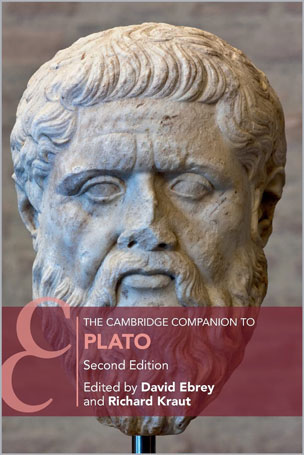
The first edition of the Cambridge Companion to Plato (1992), edited by Richard Kraut, shaped scholarly research and guided new students for thirty years. This new edition introduces students to fresh approaches to Platonic dialogues while advancing the next generation of research. Of its seventeen chapters, nine are entirely new, written by a new generation of scholars. Six others have been thoroughly revised and updated by their original authors. The volume covers the full range of Plato's interests, including ethics, political philosophy, epistemology, metaphysics, aesthetics, religion, mathematics, and psychology. Plato's dialogues are approached as unified works and considered within their intellectual context, and the revised introduction suggests a way of reading the dialogues that attends to the differences between them while also tracing their interrelations. The result is a rich and wide-ranging volume which will be valuable for all students and scholars of Plato.
Table of Contents
1. Introduction to the Study of Plato
2. Plato in his Context
3. Stylometry and Chronology
4. Plato’s Socrates and his Conception of Philosophy
5. Being Good at Being Bad: Plato’s Hippias Minor
6. Inquiry in the Meno
7. Why Eros?
8. Plato on Philosophy and the Mysteries
9. The Unfolding Account of Forms in the Phaedo
10. The Defense of Justice in Plato’s Republic
11. Plato on Poetic Creativity: A Revision
12. Betwixt and Between: Plato and the Objects of
Mathematics
13. Another Goodbye to the Third Man
14. Plato’s Sophist on False Statements
15. Cosmology and Human Nature in the Timaeus
16. The Fourfold Classification and Socrates’ Craft Analogy
17. Law in Plato’s Late Politics
David Ebrey is Researcher at Humboldt-Universität zu Berlin.