ثبت نام / ورود
0
ثبت نام / ورود
0
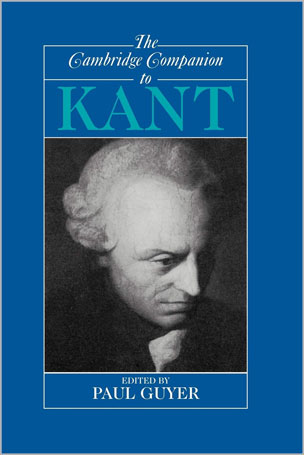
Paul Guyer
#Kant
#Philosophy
#Metaphysics
#Aesthetics
The fundamental task of philosophy since the seventeenth century has been to determine whether the essential principles of both knowledge and action can be discovered by human beings unaided by an external agency. No one philosopher contributed more to this enterprise than Kant, whose Critique of Pure Reason (1781) shook the very foundations of the intellectual world. Kant argued that the basic principles of the natural sciences are imposed on reality by human sensibility and understanding, and thus that human beings are also free to impose their own free and rational agency on the world. This volume is the only systematic and comprehensive account of the full range of Kant's writings available, and the first major overview of his work to be published in more than a dozen years. An internationally recognized team of Kant scholars explore Kant's conceptual revolution in epistemology, metaphysics, philosophy of science, moral and political philosophy, aesthetics, and the philosophy of religion. The volume also traces the historical origins and consequences of Kant's work.
Table of Contents
1 Kant's intellectual development: 1746-1781
2 The Transcendental Aesthetic/ Charles Parsons
3 Functions of thought and the synthesis of intuitions
4 The transcendental deduction of the categories
5 Causal laws and the foundations of natural science
6 Empirical, rational, and transcendental psychology: Psychology as science and as philosophy
7 Reason and the practice of science
8 The critique of metaphysics: Kant and traditional ontology
9 Vindicating reason
10 Autonomy, obligation, and virtue: An overview of Kant's moral philosophy
11 Politics, freedom, and order: Kant's political philosophy
12 Taste, sublimity, and genius: The aesthetics of nature and art
13 Rational theology, moral fait h, and religion/ Allen W. Wood
14 The first twenty years of critique: The Spinoza connection
About the Author
Paul Guyer is an American philosopher and a leading scholar of Immanuel Kant and of aesthetics. Since 2012, he has been Jonathan Nelson Professor of Philosophy and Humanities at Brown University.