ثبت نام / ورود
0
ثبت نام / ورود
0
Barry Smith, David Woodruff Smith
#Husserl
#Phenomenology
#Epistemology
#Philosophy
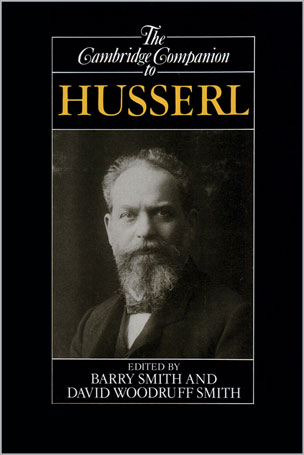
The essays in this volume explore the full range of Husserl's work and reveal just how systematic his philosophy is. There are treatments of his most important contributions to phenomenology, intentionality and the philosophy of mind, epistemology, the philosophy of language, ontology, and mathematics. An underlying theme of the volume is a resistance to the idea, current in much intellectual history, of a radical break between 'modern' and 'postmodern' philosophy, with Husserl as the last of the great Cartesians. Husserl is seen in this volume as a philosopher constantly revising his system in order to be able to integrate philosophy with ideas emanating from science and culture. The so-called rift between analytic and 'continental' philosophy emerges as an artificial construct.
Table of Contents
1 The development of Husserl's thought
2 The phenomenological dimension
3 Meaning and language
4 Knowledge
s Perception
6 Transcendental idealism
7 Mind and body
8 Common sense
9 Mathematics
10 Part-whole
About the author
Barry Smith is one of the most highly cited contemporary philosophers. He is a prominent contributor to both theoretical and applied research in ontology, where the applications of his work cover multiple disciplines from molecular biology to intelligence analysis. He is SUNY Distinguished Professor of Philosophy in the University at Buffalo, with joint appointments in the Departments of Biomedical Informatics, Neurology, and Computer Science and Engineering. He is also Director of the National Center for Ontological Research and Visiting Professor in the Università della Svizzera italiana (USI) in Lugano.
His research has been funded by the National Institutes of Health, the US, Swiss and Austrian National Science Foundations, the Humboldt and Volkswagen Foundations, the European Union, and the US Department of Defense.
Smith's pioneering work on the science of ontology led to the establishment of Basic Formal Ontology (BFO). BFO is the most commonly adopted top-level ontology development framework and was approved in ISO/IEC:21838-2 as an ISO standard top-level ontology. His work led also to the formation of the OBO (Open Biomedical Ontologies) Foundry, a suite of interoperable ontology modules designed to support information-driven research in biology and biomedicine.