ثبت نام / ورود
0
ثبت نام / ورود
0
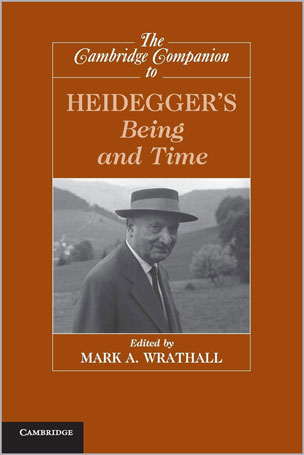
Mark A. Wrathall
#Philosophy
#Phenomenology
#Idealism
#Realism
#Being_and_Time
The Cambridge Companion to Heidegger's “Being and Time” contains seventeen chapters by leading scholars of Heidegger. It is a useful reference work for beginning students, but also explores the central themes of Being and Time with a depth that will be of interest to scholars. The Companion begins with a section-by-section overview of Being and Time and a chapter reviewing the genesis of this seminal work. The final chapter situates Being and Time in the context of Heidegger's later work. The remaining chapters examine the core issues of Being and Time, including the question of being, the phenomenology of space, the nature of human being (our relation to others, the importance of moods, the nature of human understanding, language), Heidegger's views on idealism and realism and his position on skepticism and truth, Heidegger's account of authenticity (with a focus on his views on freedom, being toward death, and resoluteness), and the nature of temporality and human historicality.
Table of Contents
1 An Overview of Being and Time
2 Martin Heidegger’s Being and Time : A Carefully
Planned Accident?
3 The Question of Being
4 The Semantics of “Dasein” and the Modality
5 Heidegger on Space and Spatiality
6 Being-with-Others
7 Why Mood Matters
8 Heidegger on Human Understanding
9 Heidegger’s Pragmatic-Existential Theory of Language and Assertion
10 The Empire of Signs: Heidegger’s Critique of Idealism in Being and Time
11 Heidegger on Skepticism, Truth, and Falsehood
12 Death and Demise in Being and Time
13 Freedom and the “Choice to Choose Oneself” in Being and Time
14 Authenticity and Resoluteness
15 Temporality as the Ontological Sense of Care
16 Historical Finitude
17 What If Heidegger Were a Phenomenologist?
Mark A. Wrathall is Professor of Philosophy at the University of California, Riverside. He is the author of Heidegger and Unconcealment (Cambridge, 2010) and How to Read Heidegger (2006). He has edited a number of collections, including A Companion to Heidegger (2007), A Companion to Phenomenology and Existentialism (2009), Religion after Metaphysics (2004) and Appropriating Heidegger (2008). Dr Wrathall has contributed chapters to The Cambridge Companion to Heidegger (2006) and The Cambridge Companion to Merleau-Ponty (2004), as well as numerous articles to peer-reviewed journals in philosophy. He has lectured at universities in Germany, China, Japan, Taiwan, the United Kingdom, Sweden and Finland.