ثبت نام / ورود
0
ثبت نام / ورود
0
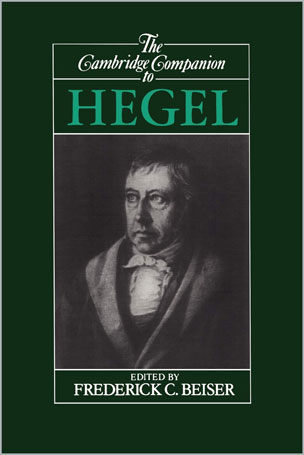
Frederick C. Beiser
#Hegel
#Philosophy
#Epistemology
#Aesthetics
#Phenomenology
Few thinkers are more controversial in the history of philosophy than Hegel. He has been dismissed as a charlatan and obscurantist, but also praised as one of the greatest thinkers in modern philosophy. No one interested in philosophy can afford to ignore him. This volume considers all the major aspects of Hegel's work: epistemology, logic, ethics, political philosophy, aesthetics, philosophy of history, philosophy of religion. Special attention is devoted to problems in the interpretation of Hegel: the unity of the Phenomenology of Spirit; the value of the dialectical method; the status of his logic; the nature of his politics. A final group of chapters treats Hegel's complex historical legacy: the development of Hegelianism and its growth into a left and right wing school; the relation of Hegel and Marx; and the subtle connections between Hegel and contemporary analytic philosophy.
Table of Contents
About the author
Frederick Charles Beiser is an American philosopher who is professor of philosophy at Syracuse University. He is one of the leading English-language scholars of German idealism. In addition to his writings on German idealism, Beiser has also written on the German Romantics and 19th-century British philosophy.