ثبت نام / ورود
0
ثبت نام / ورود
0
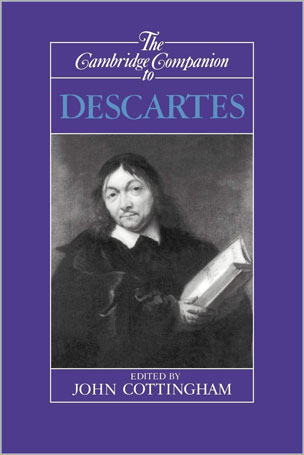
John Cottingham
#Descartes
#Philosophy
#Psychology
#Physiology
Descartes occupies a position of piviotal importance as one of the founding fathers of modern philosophy; he is, perhaps the most widely studied of all philosophers. In this authoritative collection an international team of leading scholars in Cartesian studies present the full range of Descartes' extraordinary philosophical achievement. His life and the development of his thought, as well as the intellectual background to and reception of his work are treated at length. At the core of the volume are a group of chapters on his metaphysics: the celebrated "Cogito" argument, the proofs of God's existence, the "Cartesian circle" and the dualistic theory of the mind and its relation to his theological and scientific views. Other chapters cover the philosophical implications of his work in algebra, his place in the 17th century scientific revolution, the structure of his physics, and his work on physiology and psychology.
Table of Contents
1 Descartes' life and the development of his philosophy
2 Descartes and scholasticism: the intellectual background to Descartes' thought
3 The nature of abstract reasoning: philosophical aspects of Descartes' work in algebra
4 Cartesian metaphysics and the role of the simple natures
5 The Cogito and its importance
6 The idea of God and the proofs of his existence
7 The Cartesian circle
8 Cartesian dualism: theology, metaphysics, and science
9 Descartes' philosophy of science and the scientific revolution
10 Descartes' physics
11 Descartes' physiology and its relation to his psychology
12 Descartes on thinking with the body
13 The reception of Descartes' philosophy
About the Author
John Cottingham is an English philosopher. The focus of his research has been early-modern philosophy, the philosophy of religion and moral philosophy.