ثبت نام / ورود
0
ثبت نام / ورود
0
Nicholas Griffin
#Bertrand_Russell
#Philosophy
#Neutral_Monism
#Metaphysics
#Atomism
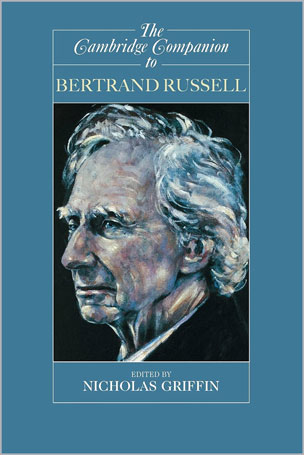
Bertrand Russell ranks as one of the giants of 20th century philosophy. This Companion focuses on Russell's contributions to modern philosophy and, therefore, concentrates on the early part of his career. Through his books, journalism, correspondence and political activity he exerted a profound influence on modern thought. New readers will find this the most convenient and accessible guide to Russell available. Advanced students and specialists will find a conspectus of recent developments in the interpretation of Russell.
Table of Contents
1 Mathematics in and behindRussell's Logicism, andlts Reception
2 Russell's Philosophical Background
3 Russell and Moore, 1898-1905
4 Russell and Frege
5 Bertrand Russell's Logicism
6 The Theory of Descriptions
7 Russell's Substitutional Theory
8 The Theory of Types
9 Russell's Method of Analysis
10 Russell's Neutral Monism
11 The Metaphysics of logical Atomism
12 Russell's Structuralism and the Absolute Descriptionof the World
13 From Knowledge byAcquaintance to Knowledgeby Causation
14 Russell, Experience, and the Roots of Science
15 Bertrand Russell: Moral Philosopher or Unphilosophical Moralist?
About the author
Nicholas John Griffin is a retired Canadian-based philosopher. He was Director of the Bertrand Russell Centre at McMaster University, Hamilton, Ontario, where he held a Canada Research Chair in Philosophy. Griffin has a bachelor's degree from the University of Leicester, and a Ph.D. from the Australian National University. His 1974 dissertation, Relative Identity, was supervised by Richard Sylvan; he later published it as a book. His area of research is Bertrand Russell.