ثبت نام / ورود
0
ثبت نام / ورود
0
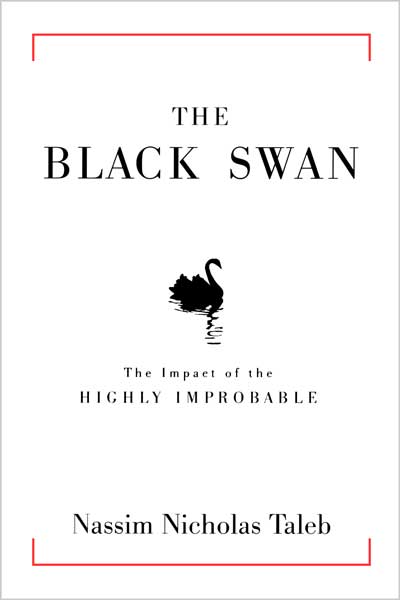
The Impact of the Highly Improbable: With a new section: "On Robustness and Fragility" (Incerto)
Nassim Nicholas Taleb
#Black_Swan
#Swan
#Nassim_Taleb
#Human_Errors
#Probability
#Risk
The most influential book of the past seventy-five years: a groundbreaking exploration of everything we know about what we don’t know, now with a new section called “On Robustness and Fragility.”
A black swan is a highly improbable event with three principal characteristics: It is unpredictable; it carries a massive impact; and, after the fact, we concoct an explanation that makes it appear less random, and more predictable, than it was. The astonishing success of Google was a black swan; so was 9/11. For Nassim Nicholas Taleb, black swans underlie almost everything about our world, from the rise of religions to events in our own personal lives.
Why do we not acknowledge the phenomenon of black swans until after they occur? Part of the answer, according to Taleb, is that humans are hardwired to learn specifics when they should be focused on generalities. We concentrate on things we already know and time and time again fail to take into consideration what we don’t know. We are, therefore, unable to truly estimate opportunities, too vulnerable to the impulse to simplify, narrate, and categorize, and not open enough to rewarding those who can imagine the “impossible.”
For years, Taleb has studied how we fool ourselves into thinking we know more than we actually do. We restrict our thinking to the irrelevant and inconsequential, while large events continue to surprise us and shape our world. In this revelatory book, Taleb will change the way you look at the world, and this second edition features a new philosophical and empirical essay, “On Robustness and Fragility,” which offers tools to navigate and exploit a Black Swan world.
Taleb is a vastly entertaining writer, with wit, irreverence, and unusual stories to tell. He has a polymathic command of subjects ranging from cognitive science to business to probability theory. Elegant, startling, and universal in its applications, The Black Swan is a landmark book—itself a black swan.
Table of Contents
PART ONE: UMBERTO ECO'S ANTILIBRARY, OR HOW WE SEEK VALIDATION
Chapter 1: The Apprenticeship of an Empirical Skeptic
Chapter 2: Yevgenia's Black Swan
Chapter 3: The Speculator and the Prostitute
Chapter 4: One Thousand and One Days, or How Not to Be a Sucker
Chapter 5: Confirmation Shmonfirmatlon!
Chapter 6: The Narrative Fallacy
Chapter 7: Living In the Antechamber of Hope
Chapter 8: Giacomo Casanova's Unfalling Luck: The Problem of SIient Evidence
Chapter 9: The Ludie Fallacy, or The Uncertainty of the Nerd
PART TWO: WE JUST CAN'T PREDICT
Chapter 10: The Scandal of Prediction
Chapter 11: How to Look for Bird Poop
Chapter 12: Epistemocracy, a Dream
Chapter 13: Appelles the Painter, or What Do You Do if You Cannot Predict?
PART THREE: THOSE GRAY SWANS OF EXTREMISTAN
Chapter 14: From Mediocristan to Extremistan, and Back
Chapter 15: The Bell Curve, That Great Intellectual Fraud
Chapter 16: The Aesthetics of Randomness
Chapter 17: Locke's Madmen, or Bell Curves in the Wrong Places
Chapter 18: The Uncertainty of the Phony
PART FOUR: THE END
Chapter 19: Half and Half, or How to Get Even with the Black Swan
Nassim Nicholas Taleb has devoted his life to problems of uncertainty, probability, and knowledge. He spent nearly two decades as a businessman and quantitative trader before becoming a full-time philosophical essayist and academic researcher in 2006. Although he spends most of his time in the intense seclusion of his study, or as a flâneur meditating in cafés, he is currently Distinguished Professor of Risk Engineering at New York University’s Polytechnic Institute. His main subject matter is “decision making under opacity”—that is, a map and a protocol on how we should live in a world we don’t understand.