ثبت نام / ورود
0
ثبت نام / ورود
0
Friedrich Nietzsche
Raymond Geuss, Ronald Speirs
#Tragedy
#Nietzsche
#Philosophy
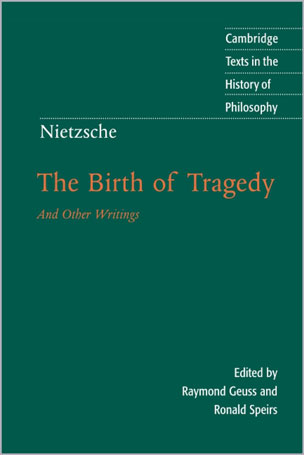
The Birth of Tragedy is one of the seminal philosophical works of the modern period. The theories developed in this relatively short text have had a profound influence on the philosophy, literature, music and politics of the twentieth century. This edition presents a new translation by Ronald Speirs and an introduction by Raymond Geuss that sets the work in its historical and philosophical context. The volume also includes two essays on related topics that Nietzsche wrote during the same period.
Table of Contents
'The main purpose of the book was to challenge nineteenth-century idealisations of classical Greece: ancient tragedy at its greatest, Nietzsche argued, was animated not by orderliness and quite decorum but by an inebriated frenzy of music, dnace and rollicking enormity.' New Humanist
A new translation and edition of one of the seminal philosophical works of the modern period.
About the Author
Friedrich Nietzsche (1844–1900) was a German philosopher, writer, and cultural critic who profoundly influenced modern philosophy, psychology, and literature. He challenged traditional religion, morality, and social values, famously declaring that “God is dead” to describe the decline of religious authority in modern society. His philosophy emphasized individual freedom, self-overcoming, personal responsibility, and the creation of one's own values. Through influential works such as Thus Spoke Zarathustra, Beyond Good and Evil, and The Gay Science, Nietzsche explored ideas such as the Übermensch (Overman), the Will to Power, and Eternal Recurrence, encouraging human beings to question conventional beliefs, embrace life's challenges, and create meaning through their own choices. His thought continues to inspire and challenge people around the world.