ثبت نام / ورود
0
ثبت نام / ورود
0
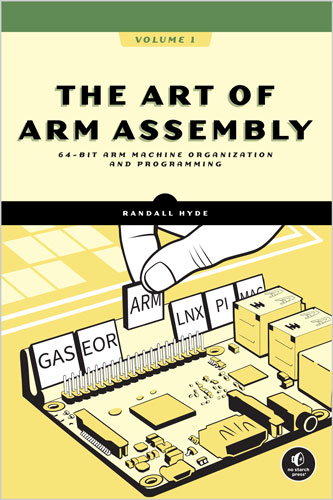
64-Bit ARM Machine Organization and Programming
Randall Hyde
#ARM
#Assembly
#CPU
#GNU
#Gas
#SIMD
دستورالعملهای مدرن برای CPUهای ۶۴-بیتی ARM
کتاب The Art of ARM Assembly با الهام از مجموعه کلاسیک رندال هاید، به برنامهنویسی سطح پایین برای پردازندههای ۶۴-بیتی ARM میپردازد — پردازندههایی که قلب تپندهی آیفون، مک، کرومبوک، سرورها و سیستمهای نهفته هستند.
پس از مقدمهای سریع اما کامل بر برنامهنویسی اسمبلی و استفاده از GNU Assembler (Gas)، وارد مباحثی مانند سازماندهی حافظه، نمایش دادهها و عملیات منطقی روی انواع دادههای پایه خواهید شد.
در ادامه میآموزید:
در فصلهای بعد، وارد حوزههایی پیشرفتهتر خواهید شد، مثل:
این کتاب عملی و عمیق، شما را در درک معماری ماشینهای مدرن و نوشتن کدهای اسمبلی بهینه برای سیستمهای مبتنی بر ARM توانمند میسازد. همچنین مهارتهایی به شما میآموزد که در نوشتن کدهای سطح بالا بهصورت مؤثرتر و درک بهتر تعامل نرمافزار و سختافزار بسیار حیاتیاند.
Modern Instructions for 64-Bit ARM CPUs
Building on Randall Hyde’s iconic series, The Art of ARM Assembly delves into programming 64-bit ARM CPUs—the powerhouses behind iPhones, Macs, Chromebooks, servers, and embedded systems.
Following a fast-paced introduction to the art of programming in assembly and the GNU Assembler (Gas) specifically, you’ll explore memory organization, data representation, and the basic logical operations you can perform on simple data types. You’ll learn how to define constants, write functions, manage local variables, and pass parameters efficiently. You’ll explore both basic and advanced arithmetic operations, control structures, numeric conversions, lookup tables, and string manipulation—in short, you’ll cover it all.
You’ll also dive into ARM SIMD (Neon) instructions, bit manipulation, and macro programming with the Gas assembler, as well as how to:
This hands-on guide will help you master ARM assembly while revealing the intricacies of modern machine architecture. You’ll learn to write more efficient high-level code and gain a deeper understanding of software-hardware interactions—essential skills for any programmer working with ARM-based systems.
Table of Contents
Part I: Machine Organization
1. Hello, World of Assembly Language
2. Data Representation and Operations
3. Memory Access and Organization
4. Constants, Variables, and Data Types
Part II: Basic Assembly Language
5. Procedures
6. Arithmetic
7. Low-Level Control Structures
Part III: Advanced Assembly Language
8. Advanced Arithmetic
9. Numeric Conversion
10. Table Lookups
11. Neon and Simd Programming
12. Bit Manipulation
13. Macros and the Gas Compile-Time Language
14. String Operations
15. Managing Complex Projects
16. Stand-Alone Assembly Language Programs
Part IV: Reference Materials
A. The ASCII Character Set
B. Glossary
C. Installing and Using Gas
D. The Bash Shell Interpreter
E. Useful C Language Functions
F. Answers to Questions
About the Author
Randall Hyde is an embedded software engineer who has worked in the medical, nuclear, consumer electronics, and entertainment industries. He taught assembly language programming at the university level for over 10 years. He is the author of The Art of Assembly Language, The Art of 64-Bit Assembly, The Book of I 2C, and the Write Great Code series, all from No Starch Press.