ثبت نام / ورود
0
ثبت نام / ورود
0
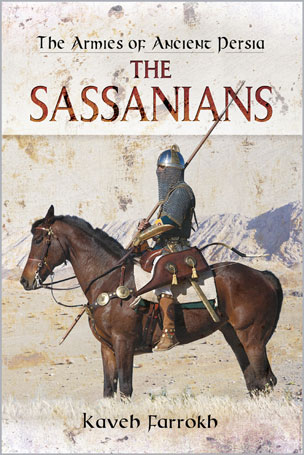
The Sassanians
Kaveh Farrokh
#Armies
#Ancient_Persia
#Sassanians
"...a major work of scholarship that is long overdue." ― HistoryNet
Throughout most of the classical period, Persia was one of the great superpowers, placing a limit on the expansion of Western powers. It was the most formidable rival to the Roman empire for centuries, until Persia, by then under the Sassanians, was overwhelmed by the Islamic conquests in the seventh century AD. Yet, the armies of ancient Persia have received relatively little detailed attention, certainly in comparison to those of Rome. This work is the firsst of three volumes that will form the most comprehensive study of ancient Persian armies available.
The Sassanians, the native Iranian dynasty that ousted their Parthian overlords in AD 226, developed a highly sophisticated army that was able for centuries to hold off all comers. They continued the Parthians’ famous winning combination of swift horse archers with heavily-armored cataphract cavalry, also making much use of war elephants, but Kaveh Farrokh interestingly demonstrates that their oft-maligned infantry has been much underestimated.
The author, born in Athens, Greece, and expert in ancient Persian languages and military history, has been researching the military history and technology of Persia for a quarter of a century. He draws on the latest research and new archaeological evidence, focusing on the organization, equipment and tactics of the armies that dominated the ancient Middle East for so long.
Table of Contents
1. Martial Ardour, Origins and Missions of the Spah
2. Organization: Military Titles and Recruitment
3. Military Reforms of the Sixth Century CE
4. Military Training, Polo, the Hunt, and Military Music
5. Archery
6. The Savaran
7. Infantry, Auxiliary Contingents and Naval Forces
8. Preparations for War
9. Tactics and Strategies along the Roman and Caucasian Frontiers
10. Logistics and Support
Plate section
11. Post-Battle Scenarios and War Diplomacy
12. The Spah in Central Asia: Warfare, Military Developments and Tactics
13. Military Architecture
14. Siege Operations
15. Sassanian Military Culture
16. Military Weaknesses of the Spah
17. The Fall of the Spah and the Empire
18. Post-Sassanian Resistance and Rebellion against the Caliphate
19. Legacy
"The book is well researched, edited, organized and written [...] the result is a major work of scholarship that is long overdue."
HistoryNet
“[A] seminal work of original scholarship and highly recommended.”
Midwest Book Review
Kaveh Farrokh, born in Athens, Greece and expert in ancient Persian languages and military history, has been researching the military history and technology of Persia for a quarter of a century. He obtained his PhD in 2001 from the University of British Columbia, where he is now a lecturer. He is also Head of the Department of Traditions and Cultural History of the Waalm School of Cultural Diplomacy. He has written three previous books on Persian military history. The second, Shadows in the Desert: Ancient Persia at War (Osprey, 2007) has been translated into Russian and Persian, received the Best History Book Award of 2008 and was cited as among the top 3 history books of 2008 by the Independent Book Publishers Association in the USA.