ثبت نام / ورود
0
ثبت نام / ورود
0
#TensorFlow
#NumPy
#ML
#workflows
#Python
#machine_learning
#data_science
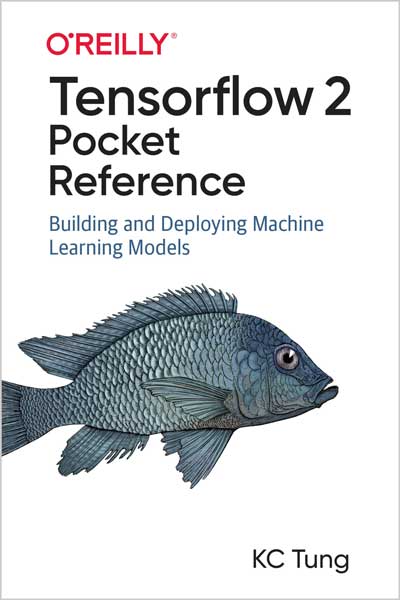
This easy-to-use reference for TensorFlow 2 design patterns in Python will help you make informed decisions for various use cases. Author KC Tung addresses common topics and tasks in enterprise data science and machine learning practices rather than focusing on TensorFlow itself.
When and why would you feed training data as using NumPy or a streaming dataset? How would you set up cross-validations in the training process? How do you leverage a pretrained model using transfer learning? How do you perform hyperparameter tuning? Pick up this pocket reference and reduce the time you spend searching through options for your TensorFlow use cases.
The TensorFlow ecosystem has evolved into many different frameworks to serve a variety of roles and functions. That flexibility is part of the reason for its widespread adoption, but it also complicates the learning curve for data scientists, machine learning (ML) engineers, and other technical stakeholders. There are so many ways to manage TensorFlow models for common tasks—such as data and feature engineering, data ingestions, model selection, training patterns, cross validation against overfitting, and deployment strategies—that the choices can be overwhelming.
This pocket reference will help you make choices about how to do your work with TensorFlow, including how to set up common data science and ML workflows using TensorFlow 2.0 design patterns in Python. Examples describe and demonstrate TensorFlow coding patterns and other tasks you are likely to encounter frequently in the course of your ML project work. You can use it as both a how-to book and a reference.
This book is intended for current and potential ML engineers, data scientists, and enterprise ML solution architects who want to advance their knowledge and experience in reusable patterns and best practices in TensorFlow modeling. Perhaps you’ve already read an introductory TensorFlow book, and you stay up to date with the field of data science generally.
This book assumes that you have hands-on experience using Python (and possibly NumPy, pandas, and JSON libraries) for data engineering, feature engineering routines, and building TensorFlow models. Experience with common data structures such as lists, dictionaries, and NumPy arrays will also be very helpful.