ثبت نام / ورود
0
ثبت نام / ورود
0
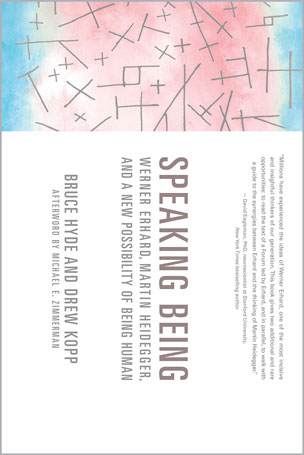
Werner Erhard, Martin Heidegger, and a New Possibility of Being Human
Bruce Hyde, Drew Kopp
#Being
#Werner_Erhard
#Martin_Heidegger
#Human
Speaking Being: Werner Erhard, Martin Heidegger, and a New Possibility of Being Human is an unprecedented study of the ideas and methods developed by the thinker Werner Erhard. In this book, those ideas and methods are revealed by presenting in full an innovative program he developed in the 1980s called The Forum―available in this book as a transcript of an actual course led by Erhard in San Francisco in December of 1989. Since its inception, Erhard’s work has impacted the lives of millions of people throughout the world. Central to this study is a comparative analysis of Erhard’s rhetorical project, The Forum, and the philosophical project of Martin Heidegger. Through this comparative analysis, the authors demonstrate how each thinker’s work sometimes parallels and often illuminates the other.
The dialogue at work in The Forum functions to generate a language which speaks being. That is, The Forum is an instance of what the authors call ontological rhetoric: a technology of communicating what cannot be said in language. Nevertheless, what does get said allows those participating in the dialogue to discover previously unseen aspects of what it currently means to be human. As a primary outcome of such discovery, access to creating a new possibility of what it is to be human is made available.
The purpose of this book is to show how communication of the unspoken realm of language―speaking being―is actually accomplished in The Forum, and to demonstrate how Erhard did it in 1989. Through placing Erhard’s language use next to Heidegger’s thinking―presented in a series of “Sidebars” and “Intervals” alongside The Forum transcript―the authors have made two contributions. They have illuminated the work of two thinkers, who independently developed similar forms of ontological rhetoric while working from very different times and places. Hyde and Kopp have also for the first time made Erhard’s extraordinary form of ontological rhetoric available for a wide range of audiences, from scholars at work within a variety of academic disciplines to anyone interested in exploring the possibility of being for human beings.
From the Afterword:
I regard Speaking Being as an enormously important contribution to understanding Heidegger and Erhard. The latter has received far too little serious academic attention, and this book begins to make up for that lack. Moreover, the book’s analysis of Heidegger’s thought is among the best that I have ever read. I commend this book to all readers without reservation.
Michael E. Zimmerman, Professor Emeritus, University of Colorado, Boulder
Table of Contents
Day One: Session One
Talking about Being
Dasein
Two Theses
Ontological Dialogue
Being-in-the-World: Being-in 20 Mood
Interval: Hints: Ontological Distinctions
Day One: Session Two
Philosophy as Rhetorical Evocation
Getting It and Losing It
Authenticity
Interval: Dasein: Meaning and Mineness
Day One: Session Three
Interval: Yankelovich Study Results
Day One: Session Four
Concern
Already Always Listening
Interval: Jargon 78
Day One: Session Five
End of Day One Interval: Refl exion: The Cartesian Defi ciency
Day Two: Session One
Being-in-the-World: Being-With
Giving and Refl exion
The They-Self
Interval: Hermeneutic Phenomenology
Day Two: Session Two
Thinking
Heidegger’s Pedagogy
Solicitude of a Forum Leader
Interval: The Forgetting of Being, Part One of Eight: Getting and Losing
Day Two: Session Three
Social Moods
Thrownness
Day Two: Session Four
End of Day Two Interval: The Forgetting of Being, Part Two of Eight: Questioning
Day Three: Session One
In-Order-To
Awakening Attunements
Interval: The Forgetting of Being, Part Three of Eight: Heidegger’s Etymologies
Day Three: Session Two
Danger: Attunements and Moods
Interval: The Forgetting of Being, Part Four of Eight: The Pre-Socratics 208
Day Three: Session Three 212 Choice
The Violence of Meaning
The Same
God
Interval: The Forgetting of Being, Part Five of Eight: Physis
Day Three: Session Four
Waiting for the Leap
A Violent Way
End of Day Three Interval: The Forgetting of Being, Part Six of Eight: Saying Nothing
Day Four: Session One
Being-in-the-World: World
The Uncanny
The Call of Conscience
What is Said When Conscience Calls?
Nothing: Beyond Nihilism
Interval: The Forgetting of Being, Part Seven of Eight: Logos
Day Four: Session Two
The Three Levels of Truth
Primordial Metaphor: Clearing
The Drift 409
“Way of Being” and the “Nature of Being for Human Beings”
Interval: The Forgetting of Being, Part Eight of Eight: The Heart of the Matter
Day Four: Session Three
A Substance Ontology
Event Ontology
Technology
Techne
Enframing
The Oblivion of Oblivion
Transformation as Technology
End of Day Four Interval: Technology of Transformation
Bruce Hyde (PhD, University of Southern California, 1990) was a Professor of Communication Studies at St. Cloud State University until his death on October 13th, 2015 (1941-2015). His primary interests as an educator were with the ontological dimensions of language and communication, and with dialogue as a non-polarized and non-polarizing form of public discourse.
Drew Kopp (PhD, University of Arizona, 2009) is an Associate Professor of Writing Arts at Rowan University. His research interests focus on the theory and history of rhetorical pedagogies, and he has published articles in journals in the field of rhetoric and writing studies, including Rhetoric Review (2013), and JAC: Rhetoric, Writing, Culture, Politics (2012). He also contributed a chapter to the edited collection Disrupting Pedagogies in the Knowledge Society (2011).