ثبت نام / ورود
0
ثبت نام / ورود
0
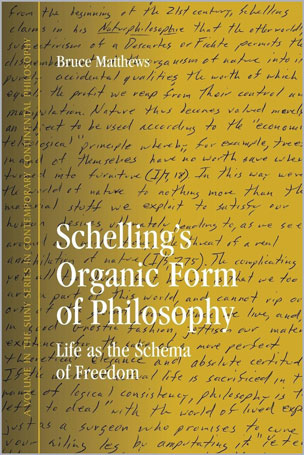
Life as the Schema of Freedom
Bruce Matthews
#Schelling
#Philosophy
#Life
#Freedom
The life and ideas of F.W.J. Schelling are often overlooked in favor of the more familiar Kant, Fichte, or Hegel. What these three lack, however, is Schelling's evolving view of philosophy. Where others saw the possibility for a single, unflinching system of thought, Schelling was unafraid to question the foundations of his own ideas. In this book, Bruce Matthews argues that the organic view of philosophy is the fundamental idea behind Schelling's thought. Focusing in particular on Schelling's early writings, especially on Plato and Kant, Matthews explores Schelling's idea that any philosophical system must be perspectival and formed by each individual student of philosophy, providing a unique new understanding to an important and often overlooked figure in the history of philosophy.
Table of Contents
Chapter 1. Life as the Schema of Freedom: Schelling's Organic Form of Philosophy
Chapter 2. Beginnings: Theosophy and Nature Divine
Chapter 3. The Question of Systematic Unity
Chapter 4. The Timaeus Commentary
Chapter 5. On the Possibility of a Form of All Philosophy: The Form Essay
Chapter 6. Freedom and the Construction of Philosophy
Appendix. "Eulogy Sung at Hahn's Grave"
Bruce Matthews is Associate Professor of Philosophy at Bard High School Early College. He is translator of Schelling's The Grounding of Positive Philosophy: The Berlin Lectures, also published by SUNY Press.
Bruce Matthews is Associate Professor of Philosophy at Bard High School Early College. He is translator of Schelling’s The Grounding of Positive Philosophy: The Berlin Lectures, also published by SUNY Press.