ثبت نام / ورود
0
ثبت نام / ورود
0
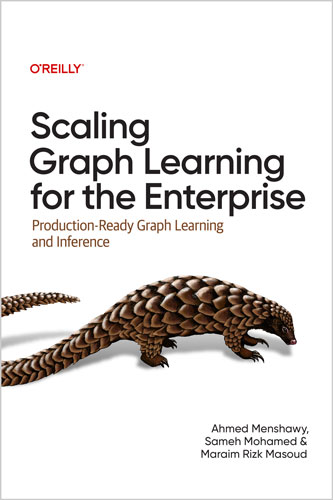
Production-Ready Graph Learning and Inference
Ahmed Menshawy, Sameh Mohamed, and Maraim Rizk Masoud
#Graph
#PyGraf
#AI
#LLM
#Network
🔍 چالشهای اصلی مرتبط با نمایش و یادگیری گرافهای آماده برای استفاده در محیطهای سازمانی را بررسی کنید.
با این راهنمای عملی، دانشمندان داده، مهندسان یادگیری ماشین و متخصصین میآموزند که چگونه یک خط لوله یادگیری گراف End-to-End (E2E) بسازند. شما چالشهای اصلی در هر مرحله از این خط لوله، از دریافت دادهها و نمایش آنها تا استنتاج بلادرنگ و بازآموزی از طریق حلقه بازخورد، را خواهید کاوش کرد.
📊 بر اساس تجربیات نویسندگان در ساخت خطوط لوله یادگیری گراف مقیاسپذیر و آماده برای تولید، این کتاب شما را از طریق فرآیند ساخت سیستمهای یادگیری گراف قوی در دنیای گرافهای پویا و در حال تغییر راهنمایی میکند.
🚀 اهمیت یادگیری گراف برای تقویت برنامههای سازمانی را درک کنید.
🔧 چالشهای توسعه و استقرار خطوط لوله یادگیری گراف و استنتاج آماده برای استفاده در محیطهای سازمانی را بشناسید.
🔍 از تکنیکهای سنتی و پیشرفته یادگیری گراف برای حل مسائل گراف استفاده کنید.
💻 از PyGraf، یک کتابخانه یادگیری گراف متنباز، استفاده کرده و به آن کمک کنید تا بهترین شیوهها در ساخت برنامههای گرافی گنجانده شود.
🧠 یک الگوریتم یادگیری گراف را با استفاده از دادههای عمومی و نحوی طراحی و پیادهسازی کنید.
🔐 از تکنیکهای حفظ حریم خصوصی در فرآیند یادگیری گراف استفاده کنید.
Tackle the core challenges related to enterprise-ready graph representation and learning. With this hands-on guide, applied data scientists, machine learning engineers, and practitioners will learn how to build an E2E graph learning pipeline. You'll explore core challenges at each pipeline stage, from data acquisition and representation to real-time inference and feedback loop retraining.
Drawing on their experience building scalable and production-ready graph learning pipelines, the authors take you through the process of building robust graph learning systems in a world of dynamic and evolving graphs.
Table of Contents
1. Introduction to Graphs.
2. The Graph Machine Learning Pipeline.
3. Traditional Machine Learning for Graphs.
4. PyGraf: End-to-End Graph Learning and Serving.
5. Graph Neural Networks.
6. Advanced Techniques in Graph Learning.
7. Scalable Graph Neural Networks.
8. Enterprise Applications of Graphs.
9. Privacy-Preserving Graph Learning.
10. Graph Inference and Deployment Strategies.
11. Monitoring and Feedback Loops.
12. Future Trends: Graph Learning and LLMs.
About the Author
Ahmed Menshawy is the Vice President of AI Engineering at Mastercard's Cyber and Intelligence. In this role, he leads the AI Engineering team, driving the development and operationalization of AI products and addressing the broad range of challenges and technical debts surrounding ML pipelines. Ahmed also leads a team dedicated to creating a number of AI accelerators and capabilities, including Serving engines and Feature stores, aimed at enhancing various aspects of AI engineering.
Ahmed is the coauthor of Deep Learning with TensorFlow and the author of Deep Learning by Example, focusing on advanced topics in deep learning.
Sameh is an expert in machine learning and health informatics. He has more than a decade of both academic and industrial experience in machine learning and artificial intelligence solutions. He obtained his PhD from the University of Galway, where he did research on machine learning on graphs and its applications in biomedical applications and a master's degree in cardiovascular intervention medicine.
He later worked for Mastercard, Carelon, and Microsoft in technical leadership roles where he built machine learning powered solutions in the domains of finance, healthcare insurance, and content generation. His contributions are mainly focused on the topics of representation learning, natural language processing, and health informatics.
Maraim Rizk Masoud is a leading machine learning engineer at Mastercard's Cyber and Intelligence division, concurrently serving as an AI researcher. With a diverse background spanning both industry and academia, Maraim has delved into various AI domains, including natural language processing and AI governance. She holds an MSc in Machine Learning from Imperial College London and an MEng from the University of Southampton.