ثبت نام / ورود
0
ثبت نام / ورود
0
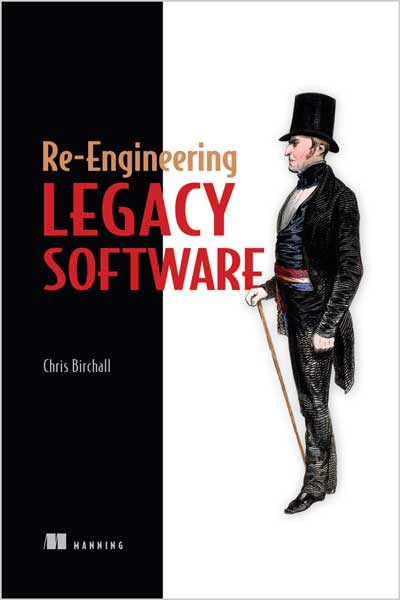
Chris Birchall
#Engineering
#Refactoring
#Java
As a developer, you may inherit projects built on existing codebases with design patterns, usage assumptions, infrastructure, and tooling from another time and another team. Fortunately, there are ways to breathe new life into legacy projects so you can maintain, improve, and scale them without fighting their limitations.
About the Book
Re-Engineering Legacy Software is an experience-driven guide to revitalizing inherited projects. It covers refactoring, quality metrics, toolchain and workflow, continuous integration, infrastructure automation, and organizational culture. You'll learn techniques for introducing dependency injection for code modularity, quantitatively measuring quality, and automating infrastructure. You'll also develop practical processes for deciding whether to rewrite or refactor, organizing teams, and convincing management that quality matters. Core topics include deciphering and modularizing awkward code structures, integrating and automating tests, replacing outdated build systems, and using tools like Vagrant and Ansible for infrastructure automation.
What's Inside
About the Reader
This book is written for developers and team leads comfortable with an OO language like Java or C#.
Table of Contents
PART 1 GETTING STARTED
Understanding the challenges of legacy projects
Finding your starting point
PART 2 REFACTORING TO IMPROVE THE CODEBASE
Preparing to refactor
Refactoring
Re-architecting
The Big Rewrite
PART 3 BEYOND REFACTORING—IMPROVING PROJECT WORKFLOWAND INFRASTRUCTURE
Automating the development environment
Extending automation to test, staging, and production environments
Modernizing the development, building, and deployment of legacy software
Stop writing legacy code!
About the Author
Chris Birchall is a backend developer at M3 in Tokyo, working on Japan's largest medical portal site. Previously he has worked on a wide range of projects including high-performance log management software, natural language analysis tools and numerous mobile sites. He is an active member of the Tokyo Scala community and an active open source contributor. He earned a degree in Computer Science from the University of Cambridge.