ثبت نام / ورود
0
ثبت نام / ورود
0
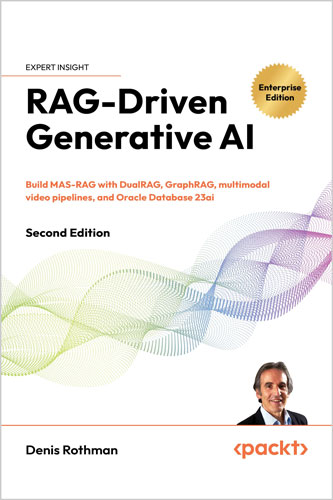
Build MAS-RAG with DualRAG, GraphRAG, multimodal video pipelines, and Oracle Database 23ai
Denis Rothman
#RAG
#AI
#Generative_AI
#MLOps
#OpenAI
#Deep_Lake
#Oracle
#Spatial-RAG
#GraphRAG
#SQL
🤖 ساخت سیستمهای MAS-RAG (سیستمهای چندعامله برای RAG) که با استفاده از بازیابی ترکیبی و معماریهای مقیاسپذیر برای محیطهای عملیاتی، روی دادههای واقعی استدلال میکنند.
🔹 تسلط بر DualRAG با ترکیب جستجوی برداری و فیلترینگ SQL روی دادههای ساختاریافته سازمانی.
🔹 پیادهسازی GraphRAG ،Spatial-RAG و جستجوی برداری به صورت Native در پایگاهداده Oracle 23ai.
🔹 ساخت پایپلاینهای ویدیویی چندوجهی (Multimodal) با حلقههای بازخورد انسانی و مدلهای فینتیون شده.
💡 دیگه وقتش رسیده که جابجا کردن داده به سمت هوش مصنوعی را متوقف کنید. این ویرایش دوم، یک شیفت معماری انقلابی را تعریف میکند: آوردن هوش مصنوعی به سمت داده.
🏢 با استفاده از Oracle Database 23ai به عنوان یک موتور همگرا در این کتاب، شما سیستمهای هوش مصنوعی حاکمیتی (Sovereign AI) را طراحی میکنید که پراکندگی، تاخیر و ریسکهای امنیتی وحشتناکِ روشهای سنتیِ استخراج داده را از بین میبرند.
🔗 شما با DualRAG کار میکنید؛ سیستمی که معناشناسی برداریِ ساختارنیافته را با حقیقتِ قطعیِ بازیابیهای ساختاریافته SQL، گراف و دادههای مکانی (Spatial) سینک میکند.
🧠 این کار به سیستمهای شما اجازه میدهد به جای حدسهای احتمالی، بر اساس دادههای تایید شده سازمانی استدلال کنند و جلوی توهمات هوش مصنوعی را از همان منبع اصلی بگیرید.
🤖 با فراتر رفتن از خطلولههای ساده، شما سیستمهای MAS-RAG (سیستمهای چندعامله برای RAG) را میسازید که در آن Agentهای خودمختار در جریانهای کاری بازیابی ترکیبی، پایپلاینهای ویدیویی چندوجهی و ساختارهای دانشی مبتنی بر گراف با هم هماهنگ میشوند.
🛠️ این بلوپرینتها که مخصوص دولوپرها و معمارها طراحی شدهاند، سیلوهای دادهی مجزا را به یک موتور واحد برای هوش سازمانی خودمختار تبدیل میکنند که با RLHF و فینتیونینگ مدل به خوبی اسکیل میشود.
🎓 در پایان کتاب، شما میتوانید سیستمهای هوش مصنوعی سازمانی را طراحی و دیپلوی کنید که بازیابی، استدلال و دادههای ساختاریافته را برای ساخت اپلیکیشنهای هوش مصنوعی مولدِ قابل اعتماد با هم ترکیب میکنند.
🎯 تزریق مستقیم هوش به درون لایه داده در محیط Oracle Database 23ai.
🛡️ نابود کردن توهمات و مسمومیت دادهها با DualRAG از طریق همگامسازی معناشناسی برداری با SQL ساختاریافته.
🏗️ ساخت پایپلاینهای MAS-RAG با استفاده از Planner، Agent Registry و ایجنتهای حاکمیتی با استاندارد MCP.
🔀 مهندسی یک روتر در زمان استنتاج با استفاده از Hybrid Adaptive RAG برای سوئیچ بین استدلال، بازیابی و بازخورد انسانی.
💠 ترکیب شباهت برداری، Oracle Spatial و پیمایش گراف در یک Hyper-query همگرا.
📹 پیادهسازی Multimodal Video RAG با رجیستریِ شمای نسخهبندی شده و جستجوی برداری روی اسِتهای بصری.
💻 این کتاب برای مهندسان هوش مصنوعی، مهندسان یادگیری ماشین، دانشمندان داده و متخصصان MLOps است که میخواهند سیستمهای Generative AI آماده برای پروداکشن بسازند که به دادههای سازمانی متصل هستند.
📐 همچنین معماران راهکار، مهندسان دیتابیس و توسعهدهندگان نرمافزار که دنبال ادغام LLMها با منابع داده ساختاریافته و ساختارنیافته هستند، از آن استفاده میکنند.
🐍 برای خواندن این کتاب باید با پایتون راحت باشید و مفاهیم پایهای Machine Learning را بدانید.
📊 داشتن تجربه قبلی در زمینه Generative AI یا دیتابیسهای برداری به شما کمک میکند که خیلی سریعتر مطالب را یاد بگیرید.
۱ چرا بازیابیِ تقویتشده با تولید (RAG)؟
۲ Embeddings در ذخیرهسازهای برداری اوراکل
۳ ساخت یک Agent استخدامکننده زنده
۴ ساخت Agentهای سازمانی حاکمیتی
۵ ساخت یک موتور Context جهانی
۶ عملیاتیسازی موتور Context جهانی
۷ توانمندسازی مدلها با فینتیونینگ دادههای RAG
۸ بهبود پرفورمنس RAG با بازخورد انسانی
۹ ساخت یک Agent گفتگویی برای RAG
۱۰ ساخت Agent با Spatial-RAG و GraphRAG
۱۱ اسکیل کردن ورکلودهای هوش مصنوعی با Oracle Exadata
۱۲ معمار دیتابیس خودمختار
🎓 دنیس روتمن فارغالتحصیل دانشگاه سوربن و پاریس-دیدرو است و یکی از اولین سیستمهای Embedding پتنتشده به نام word2matrix و ایجنتهای گفتگوی هوش مصنوعی را طراحی کرده است.
🗨️ او کارش را با تالیف یکی از اولین چتباتهای NLP شناختی شروع کرد که به عنوان مدرس زبان برای شرکتهایی مثل Moet et Chandon استفاده میشد.
🏢 او یک بهینهساز منابع هوش مصنوعی برای IBM و تولیدکنندگان پوشاک تالیف کرده است.
⚙️ همچنین او خالق یک راهکار برنامهریزی و زمانبندی پیشرفته (APS) است که در حال حاضر در کل دنیا
🏢 او یک بهینهساز منابع هوش مصنوعی برای آیبیام (IBM) و تولیدکنندگان پوشاک تالیف کرده است.
⚙️ سپس یک راهکار برنامهنویسی و زمانبندی پیشرفته (APS) نوشت که در سطح جهانی مورد استفاده قرار
Building MAS-RAG (multi-agent AI systems for RAG) that reason over real-world data using hybrid retrieval and scalable architectures for production use.
Stop moving your data to the AI. This second edition defines a revolutionary architectural shift: bringing the AI to the data. By using Oracle Database 23ai as a converged engine in this book, you will architect Sovereign AI systems that eliminate the fragmentation, latency, and massive security risks inherent in traditional data extraction.
You’ll work with DualRAG, synchronizing unstructured vector semantics with the deterministic truth of structured SQL, Graph, and Spatial retrieval. This allows your systems to reason over verified corporate data rather than probabilistic guesses, reducing hallucinations at the source. Moving beyond simple pipelines, you’ll also build MAS-RAG (multi-agent systems for RAG), where autonomous agents coordinate across hybrid retrieval workflows, multimodal video pipelines, and graph-based knowledge structures.
Designed for developers and architects, these blueprints transform disconnected data silos into a unified engine to architect autonomous enterprise intelligence that scales with RLHF and model fine-tuning. By the end of the book, you’ll be able to design and deploy enterprise AI systems that combine retrieval, reasoning, and structured data to build reliable generative AI applications.
This book is for AI engineers, ML engineers, data scientists, and MLOps professionals who want to build production-ready generative AI systems grounded in enterprise data. It will also benefit solutions architects, database engineers, and software developers looking to integrate large language models with structured and unstructured data sources using modern retrieval architectures. Readers should be comfortable with Python and have a basic understanding of machine learning concepts. Prior experience with generative AI or vector databases will help you get the most out of this book.
Denis Rothman graduated from Sorbonne University and Paris-Diderot University, designing one of the very first word2matrix patented embedding and patented AI conversational agents. He began his career authoring one of the first AI cognitive Natural Language Processing (NLP) chatbots applied as an automated language teacher for Moet et Chandon and other companies. He authored an AI resource optimizer for IBM and apparel producers. He then authored an Advanced Planning and Scheduling (APS) solution used worldwide.