ثبت نام / ورود
0
ثبت نام / ورود
0
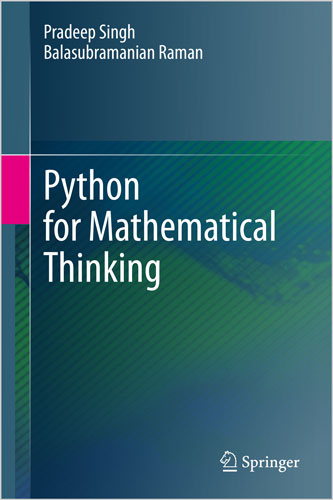
Pradeep Singh, B alasubramanian Raman
#Python
#Mathematic
#Computational_Science
🐍 از اثباتهای ریاضی تا حل مسئله با پایتون
📘 این کتاب مسیری دقیق و درعینحال قابلفهم برای استفاده از پایتون در حل مسائل ریاضی ارائه میده؛ مسیری که از مفاهیم پایه شروع میشه و تا چارچوبهای نظری پیشرفته ادامه پیدا میکنه. با پیوند دادن ریاضیات انتزاعی به اجرای محاسباتی، خواننده را در یک مسیر گامبهگام و منطقی همراهی میکنه.
🧠 تمرکز کتاب بر استدلال ریاضی، محاسبات نمادین و مدلسازی مسائل دنیای واقعی است؛ مهارتهایی که کمک میکنن ساختارهای پیچیده را با وضوح و کارایی تحلیل، شبیهسازی و مصورسازی کنی. این رویکرد، هم توانایی برنامهنویسی را تقویت میکنه و هم شهود ریاضی عمیقتری به وجود میاره.
🔍 اثباتها و برنامهها، دو دریچه برای نگاه کردن به یک ساختار مشترکن؛ این کتاب هر دو را در اختیار میذاره.
⚙️ دانشمند، مهندس یا اقتصاددانی که هم بر استدلال دقیق ریاضی مسلط باشه و هم مهارت طراحی الگوریتم داشته باشه، میتونه سراغ مسئلههایی بره که حل اونها یک نسل پیش حتی قابلتصور نبود. این کتاب برای پرورش همین تسلط دوگانه نوشته شده و بر یک باور تکیه داره: اثباتها و برنامهها، شیوههای رقیب برای توضیح پدیدهها نیستن؛ بلکه نگاههای مکملی به یک ساختار واحد ارائه میدن.
💻 هر مفهوم ابتدا بهشکل یک نتیجه دقیق ریاضی مطرح میشه و با مثالهایی از آنالیز، جبر، هندسه، احتمال یا نظریه محاسبه، انگیزه و کاربرد اون روشن میشه. سپس همان مفهوم با استفاده از NumPy، SymPy و SciPy به کدی تبدیل میشه که با شیوههای متداول و اصولی برنامهنویسی پایتون سازگاره.
🎯 این کتاب برای دانشجویان، پژوهشگران و متخصصان ریاضیات، علم داده، هوش مصنوعی، فیزیک و علوم محاسباتی مناسبه؛ افرادی که میخوان در کنار تقویت مهارت برنامهنویسی، درک عمیقتری از مبانی ریاضی به دست بیارن و میان مفاهیم نظری و آزمایشهای محاسباتی ارتباط برقرار کنن.
📚 مسیر یادگیری و موضوعات کتاب
کتاب با خود پایتون و مبانی ریاضی شروع میشه و سپس، بهصورت مرحلهبهمرحله، موضوعات زیر را پوشش میده:
🧮 در سراسر کتاب، تحلیل پیچیدگی محاسباتی در کنار قضیهها ارائه میشه و ساختارهای داده کارآمد صرفاً معرفی نمیشن؛ بلکه روند استخراج و ساخت اونها هم توضیح داده میشه.
🌱 پیشنیاز کتاب فقط آشنایی با حساب دیفرانسیل و انتگرال مقدماتی و مبانی برنامهنویسیه. هدف اینه که از سطح مبتدی تا پژوهشگر، همراه خواننده باشه: برای دانشجوها پلی میان اثباتهای روی تخته و آزمایشهای قابلاجرا، برای ریاضیدانها بستری قابلگسترش و برای متخصصان عملی، مجموعهای از الگوریتمها که اعتبارشون بر قضیههای ریاضی استواره، نه صرفاً باورهای رایج.
📖 فهرست مطالب
فصل ۱. مقدمه
فصل ۲. مبانی ریاضی در پایتون
فصل ۳. حساب دیفرانسیل و انتگرال با پایتون
فصل ۴. ساختارهای داده و الگوریتمها با پایتون
فصل ۵. احتمال و آمار
فصل ۶. معادلات دیفرانسیل
فصل ۷. ریاضیات گسسته و ترکیبیات
فصل ۸. روشهای عددی
فصل ۹. نظریه آشوب و سیستمهای دینامیکی
فصل ۱۰. علم داده و یادگیری ماشین
فصل ۱۱. موضوعات پیشرفته
👥 درباره نویسندگان
👨🔬 دکتر پرادیپ سینگ، پژوهشگر دوره پسادکتری ملی و پژوهشگر اصلی در آزمایشگاه هوش ماشینیِ دانشکده علوم و مهندسی کامپیوتر مؤسسه فناوری هند در رورکی (IIT Roorkee) است. پژوهشهای او حوزههای یادگیری عمیق هندسی، هوش مصنوعی عصبینمادین و سیستمهای دینامیکی را در بر میگیره و با حمایت مالی بنیاد ملی پژوهش آنوساندهان (ANRF)، وابسته به اداره علم و فناوری هند، انجام میشه.
📄 آثار پژوهشی او در نشریات و رویدادهایی مانند IEEE Transactions، Biomedical Signal Processing and Control، Computers & Geosciences، Journal of Forecasting، ECAI و ACM Multimedia منتشر شده و به گسترش مباحث پژوهشی در زمینه هوش مصنوعی و سیستمهای دینامیکی کمک کرده است.
📚 او از نویسندگان مشترک کتابهایی مانند «یادگیری عمیق از دریچه تانسورها» (Deep Learning Through the Prism of Tensors)، «هندسه هوش: مبانی شبکههای ترنسفورمر» (The Geometry of Intelligence: Foundations of Transformer Networks) و «یادگیری ماشین و هوش مصنوعی» (Machine Learning and Artificial Intelligence) است.
🎓 دکتر سینگ مدرک دکتری خود را در سال ۲۰۲۲ و مدرک کارشناسی ارشدش را با تخصص در سیستمهای نمادین از IIT Delhi دریافت کرده است. او همچنین مدرک کارشناسی علم داده از IIT Madras داره.
🏅 از افتخارات او میشه به بورسیههای کارشناسی ارشد، دکتری و پسادکتری هیئت ملی ریاضیات عالی (NBHM)، اعطاشده از سوی اداره انرژی اتمی هند، اشاره کرد. در سال ۲۰۱۹ نیز یکی از تنها دو پژوهشگر در سراسر هند بود که بورسیه دکتر شیاما پراساد موکرجی (SPM) در رشته ریاضیات را از شورای پژوهشهای علمی و صنعتی هند (CSIR) دریافت کردن.
👨🏫 دکتر بالاسوبرامانیان رامان، عضو ارشد IEEE، استاد با مرتبه HAG و رئیس دانشکده علوم و مهندسی کامپیوتر در مؤسسه فناوری هند در رورکی (IIT Roorkee) است. او همزمان در مدرسه علم داده و هوش مصنوعی خانواده مهتا نیز سمت دانشگاهی مشترک داره. از سال ۲۰۲۲ تا ۲۰۲۵ هم دارنده کرسی استادی iHUB Divyasampark بوده است.
🎓 دکتر رامان مدرک دکتری خود را در سال ۲۰۰۱ از IIT Madras دریافت کرد. پژوهشهای او در زمینه یادگیری ماشین، بینایی کامپیوتر، پردازش تصویر و ویدئو و بازشناسی الگو، به انتشار بیش از ۲۵۰ اثر علمی داوریشده منجر شده است.
🌍 او دورههای پسادکتری و فرصتهای حضور دانشگاهی بهعنوان پژوهشگر یا استاد مدعو را در دانشگاه راتگرز، دانشگاه میزوری–کلمبیا، دانشگاه متروپولیتن اوساکا، دانشگاه کرتین و دانشگاه سایبرجایا گذرانده است. همچنین راهنمایی چندین پژوهشگر دوره دکتری را بر عهده داشته است.
📚 دکتر رامان از نویسندگان مشترک کتابهای «یادگیری عمیق از دریچه تانسورها» (Deep Learning Through the Prism of Tensors، انتشارات Springer Nature، سال ۲۰۲۴)، «هندسه هوش: مبانی شبکههای ترنسفورمر در یادگیری عمیق» (The Geometry of Intelligence: Foundations of Transformer Networks in Deep Learning، انتشارات Springer Nature، سال ۲۰۲۵) و «هوش مصنوعی و یادگیری ماشین» (Artificial Intelligence and Machine Learning، سال ۲۰۲۵) است.
🏆 افتخارات او شامل بورسیه DST BOYSCAST، دو جایزه استاد برجسته IIT Roorkee، جایزه رامکومار برای آموزش و پژوهش برجسته و جایزه مربی ICPC میشه. جایزه اخیر به پاس قرار گرفتن تیمهای تحت هدایت او در میان ۵۰ تیم برتر فینال جهانی ACM ICPC به او اعطا شده است.
This book offers a rigorous yet approachable pathway to applying Python for mathematical problem-solving, spanning foundational concepts to advanced theoretical frameworks. It bridges the gap between abstract mathematics and computational execution, guiding readers through a logically structured, step-by-step journey. Emphasizing mathematical reasoning, symbolic computation, and real-world problem modeling, it equips readers to analyze, simulate, and visualize complex structures with clarity and efficiency. Ideal for students, researchers, and professionals in Mathematics, Data Science, AI, Physics, and Computational Science, it cultivates both programming skill and deep mathematical intuition.
Proofs and programs are two lenses on the same structure; this book gives you both.
The scientist, engineer, or economist who commands both rigorous mathematical reasoning and algorithmic craftsmanship can tackle problems that were inconceivable a generation ago. This book is written to cultivate that dual fluency, and it rests on one conviction: proofs and programs are not competing modes of explanation but complementary lenses on the same structure. Each concept is first stated as a mathematically precise result, motivated by examples from analysis, algebra, geometry, probability, or the theory of computation, and then translated into idiomatic Python using NumPy, SymPy, and SciPy.
The book begins with Python itself and the mathematical foundations, then climbs in steady strata:
Computational complexity analysis accompanies the theorems throughout, and efficient data structures are derived, not merely quoted. The book assumes only elementary calculus and basic programming and aims to be a companion from novice to researcher: a bridge between chalkboard proofs and executable experiments for students, an extensible platform for mathematicians, and algorithms certified by theorem, not folklore, for practitioners.
Table of Contents
1. Introduction
2. Mathematical Foundations in Python
3. Calculus with Python
4. Data Structures and Algorithms with Python
5. Probability and Statistics
6. Differential Equations
7. Discrete Mathematics and Combinatorics
8. Numerical Methods
9. Chaos Theory and Dynamical Systems
10. Data Science and Machine Learning
11. Advanced Topics
About the Author
Dr. Pradeep Singh is a National Post-Doctoral Fellow and Principal Investigator at the Machine Intelligence Lab, Department of Computer Science and Engineering at the Indian Institute of Technology Roorkee (IIT) Roorkee. His research spans Geometric Deep Learning, Neuro-symbolic AI, and Dynamical Systems, funded by the Anusandhan National Research Foundation (ANRF), Department of Science and Technology, India. His research has appeared in IEEE Transactions, Biomedical Signal Processing and Control, Computers & Geosciences, Journal of Forecasting, ECAI and ACM Multimedia, contributing to the wider dialogue in AI and dynamical-systems research. He has co-authored books such as "Deep Learning Through the Prism of Tensors", "The Geometry of Intelligence: Foundations of Transformer Networks", and "Machine Learning and Artificial Intelligence". He earned his Ph.D. (2022) and Master’s degree from IIT Delhi, specializing in Symbolic Systems, and a Bachelor’s degree in Data Science from IIT Madras. Dr. Singh has received several awards, including the National Board for Higher Mathematics (NBHM) Master’s, Doctoral, and Post-Doctoral Fellowships awarded by the Department of Atomic Energy, India. In 2019, he was one of only two researchers nationwide to receive the Dr Shyama Prasad Mukherjee (SPM) Fellowship in Mathematics from CSIR, India.
Dr. Balasubramanian Raman (Senior Member, IEEE) is Professor (HAG) and Head of the Department of Computer Science & Engineering at the Indian Institute of Technology (IIT) Roorkee, where he also holds a joint appointment with the Mehta Family School of Data Science & AI. He served as the iHUB Divyasampark Chair Professor from 2022 to 2025. Dr. Raman earned his Ph.D. from IIT Madras (2001). His research spanning machine learning, computer vision, image/video processing, and pattern recognition—has produced more than 250 peer-reviewed publications. He has undertaken post-doctoral and visiting appointments at Rutgers University, the University of Missouri–Columbia, Osaka Metropolitan University, Curtin University, and the University of Cyberjaya. He has also supervised several Ph.D. scholars. Dr. Raman has co-authored books such as Deep Learning Through the Prism of Tensors (Springer Nature, 2024), The Geometry of Intelligence: Foundations of Transformer Networks in Deep Learning (Springer Nature, 2025), and Artificial Intelligence and Machine Learning (2025). His honours include the DST BOYSCAST Fellowship, two IIT Roorkee Outstanding Teacher Awards, the Ramkumar Prize for Outstanding Teaching and Research, and the ICPC Coach Award, which recognised his teams’ top-50 finishes at the ACM ICPC World Finals.