ثبت نام / ورود
0
ثبت نام / ورود
0
Noel Rappin, Dave Thomas
#Ruby
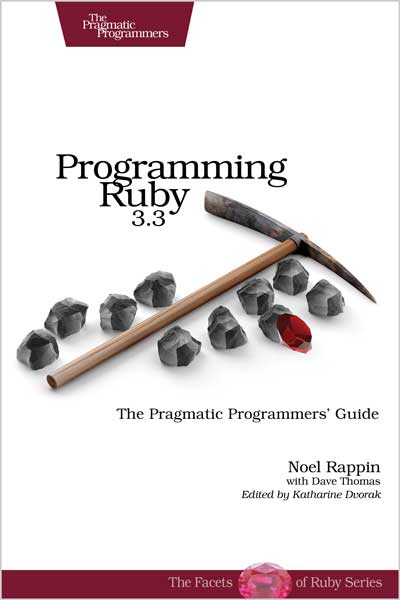
Ruby is one of the most important programming languages in use for web development. It powers the Rails framework, which is the backing of some of the most important sites on the web. The Pickaxe Book, named for the tool on the cover, is the definitive reference on Ruby, a highly-regarded, fully object-oriented programming language. This updated edition is a comprehensive reference on the language itself, with a tutorial on the most important features of Ruby - including pattern matching and Ractors - and describes the language through Ruby 3.3.
Would you like to go from first idea to working code much, much faster? Do you currently spend more time satisfying the compiler instead of your clients or end users? Are you frustrated with demanding languages that seem to get in your way instead of helping you get the work done? Are you using Rails and want to dig deeper into the underlying Ruby language? If so, then we've got a language and book for you!
Ruby is a fully object-oriented language. The combination of the power of a pure object-oriented language with the convenience of a scripting language makes Ruby a favorite tool of programmers that want to get things done quickly and cleanly.
This comprehensive reference manual for Ruby includes a description of the most important standard library modules, built-in classes, and modules. It also includes all the new and changed syntax and semantics introduced through Ruby 3.3, including pattern matching and Ractors, and describes the language through Ruby 3.3.
Table of Contents
Part I-Facets of Ruby
1. Getting Started
2. Ruby.new
3. Classes, Objects, and Variables
4. Collections, Blocks, and Iterators
5. More about Methods
6. Sharing Functionality: Inheritance, Modules, and Mixins
7. Basic Types: Numbers, Strings, and Ranges
8. Regular Expressions
9. Expressions
10. Exceptions
11. Basic Input and Output
12. Threads, Fibers, and Ractors
13. Testing Ruby Code
Part II—Ruby in Its Setting
14. Ruby from the Command Line
15. Ruby Gems
16. Interactive Ruby
17. Debugging Ruby
18. Typed Ruby
19. Documenting Ruby
Part III-Ruby Crystallized
20. Ruby and the Web
21. Ruby Style
22. The Ruby Object Model and Metaprogramming
23. Reflection and Object Space
Part IV-Ruby Language Reference
24. Language Reference: Literal Types and Expressions
25. Language Reference: Objects and Classes
Part V-Ruby Library Reference
26. Library Reference: Core Data Types
27. Library Reference: Ruby's Object Model
28. Library Reference: Enumerators and Containers
29. Library Reference: Input, Output, Files, and Formats
30. Library Reference: Ruby on Ruby
Part VI-Appendixes
A1. Troubleshooting Ruby
A2. I Can't Look It Up!
A3. Command-Line Basics
A4. Ruby Runtimes
A5. Ruby Changes
What You Need:
This book assumes you have a basic understanding of object-oriented programming.
In general, Ruby programmers tend to favor the the command line for running their code, and they tend to use text editors rather than IDEs.
Ruby runs on Windows, Linux, and MacOS.
About the Author
Noel Rappin is a Staff Software Engineer at Chime Financial. He is the author of multiple technical books including Rails 5 Test Prescriptions and Modern Front End Development With Rails, Second Edition,, and was the host of the Tech Done Right Podcast. Follow Noel on Twitter @noelrap, and online at noel.rappin.com.
Dave Thomas, is a cornerstone of the Ruby community, and is personally responsible for many of its innovative directions and initiatives. He is one of the founders of the Pragmatic Programmers and the Pragmatic Bookshelf.