ثبت نام / ورود
0
ثبت نام / ورود
0
Roger Lewin, Robert A. Foley
#Evolution
#morphology
#molecules
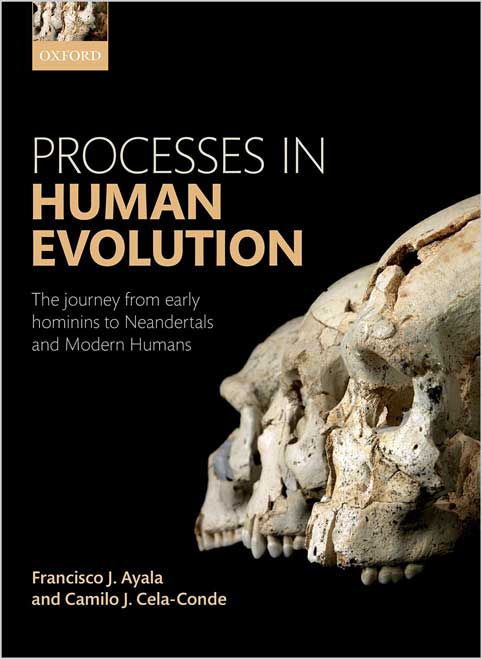
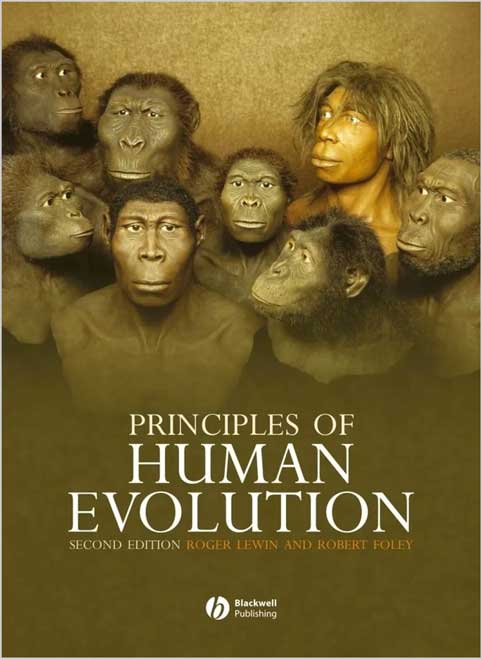
Principles of Human Evolution presents an in-depth introduction to paleoanthropology and the study of human evolution. Focusing on the fundamentals of evolutionary theory and how these apply to ecological, molecular genetic, paleontological and archeological approaches to important questions in the field, this timely textbook will help students gain a perspective on human evolution in the context of modern biological thinking.
The second edition of this successful text features the addition of Robert Foley, a leading researcher in Human Evolutionary Studies, to the writing team. Strong emphasis on evolutionary theory, ecology and behavior and scores of new examples reflect the latest evolutionary theories and recent archaeological finds. More than a simple update, the new edition is organized by issue rather than chronology, integrating behavior, adaptation and anatomy. A new design and new figure references make this edition more accessible for students and instructors.
Table of Contents
Part 1 The framework of human evolution
Chapter 1 the growth of the evolutionary perspective
Chapter 2 The principles of evolutionary theory
Chapter 3 Pattern and process in evolution
Chapter 4 The geological context
Chapter 5 The systematic context
Chapter 6 Human evolution in comparative perspective
Chapter 7 Reconstructing behavior
Part 2 Early hominin evolution
Chapter 8 Apes, hominins, and humans: morphology, molecules, and fossils
Chapter 9 Searching for the first hominins
Chapter 10 The apelike hominins
Chapter 12 Behavior and evolution of early hominins
Chapter 13 Africa and beyond: the evolution of Homo
Part 3 Later hominin evolution
Chapter 14 The origin of modern humans: background and fossil evidence
Chapter 15 The origin of modern humans: genetic evidence
Chapter 16 The origin of modern humans: archeology, behavior, and evolutionary process
Chapter 17 Evolution of the brain, intelligence, and culture
Chapter 18 Language and symbolism
Chapter 19 New worlds, old worlds
Review from Times Higher Education Supplement, February 2004
-Alan Bilsborough, University of Durham
Human evolutionary studies now encompasses such wide-ranging subject matter that accounts confined to simple narrations of the fossil record no longer suffice, while the pace of discovery creates a continuing demand for clear, balanced introductions to the subject. This book's authors - an expert science communicator and a researcher who has had a major influence in broadening theoretical perspectives on human evolution - form a dream team to guide us through the subject's complexities.
This much-expanded second edition of an established text differs from its predecessor and virtually every other treatment in its range and its emphasis on principles, whether of evolutionary theory, phylogenetics, behaviour, ecology or comparative frameworks. Whereas most accounts condense such fundamentals into an abbreviated introduction before homing in on the hominid fossil record, this book dedicates some 200 pages, or about 40 per cent of the text, to the subject. The approach is to view human evolution as exemplifying general evolutionary forces and processes that impact on hominids as on other species, not to treat human evolution as a one-off case for which issues of evolutionary dynamics, adaptation, ecology and so on have little, if any, relevance.
The book is impressively broad in scope, well organised and clearly written. Key issues are flagged up, with questions alongside the text to serve as prompts. Alternative interpretations are accurately summarised, with a balanced commentary and sufficient facts to indicate each argument's basics without overloading detail. Each chapter ends with a "Beyond the facts" box summarising a current issue and its underlying concepts to stimulate further thought.
There are reasonable illustrations of important fossil specimens and excellent diagrams that greatly clarify issues of theory and interpretation. An associated website promises further resources.
I would have welcomed rather more coverage of the fossil evidence; on the other hand, there is a very clear pr?cis of genetic data bearing on modern human origins, and an excellent account of cognitive and behavioural aspects of human evolution.
The book is aimed at the US market but will find many takers this side of the Atlantic among anthropology, archaeology and evolutionary biology students. Inevitably, some aspects will quickly be overtaken by new discoveries. The website, if developed, will help here, but minor obsolescences matter little compared with the book's great strength, which is to provide readers with an accessible, secure and comprehensive conceptual framework for human evolution, within which they can make sense of new developments.
Alan Bilsborough, University of Durham, Times Higher Education Supplement, February 2004
Roger Lewin is an Associate of the Peabody Museum at Harvard University. He is the author of half a dozen books on human origin research, three of which he co-authored with world-famous anthropologist Richard Leakey, as well as the author of the prize-winning Bones of Contention.
Robert A. Foley is the Director of the Leverhulme Centre for Human Evolutionary Studies at the University of Cambridge, and a fellow of King’s College. He is the author of numerous articles and books on human evolution, including Another Unique Species (1987) and Humans before Humanity (1995). His research has focused on the links between human evolution and ecological and evolutionary mechanisms.