ثبت نام / ورود
0
ثبت نام / ورود
0
N. Gregory Mankiw
#Economics
#Economist
#Monopoly
#Monopolistic
#Oligopoly
#Macroeconomics
#Microeconomics
#Finance
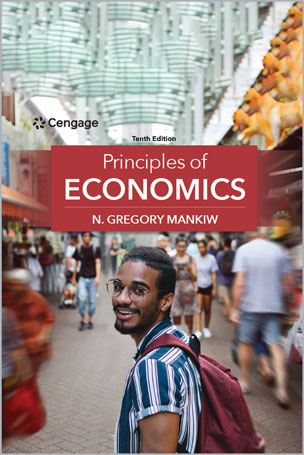
Gain a strong foundation in economics with today's most popular economics text, trusted by students like you worldwide -- Mankiw’s PRINCIPLES OF ECONOMICS, 10E. Using a clear, inviting writing style, this edition focuses exclusively on content to help you better understand the world and economy in which you live. You become a more astute participant in today's economic environment as you learn the potential and limits of economic policy. The latest examples and learning features clarify and bring economic principles to life as author Gregory Mankiw puts himself in the position of someone seeing economics for the first time. Dr. Mankiw's goal is to emphasize the material you will find most relevant and interesting as you study economics. MindTap digital resources, Aplia digital homework solution and author videos are also available to help you further master key economic principles.
Table of Contents
Chapter 1: Ten Principles of Economics
Chapter 2: Thinking Like an Economist
Appendix Graphing: A Brief Review
Chapter 3: Interdependence and the Gainsfrom Trade
Chapter 4: The Market Forces of Supply and Demand
Chapter 5: Elasticity and Its Application
Chapter 6: Supply. Demand, and Government Policies
Chapter 7: Consumers, Producers, and the Efficiency of Markets
Chapter 8: Application: The Costs of Taxation
Chapter 9: Application: International Trade
Chapter 10: Externalities
Chapter 11: Public Goods and Common Resources
Chapter 12: The Economics of Healthcare
Chapter 13: The Design of the Tax System
Chapter 14: The Costs of Production
Chapter 15: Firms in Competitive Markets
Chapter 16: Monopoly
Chapter 17: Monopolistic Competition
Chapter 18: Oligopoly
Chapter 19: The Markets for the Factors of Production
Chapter 20: Earnings and Discrimination
Chapter 21: Income Inequality and Poverty
Chapter 22: The Theory of Consumer Choice
Chapter 23: Frontiers of Microeconomics
Chapter 24: Measuring a Nation's Income
Chapter 25: Measuring the Cost of Living
Chapter 26: Production and Growth
Chapter 27: Saving, Investment, and the Financial System
Chapter 28: The Basic Tools of Finance
Chapter 29: Unemployment
Chapter 30: The Monetary System
Chapter 31: Money Growth and Inflation
Chapter 32: Open-Economy Macroeconomics: Basic Concepts
Chapter 33: A Macroeconomic Theory of the Open Economy
Chapter 34: Aggregate Demand and Aggregate Supply
Chapter 35: The Influence of Monetary and Fiscal Policy on Aggregate Demand
Chapter 36: The Short-Run Trade-Off between Inflation and Unemployment
Chapter 37: Six Debates over Macroeconomic Policy
Chapter 38: Appendix: How Economists Use Data
N. Gregory Mankiw is the Robert M. Beren Professor of Economics at Harvard University. For 14 years he taught EC10 Principles, the most popular course at Harvard. Dr. Mankiw studied economics at Princeton University and MIT. He is a prolific writer and a regular participant in academic and policy debates. His research includes work on price adjustment, consumer behavior, financial markets, monetary and fiscal policy and economic growth. Dr. Mankiw's articles have appeared in academic journals such as the American Economic Review, Journal of Political Economy and Quarterly Journal of Economics. His work has also appeared in more widely accessible forums, including The New York Times, The Washington Post, The Wall Street Journal and Fortune. Dr. Mankiw has been a research associate of the National Bureau of Economic Research, an adviser to the Federal Reserve Bank of Boston and the Congressional Budget Office and a member of the ETS test development committee for the advanced placement exam in economics. From 2003 to 2005, Dr. Mankiw served as chairman of the Presidents Council of Economic Advisers.