ثبت نام / ورود
0
ثبت نام / ورود
0
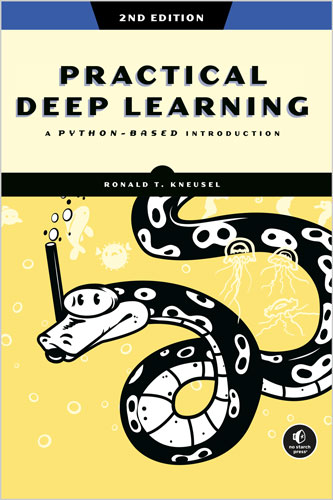
A Python-Based Introduction
Ronald T. Kneusel
#Deep_Learning
#Python
#networks
#Vector_Machine
🔎 یادگیری عمیق بهسادگی
با این ویرایش کاملاً بهروزرسانیشده از Practical Deep Learning، میتوانید بدون غرق شدن در نظریههای پیچیده، وارد دنیای یادگیری عمیق شوید. نویسنده و متخصص هوش مصنوعی رونالد تی. کنیوزل شما را قدمبهقدم همراهی میکند. پس از مرور کوتاهی بر اصول پایه ریاضی و برنامهنویسی، مستقیماً وارد آزمایشهای عملی میشوید و میآموزید که چگونه مدلهای واقعی بسازید؛ از تحلیل تصاویر گرفته تا نوشتار خلاقانه، و در عین حال درک عمیقی از نحوه کار هر تکنیک به دست آورید.
این کتاب برای توسعهدهندگانی که میخواهند هوش مصنوعی را به ابزارهای کاری خود اضافه کنند و برای دانشجویانی که بهدنبال مهارتهای کاربردی در یادگیری ماشین هستند، ایدهآل است.
📘 در این کتاب میآموزید:
هر فصل با تأکید بر تمرین عملی و آزمایش طراحی شده و در نهایت به یک مطالعه موردی ختم میشود: طبقهبندی دادههای صوتی با بهرهگیری از تمام دانستههایتان. برای تمام مباحث، نمونه کدهای آماده و قابلاجرا در GitHub در دسترس شما قرار دارد.
با Practical Deep Learning (ویرایش دوم) مهارت و اعتمادبهنفس لازم برای ساخت سیستمهای واقعی هوش مصنوعی که مشکلات واقعی را حل میکنند، به دست خواهید آورد.
✨ ویژگیهای جدید این ویرایش:
Deep learning made simple.
Dip into deep learning without drowning in theory with this fully updated edition of Practical Deep Learning from experienced author and AI expert Ronald T. Kneusel.
After a brief review of basic math and coding principles, you’ll dive into hands-on experiments and learn to build working models for everything from image analysis to creative writing, and gain a thorough understanding of how each technique works under the hood. Whether you’re a developer looking to add AI to your toolkit or a student seeking practical machine learning skills, this book will teach you:
Each chapter emphasizes practical skill development and experimentation, building to a case study that incorporates everything you’ve learned to classify audio recordings. Examples of working code you can easily run and modify are provided, and all code is freely available on GitHub. With Practical Deep Learning, second edition, you’ll gain the skills and confidence you need to build real AI systems that solve real problems.
New to this edition: Material on computer vision, fine-tuning and transfer learning, localization, self-supervised learning, generative AI for novel image creation, and large language models for in-context learning, semantic search, and retrieval-augmented generation (RAG).
Table of Contents
Chapter 0: Environment and Mathematical Preliminaries
PART I: DATA IS EVERYTHING
Chapter 1: It’s All About the Data
Chapter 2: Building the Datasets
PART II: CLASSICAL MACHINE LEARNING
Chapter 3: Introduction to Machine Learning
Chapter 4: Experiments with Classical Models
PART III: NEURAL NETWORKS
Chapter 5: Introduction to Neural Networks
Chapter 6: Training a Neural Network
Chapter 7: Experiments with Neural Networks
Chapter 8: Evaluating Models
PART IV: CONVOLUTIONAL NEURAL NETWORKS
Chapter 9: Introduction to Convolutional Neural Networks
Chapter 10: Experiments with Keras and MNIST
Chapter 11: Experiments with CIFAR-10
Chapter 12: A Case Study: Classifying Audio Samples
PART V: ADVANCED NETWORKS AND GENERATIVE AI
Chapter 13: Advanced CNN Architectures
Chapter 14: Fine-Tuning and Transfer Learning
Chapter 15: From Classification to Localization
Chapter 16: Self-Supervised Learning
Chapter 17: Generative Adversarial Networks
Chapter 18: Large Language Models
Ronald T. Kneusel earned a PhD in machine learning from the University of Colorado, Boulder, and has over 20 years of machine learning experience in industry. Kneusel is also the author of numerous books, including Math for Programming (2025), The Art of Randomness (2024), How AI Works (2023), Strange Code (2022), and Math for Deep Learning (2021), all from No Starch Press.