ثبت نام / ورود
0
ثبت نام / ورود
0
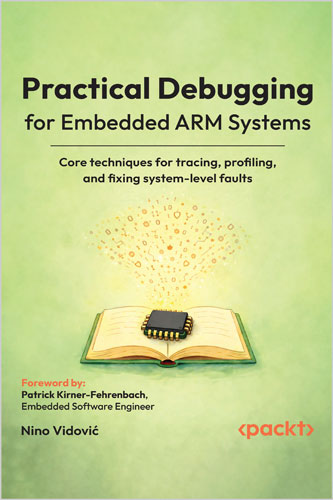
Core techniques for tracing, profiling, and fixing systemlevel faults
Nino Vidović
#ARM
#Embedded_Systems
#RTOS
⚡ این کتاب مثل یک فانوس راهنما برای دیباگ کردن حرفهای توی دنیای سیستمهای جاسازی شده عمل میکنه.
تکنیکهای پیشرفته دیباگ برای سیستمهای ARM Embedded را یاد بگیرید و کشف کنید که چطور با استفاده از ابزارهای حرفهای در سناریوهای واقعی، کدهای فرمور را ردیابی، پروفایل و تحلیل کنید.
🔎 بررسی ابزارهای دیباگ پیشرفته مثل ردیابی سختافزاری (Hardware Tracing) و پروفایل مصرف توان.
🧠 یادگیری تکنیکهایی برای تحلیل بوتلودرها، سیستمعاملهای بلادرنگ (RTOS) و مشکلات حافظه.
🏗️ بهکارگیری گردشکارهای عملی دیباگ بر اساس مثالهای فرمور ARM Cortex-M.
آیا واقعاً دارید از تمام پتانسیل ابزارهای دیباگ سیستمهای جاسازی شده خود استفاده میکنید؟ این راهنمای کاربردی، پیچیدگیهای روشهای معمول را کنار میزند و به شما نشان میدهد که چطور مثل یک مهندس فرمور حرفهای، سیستمهای مبتنی بر ARM را ردیابی، پروفایل و دیباگ کنید.
این کتاب که توسط یک متخصص باسابقه در این صنعت نوشته شده، شما را از طریق سناریوهای دیباگ واقعی با سختافزارهای فیزیکی جلو میبرد. شما از تکنیکهای ضروری گرفته تا موارد پیشرفته مثل تنظیم نقاط توقف (Breakpoints)، تحلیل حافظه، ردیابی سختافزاری، پروفایل توان و آگاهی از RTOS را یاد میگیرید. همچنین با تحلیل کرشهای واقعی، یاد میگیرید چطور مواردی مثل سرریز استک (Stack Overflow)، خطاهای ارتباطی، نشت حافظه و موارد مشابه را شناسایی کنید. 🛠️
شما مثالهای کاربردی روی دیوایسهای ARM Cortex-M را بررسی میکنید که به شما کمک میکند گردشکارهای دیباگ ساختاریافته و بهینهای بسازید. مهارتهایی که اینجا یاد میگیرید را میتوانید به راحتی روی معماری تراشههای دیگر هم پیاده کنید. در نهایت، با درک عمیقی از ابزارهای موجود و اعتمادبهنفس کافی برای حل سختترین باگهای سیستمهای تولیدی، کار را به پایان میرسانید.
⚙️ راهاندازی گردشکارهای دیباگ برای سیستمهای ARM-based.
📡 ردیابی اجرای فرمور با استفاده از ابزارهای سختافزاری.
📊 تحلیل استک، حافظه و ریجیسترها.
🛡️ دیباگ کردن بوتلودرها و اپلیکیشنهای Bare-metal با اعتمادبهنفس کامل.
⚡ شناسایی مشکلات مربوط به توان، وقفهها یا RTOS.
💧 تشخیص نشت حافظه (Memory Leaks).
💥 بهکارگیری تکنیکهای تحلیل کرش در سناریوهای دنیای واقعی.
⏱️ استفاده از ابزارهای ردیابی نمادها به صورت زنده و پروفایل کد.
این کتاب برای توسعهدهندگان سیستمهای جاسازی شده و مهندسان فرموری است که با سیستمهای ARM کار میکنند و میخواهند گردش کار دیباگ خود را ارتقا دهند. 🧑💻 این کتاب فقط یک راهنمای مقدماتی نیست، بلکه یک منبع عملی برای کسانی است که با ساخت و برنامهنویسی فرمور آشنایی دارند. چه در حال دیباگ بوتلودر باشید، چه تحلیل رفتار RTOS یا استفاده از ابزارهای سختافزاری پیشرفته، این کتاب به شما کمک میکند مسیرتان را هموار کنید. 🚀
۱. تاریخچهای کوتاه از دیباگ در سیستمهای جاسازی شده
۲. دیباگ چیست و چرا باید به آن اهمیت بدهید؟
۳. ویژگیهای پایه در دیباگ
۴. ویژگیهای پیشرفته در دیباگ
۵. از تئوری تا عمل
"دیباگ کردن سیستمهای جاسازی شده روی معماری ARM همیشه کاری پیچیده و خستهکننده به نظر میرسید. این کتاب روایت را کاملاً عوض کرده است. این یک راهنمای شفاف، ساختاریافته و عمیقاً کاربردی است که دیباگ در سطح سیستم را ابهامزدایی میکند."
— ماکسیم بلاوال، مدیر بازاریابی اکوسیستم میکروکنترلر در شرکت STMicroelectronics
"این کتاب یک راهنمای قوی برای دیباگ میکروکنترلرها است که خواننده را از اصول اولیه تا ویژگیهای هسته که در کارهای روزمره استفاده میشوند، همراهی میکند. بخش از تئوری تا عمل که تکنیکها را در سناریوهای واقعی پیاده میکند، بسیار ارزشمند است."
— عمار ماهوتبگوویچ، مدیر مهندسی در Semblie
نینو ویدوویچ (Nino Vidović) یک مهندس نرمافزار ارشد و مالک محصول در شرکت SEGGER Microcontroller GmbH است که تخصص ویژهای در سیستمهای جاسازی شده و دیباگ اپلیکیشنهای بلادرنگ دارد. او مدیریت خط محصول J-Trace را بر عهده دارد که برای افزایش دقت و کارایی توسعهدهندگان حیاتی است. نینو مدارک کارشناسی و کارشناسی ارشد خود را در رشته مهندسی میکروسیستمها از دانشگاه فرایبورگ دریافت کرده است. تخصص فنی نینو در کنار اشتیاقش به آموزش، باعث شده تا نسل بعدی مهندسان را برای نوآوری توانمند کند.
Learn advanced debugging techniques for embedded ARM systems and uncover how to trace, profile, and analyze firmware issues using professional tools in real-world scenarios
Are you truly unlocking the full potential of your embedded debugging tools? This hands-on guide cuts through the confusion of common workflows and shows you how to trace, profile, and debug ARM-based systems like a professional firmware engineer.
Written by an industry expert, this book guides you through practical debugging scenarios using real hardware setups. You’ll explore both essential and advanced techniques, from setting breakpoints and analyzing memory to using hardware tracing, power profiling, and RTOS awareness. Through real-world crash analysis, you'll learn how to detect stack overflows, communication errors, memory leaks, and more.
You will explore practical examples based on ARM Cortex-M target devices, which help you build structured and efficient debugging workflows. The learned skills can then be easily applied to other chip architectures as well. You’ll walk away with a clear understanding of the tools available, how to apply them in complex firmware projects, and the confidence to tackle even the most elusive bugs in production systems.
Whether you’re refining your setup or debugging embedded systems at scale, this book will sharpen your skills and elevate your embedded development workflow.
This book is ideal for embedded developers and firmware engineers working with ARM-based systems who want to improve their debugging workflows. It is not just a beginner’s guide, but a practical resource for those already familiar with building and programming embedded firmware. Whether you’re debugging bootloaders, analyzing RTOS behavior, or using advanced hardware tools, this book will help you streamline your workflow and solve complex issues with confidence.
“Debugging embedded systems on Arm architectures has long been perceived as a complex, opaque, and often frustrating and time-consuming task. Practical Debugging for Embedded Arm Systems changes that narrative entirely. This book stands out as a clear, structured, and deeply practical guide that demystifies system-level debugging and this problem-solving endeavor through a carefully crafted, incremental approach. What makes this work particularly compelling is its pedagogy. Each concept is introduced with clarity, then reinforced through progressively richer examples that mirror real-world scenarios. From basic debugging techniques to advanced features, including profiling strategies, you are guided step by step, building both intuition and technical understanding of the numerous tools at their disposal. This is not just a reference manual, it is a learning journey. Whether you are refining your debugging practices or aiming to elevate your understanding of Arm-based systems, this book provides a solid, actionable framework. A must-read for embedded engineers seeking to move from trial-and-error debugging to disciplined, insight-driven problem solving.”
Maxime Belaval, Microcontroller Ecosystem Marketing Manager, STMicroelectronics
“Practical Debugging for Embedded ARM Systems is a strong and practical guide to debugging ARM-based microcontrollers. It takes the reader from the fundamentals of debugging and the realities of embedded debug setups to the core interfaces and features used in day-to-day work.
Beyond the basics, the book explores more advanced techniques such as code instrumentation, hardware tracing, live symbol tracking, and power profiling. A particularly valuable part of the book is the From Theory to Practice chapter, where these techniques are applied to concrete debugging scenarios. The accompanying videos make the material even more accessible, helping readers follow along with the techniques even if they do not have the same hardware used in the examples.
Drawing on his experience at SEGGER, Nino brings both technical depth and practical perspective to the subject. The result is a useful reference for embedded developers who want to build stronger debugging skills and make better use of the tools available to them.”
Amar Mahmutbegovic, Head of Engineering, Semblie
About the Author
Nino Vidović is a senior software engineer and product owner at SEGGER Microcontroller GmbH, specializing in embedded systems and real-time application debugging. He manages the J-Trace product line, crucial for enhancing developers' efficiency and accuracy. Nino earned his Bachelor's and Master's degrees in Microsystems Engineering from the IMTEK Institute at the University of Freiburg and conducted advanced research in MEMS engineering at the Fraunhofer IMS. He also spearheads the SEGGER Educational Partnership Program, bridging academia and industry. Nino's technical expertise is complemented by his dedication to education, driving innovation while empowering the next generation of engineers.