ثبت نام / ورود
0
ثبت نام / ورود
0
Build secure, rootless containers, and integrate them into real DevOps and AI workflows
Gianni Salinetti
#Podman
#DevOps
#Skopeo
#OCI
#CLI
#Docker
#Networking
#Securing
#Kubernetes
#AI
#ML
📦 یاد بگیر چطور کانتینرها رو روی Linux بسازی، مدیریت کنی و Deploy کنی — با Podman، Buildah و Skopeo، همراه با یک رویکرد مدرن برای Kubernetes، systemd و حتی اجرای AI مدلها بهصورت Local
🚀 این کتاب یک راهنمای کاملاً عملی و مدرن برای کار با Container Ecosystem هست؛ جایی که بهجای Docker کلاسیک، با ابزارهای نسل جدید مثل Podman Stack کار میکنی و کنترل کاملتری روی امنیت، اجرا و مدیریت کانتینرها به دست میاری.
⚙️ ویژگیهای کلیدی
🧱 ساخت کانتینر از صفر با Buildah و مدیریت امن Imageها با Skopeo
🔐 سختسازی محیط کانتینری با Rootless Podman، سیاستهای SELinux و Image Signing
☸️ مدیریت منابع Kubernetes و سادهسازی Workflowها با Podman Desktop
🤖 اجرای مدلهای AI/ML بهصورت Local داخل محیط کانتینری با Podman AI Lab
📖 توضیحات کتاب
🐳 کانتینرها نحوه ساخت، Deploy و Scale کردن اپلیکیشنهای مدرن رو کامل تغییر دادن. Podman بهعنوان یک جایگزین امنتر و مدرنتر برای Docker طراحی شده؛ چون برخلاف Docker، بدون Daemon کار میکنه و از اجرای Rootless Container پشتیبانی میکنه.
🧠 این کتاب برای کسانیه که میخوان از Workflowهای قدیمی Docker فاصله بگیرن و به کنترل کامل روی Container Management برسن.
🚀 در مسیر یادگیری این کتاب:
📦 اول با مفاهیم پایه کانتینر و مقایسه دقیق بین Docker vs Podman شروع میکنی
🐳 بعد اولین کانتینر واقعی رو اجرا میکنی و Lifecycle اون رو مدیریت میکنی
🏗️ با Buildah یاد میگیری چطور Imageها رو از صفر بسازی
🔄 با Skopeo Imageها رو بین Registryها جابهجا و بررسی میکنی
🔐 امنیت رو جدی میگیری: از Rootless Execution گرفته تا SELinux و Signed Images
🌐 Networking کانتینرها رو تنظیم میکنی و با ابزارهای Linux Debugging مشکلات رو حل میکنی
⚙️ کانتینرها رو با systemd و حتی Kubernetes یکپارچه میکنی
📊 در نهایت با Podman Desktop همه چیز رو بهصورت گرافیکی مدیریت میکنی
🤖 و در مرحله پیشرفتهتر، Workloadهای AI/ML رو بهصورت Local داخل کانتینر اجرا میکنی
📚 در این کتاب یاد میگیری چطور:
🧱 مفاهیم پایه و تاریخچه Container Technology رو درک کنی
⚖️ تفاوت دقیق بین Podman و Docker رو تحلیل و انتخاب درست انجام بدی
🐳 کانتینرها رو روی Linux اجرا و مدیریت کنی
🏗️ با Buildah کانتینرها رو از صفر بسازی
📦 با Skopeo Imageها رو مدیریت، بررسی و منتقل کنی
🔐 امنیت کانتینرها رو با Rootless Mode و SELinux تقویت کنی
🧪 کانتینرها رو Debug و Monitor کنی با ابزارهای Native Linux
🌐 Networking پیشرفته کانتینرها رو پیادهسازی کنی
☸️ با systemd و Kubernetes ادغامشون کنی
🤖 و در نهایت AI/ML workloadها رو در محیط کانتینری مدیریت کنی
👥 مخاطبان کتاب
💻 توسعهدهندگان Cloud که میخوان اپلیکیشنها رو داخل Container Package کنن
🛠️ System Administratorها که مسئول Deploy و مدیریت زیرساخت هستن
☸️ کسانی که با Kubernetes، Docker و محیطهای Cloud کار کردن و میخوان وارد دنیای Podman بشن
📑 فهرست مطالب
✍️ درباره نویسندگان
👨💻 آلساندرو آرریچیلو یک معمار ارشد راهکار در شرکت Red Hat هست که در حوزه Kubernetes، OpenShift و طراحی سیستمهای Enterprise فعالیت میکنه.
🌍 او بیش از یک دهه تجربه در طراحی سیستمهای پیچیده سازمانی داره و بهطور فعال در جامعه Open Source مشارکت میکنه و در رویدادهایی مثل DevConf.cz سخنرانی داشته.
👨💻 جانی سالینتی یک معمار Cloud و متخصص Cloud-Native در Red Hat هست.
☁️ تخصص اصلی او در حوزههای Automation، Platform Engineering و طراحی زیرساختهای AI در محیطهای مدرن Cloud هست.
🎓 او همچنین مدرس رسمی Red Hat بوده و در حوزههایی مثل Ansible، Kubernetes و OpenShift آموزشهای گستردهای ارائه داده و در رویدادهای صنعتی و وبینارهای بینالمللی سخنرانی میکند.
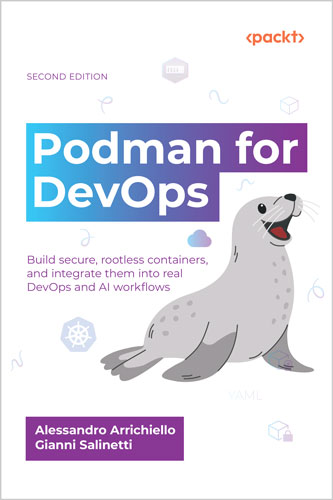
Learn to build, manage, and deploy containers on Linux using Podman, Buildah, and Skopeo, and integrate them with Kubernetes and systemd, while running AI models locally through the Podman Desktop interface
Containers are transforming how modern applications are built, deployed, and scaled. Podman offers a powerful, secure alternative to Docker by eliminating the daemon and embracing rootless container execution. If you're ready to move beyond legacy workflows and gain full control over container management, this practical guide is for you.
You’ll begin with container fundamentals and a side-by-side comparison of Docker and Podman to ease the transition. Then, you'll run your first container, manage its lifecycle, and use Buildah to build images from scratch. Skopeo helps you transfer and inspect images across registries. As you progress, you’ll secure your environment with rootless containers, signed images, and SELinux policies. You’ll also configure container networking, integrate workloads with systemd services, and troubleshoot issues using native Linux tools. The final chapters focus on modern developer workflows, showing how to migrate existing Docker workloads, manage containers and Kubernetes resources visually using Podman Desktop, and leverage Podman AI Lab to experiment with, run, and manage AI/ML models locally in a containerized environment.
By the end of this book, you’ll be able to build, run, and secure containers, automate workflows, and confidently manage deployments across DevOps and AI-powered environments.
The book is for cloud developers looking to learn how to build and package applications inside containers and system administrators who want to deploy, manage, and integrate them with system services and orchestration solutions. This book provides a detailed comparison between Docker and Podman to aid you in learning Podman quickly. Basic Linux skills are assumed. Familiarity with Docker, container concepts, and cloud environments is helpful but not required, as concepts are introduced progressively.
Review
“If you’ve been running containers with Docker for years, this book will quietly make you feel like you’ve been doing it the hard way. Podman for DevOps goes beyond the usual Docker comparison and actually explains the architecture properly. The coverage of migration challenges around Compose and networking is honest rather than optimistic, which I appreciated. The section on running AI/ML workloads locally was unexpected and genuinely useful. The security chapters alone are worth the price. Practical, current, and worth your time.”
Ugo Giordano, Senior Software Engineer at Red Hat
“If you’ve been running containers with Docker for years, this book will quietly make you feel like you’ve been doing it the hard way. Podman for DevOps goes beyond the usual Docker comparison and actually explains the architecture properly. The coverage of migration challenges around Compose and networking is honest rather than optimistic, which I appreciated. The section on running AI/ML workloads locally was unexpected and genuinely useful. The security chapters alone are worth the price. Practical, current, and worth your time.”
Ugo Giordano, Senior Software Engineer at Red Hat
Alessandro Arrichiello is a senior specialist solution architect at Red Hat, within the EMEA Telco Center of Excellence. A dedicated free and open source software (FOSS) enthusiast, his journey with GNU/Linux systems began at the age of 14, evolving into a career focused on designing and architecting complex enterprise systems. With over a decade of experience at Red Hat, Alessandro has held various roles, from platform consultant to solution architect, specializing in OpenShift, Kubernetes, and AppDev for major telecommunications accounts. Alessandro is a prolific contributor to the open source community, regularly authoring articles on container architecture and technology for the Red Hat Developer blog. He is a seasoned public speaker who has presented at major industry events, including Devconf.cz, on topics such as OpenShift security and hybrid cloud management.
Gianni Salinetti is an associate principal account solution architect at Red Hat, specializing in cloud-native computing and hybrid cloud strategies. Since beginning his journey with GNU/Linux in 2001, Gianni has built a career rooted in a deep passion for open source software. His current expertise spans cloud-native applications, automation, platform engineering, and systems performance tuning, with a dedicated focus on the evolving field of AI infrastructure design. A former award-winning Red Hat instructor, Gianni was recognized as the best EMEA instructor for DevOps, cloud, and middleware. He has trained hundreds of professionals on Ansible, Kubernetes, and Red Hat OpenShift. Beyond architecture, Gianni has contributed to the Red Hat Developer blog and is a regular speaker at webinars and industry events, where he shares insights on the future of platform engineering.