ثبت نام / ورود
0
ثبت نام / ورود
0
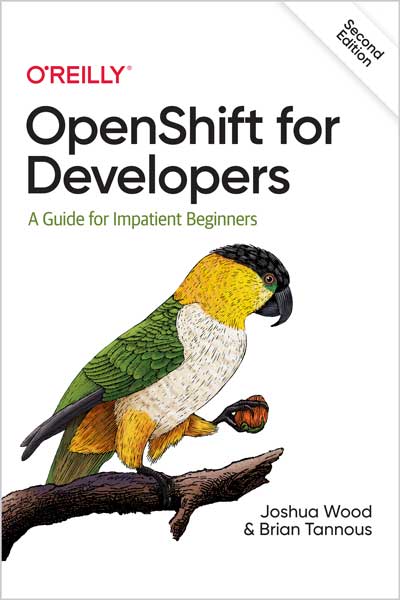
A Guide for Impatient Beginners
Joshua Wood, Brian Tannous
#OpenShift
#Java
#webhooks
#Red_Hat
#GitOps
#Kubernetes
#Quarkus
آیا آمادهاید اپلیکیشنهای Cloud Native بسازید؟
با این راهنمای عملی، تجربهای واقعی از زندگی روزمره یک توسعهدهنده را به دست میآورید که در حال کدنویسی روی OpenShift است—پلتفرم متنباز اپلیکیشنهای کانتینری از شرکت Red Hat.
ساخت و بستهبندی اپلیکیشنها برای استقرار روی سیستمهای توزیعشده مدرن، اغلب پیچیده و زمانبر است. افزودن ارزشهای زیرساختی ممکن است روند توسعه را دشوارتر کند. اما با کمک این کتاب، میآموزید چگونه یک اپلیکیشن چندلایه (n-tier) را روی OpenShift بسازید، استقرار دهید و مدیریت کنید—بدون درگیر شدن با پیچیدگیهای زیرساخت.
نویسندگان: Joshua Wood و Brian Tannous، به شما نشان میدهند که چگونه OpenShift با استفاده از Kubernetes به عنوان هستهی اصلی خود، فرآیند ساخت، انتشار و اجرای کد را ساده و خودکار میکند. همچنین خواهید آموخت چگونه از فریمورک Java محور Quarkus در کنار فناوریهای اثباتشده سازمانی استفاده کنید—و این دانش را برای توسعه برنامه با هر زبان برنامهنویسی بهکار ببندید.
این کتاب راهنمایی عملی برای توسعهدهندگانی است که میخواهند با زیرساخت مدرن و کانتینریشده کار کنند و بهصورت مؤثر، سریع و قابلاطمینان، کد تولیدی خود را به محیطهای ابری تحویل دهند.
Ready to build cloud native applications? Get a hands-on introduction to daily life as a developer crafting code on OpenShift, the open source container application platform from Red Hat. Creating and packaging your apps for deployment on modern distributed systems can be daunting. Too often, adding infrastructure value can complicate development. With this practical guide, you'll learn how to build, deploy, and manage a multitiered application on OpenShift.
Authors Joshua Wood and Brian Tannous demonstrate how OpenShift speeds application development. With the Kubernetes container orchestrator at its core, OpenShift simplifies and automates the way you build, ship, and run code. You'll learn how to use OpenShift and the Quarkus Java framework to develop and deploy apps using proven enterprise technologies and practices that you can apply to code in any language.
Table of Contents
Chapter 1: A Kubernetes Application Platform
Chapter 2: OpenShift Concepts
Chapter 3: OpenShift Lab
Chapter 4: Deploying an Application on OpenShift
Chapter 5: OpenShift Pipelines
Chapter 6: Developing and Deploying from Source Code
Chapter 7: Evolving the Application: Data Persistence
Chapter 8: Production Deployment and Scaling
Chapter 9: Monitoring and Managing Applications on OpenShift
Chapter 10: Templates, Operators, and OpenShift Automation
Software serves more people more critically than ever before. These two demands are generalized as scale and reliability. Over the past decade, the software industry has pursued scale and reliability with tactics, infrastructure, and cultural initiatives like DevOps, which sees developers share the operational responsibility of keeping applications running.
One set of tactics is the automation of operations chores: writing software to run your software. The automation of repetitive toil is among the keystones of Site Reliability Engineering (SRE), an IT discipline defined by the O’Reilly title of the same name. DevOps and its younger cousin GitOps both apply SRE’s automation ideas to development machinery and to the practice of building software. The simplest form might be the triggering of automatic construction and deployment processes whenever an application’s source code changes.
Modern software infrastructure pursues scale and reliability through distributed computing. Despite all the syllables, distributed computing just means making many computers act like one big computer. The assembled system can do more work (scale), and it can cast understudies for potential points of failure (reliability).
Kubernetes is a system for managing applications on distributed computers by encapsulating them in discrete, interchangeable artifacts called containers. Kubernetes can manage where and when containers run without knowing all about them and their dependencies. Kubernetes is termed a container orchestrator.
OpenShift uses Kubernetes orchestration at its core to harness computers together into a cluster. The computers that form the cluster are called nodes. OpenShift defines how those nodes relate and how work is performed on them. By packaging core distributed computing primitives with tools, policies, and interfaces for using them, OpenShift helps teams adopt modern practices from DevOps and GitOps and automate repetitive processes according to SRE precepts.
Who This Book Is For
If you’re an application developer familiar with data structures and functions and how to build them into programs, but you’re new to containers, Kubernetes, and application platforms, this guide to OpenShift is for you. It will show you how to use OpenShift to build, deploy, scale, and manage your software, and how you can automate those chores with OpenShift features such as build triggers, pipelines, and demand-driven autoscaling. You don’t need to have used Kubernetes or OpenShift before.
What You Will Learn
This book explains what OpenShift is and how to use it to build your applications, run them, and keep them running through changing demand, failure recovery, and a continuous stream of new releases as you iterate on their source code with new fixes and features.
About the Author
Joshua Wood is a Principal OpenShift Developer Advocate at Red Hat. Co-author of Kubernetes Operators (O’Reilly, 2020), he was formerly responsible for documentation at CoreOS. Wood has worked in roles from sysadmin to CTO to build utility computing with open source software. He likes fast cars, slow boats, and writing short autobiographies.
Brian Tannous is a Principal Developer Advocate at Red Hat. He has held development, marketing, and advocacy roles in both mobile and open source technology. He is a technology nerd who likes aviation, sustainability, and writing minimal bios.