ثبت نام / ورود
0
ثبت نام / ورود
0
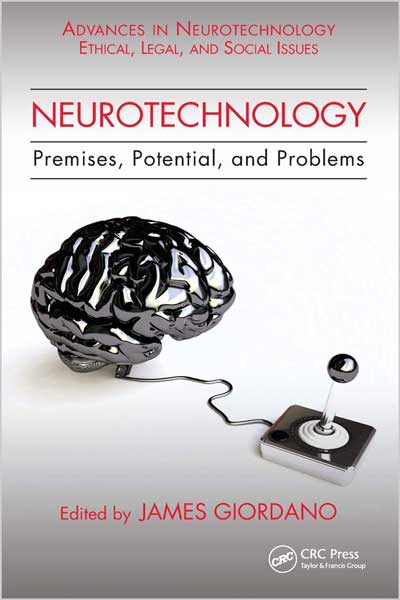
Premises, Potential, and Problems
James Giordano
#Neurotechnology
#Neuroethics
#Neuroelectronics
#Biopower
New technologies that allow us to investigate mechanisms and functions of the brain have shown considerable promise in treating brain disease and injury. These emerging technologies also provide a means to assess and manipulate human consciousness, cognitions, emotions, and behaviors, bringing with them the potential to transform society. Neurotechnology: Premises, Potential, and Problems explores the technical, moral, legal, and sociopolitical issues that arise in and from today's applications of neuroscience and technology and discusses their implications for the future.
Some of the issues raised in this thought-provoking volume include:
With contributions from an international group of experts working on the cutting edge of neurotechnology, this volume lays the groundwork to appreciate the ethical, legal, and social aspects of the science in ways that keep pace with this rapidly progressing field.
Table of Contents
Chapter 1: Neurotechnology as Demiurgical Force: Avoiding Icarus· Folly
Chapter 2: The Potential Utility of Advanced Sciences Convergence: Analytical Methods to Depict, Assess, and Forecast Trends in Neuroscience and Neurotechnological Developments and Uses
Chapter 3: Is the Use of Neurotechnology in Education an Enablement, Treatment, or Enhancement?
Chapter 4: Images of Uncertainty: Two Cases of Neuroimages and What They Cannot Show
Chapter 5: Neurogenetic and Neural Tissue-Implantation Technology: Neuroethical, Legal, and Social Issues
Chapter 6: Neuroprotective Agents Commonly Display Hormesis: Implications for Nanoneuropharmacology
Chapter 7: Neuroprostheses: Implications of the Current and Future State of the Science and Technology
Chapter 8: Transcranial Magnetic Stimulation, Deep Brain Stimulation, and Personal Identity: Ethical Questions and Neuroethical Approaches for Medical Practice
Chapter 9: Promises and Perils of Cognitive Performance Tools: A Dialogue
Chapter 10: The Age of Neuroelectronics
Chapter 11: Ethical Issues in Performance-Enhancing Technologies: From Bench to Headline
Chapter 12: The Cyborg and Cyborgization
Chapter 13: Is Neuroenhancement Unnatural, and Does It Morally Matter?
Chapter 14: A Surety Engineering Framework and Process to Address Ethical, Legal, and Social Issues for Neurotechnologies
Chapter 15: Neurotechnology, Culture, and the Need for a Cosmopolitan Neuroethics
Chapter 16: Cognitive Enhancement, Analogical Reasoning, and Social Justice
Chapter 17: Policy Implications of Technologies for Cognitive Enhancement
Chapter 18: Neurotechnology Research and the World Stage: Ethics, Biopower, and Policy
Chapter 19: Biotechnology: Who Benefits, Who Is Harmed?
James Giordano, PhD, is Director of the Center for Neurotechnology Studies at the Potomac Institute for Policy Studies, Arlington, Virginia, Fulbright Professor of Neuroscience, Neurotechnology and Ethics at the Human Science Center of Ludwig-Maximilians University, Munich, Germany, and Research Professor of Neurosciences and Ethics in the Department of Electrical and Computational Engineering at the University of New Mexico in Albuquerque. His ongoing research addresses the ethical issues that are generated from neuroscientific and neurotechnological research and its applications in medicine, public life, and sociocultural conduct.