ثبت نام / ورود
0
ثبت نام / ورود
0
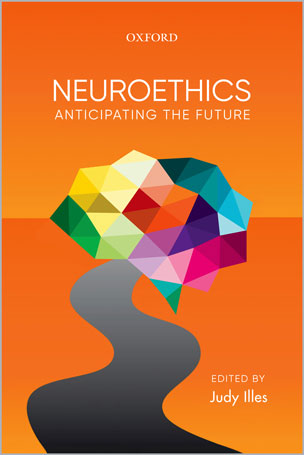
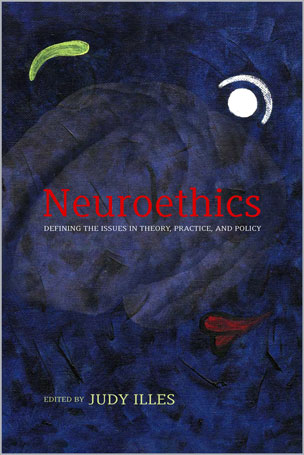
Defining the issues in theory, practice, and policy
Judy Illes
#Neuroethics
#Neuroscience
#Brain
#Moral
Recent advances in the brain sciences have dramatically improved our understanding of brain function. As we find out more and more about what makes us tick, we must stop and consider the ethical implications of this new found knowledge. Will having a new biology of the brain through imaging make us less responsible for our behavior and lose our free will? Should certain brain scan studies be disallowed on the basis of moral grounds? Why is the media so interested in reporting results of brain imaging studies? What ethical lessons from the past can best inform the future of brain imaging?
These compelling questions and many more are tackled by a distinguished group of contributors to this, the first-ever volume on neuroethics. The wide range of disciplinary backgrounds that the authors represent, from neuroscience, bioethics and philosophy, to law, social and health care policy, education, religion and film, allow for profoundly insightful and provocative answers to these questions, and open up the door to a host of new ones. The contributions highlight the timeliness of modern neuroethics today, and assure the longevity and importance of neuroethics for generations to come.
Table of Contents
Part I Neuroscience, ethics, agency, and the self
1 Moral decision-making and the brain
Patricia Smith Churchland
2 A case study in neuroethics: the nature of moral judgment
Adina Roskies
3 Moral and legal responsibility and the new neuroscience
Stephen J. Morse
4 Brains, lies, and psychological explanations
Thomas Buller
5 Being in the world: neuroscience and the ethical agent
Laurie Zoloth
6 Creativity, gratitude, and the enhancement debate
Erik Parens
7 Ethical dilemmas in neurodegenerative disease: respecting
patients at the twilight of agency
Agnieszka Jaworska
Part II Neuroethics in practice
8 From genome to brainome: charting the lessons learned
Ronald M. Green
9 Protecting human subjects in brain research: a pragmatic perspective
Franklin G. Miller and Joseph J. Fins
10 Facts, fictions, and the future of neuroethics
Michael S. Gazzaniga
11 A picture is worth 1000 words, but which 1000?
Judy Illes, Eric Racine, and Matthew P. Kirschen
12 When genes and brains unite: ethical implications of genomic
neuroimaging
Turhan Canli
13 Engineering the brain
Kenneth R. Foster
14 Transcranial magnetic stimulation and the human brain:
an ethical evaluation
Megan S. Steven and Alvaro Pascual-Leone
15 Functional neurosurgical intervention: neuroethics in
the operating room
Paul J. Ford and Jaimie M. Henderson
16 Clinicians, patients, and the brain
Robert Klitzman
Part III Justice, social institutions, and neuroethics
17 The social effects of advances in neuroscience: legal problems,
legal perspectives
Henry T. Greely
18 Neuroethics in education
Kimberly Sheridan, Elena Zinchenko, and Howard Gardner
19 Poverty, privilege, and brain development: empirical findings
and ethical implications
Martha J. Farah, Kimberly G. Noble, and Hallam Hurt
20 Religious responses to neuroscientific questions
Paul Root Wolpe
21 The mind in the movies: a neuroethical analysis of the portrayal
of the mind in popular media
Maren Grainger-Monsen and Kim Karetsky
"All the papers are lucid and thoughtful contributions, and the book deserves to stand as the state of the art in the field for some time to come. It will certainly be an invaluable textbook for anyone teaching this material...I recommend it very highly."--Lancet Neurology
Judy Illes is at Senior Research Scholar and Director, Program for Neuroethics, Center for Biomedical Ethics; Senior Research Scholar, Department of Radiology, Stanford University, California, USA.