ثبت نام / ورود
0
ثبت نام / ورود
0
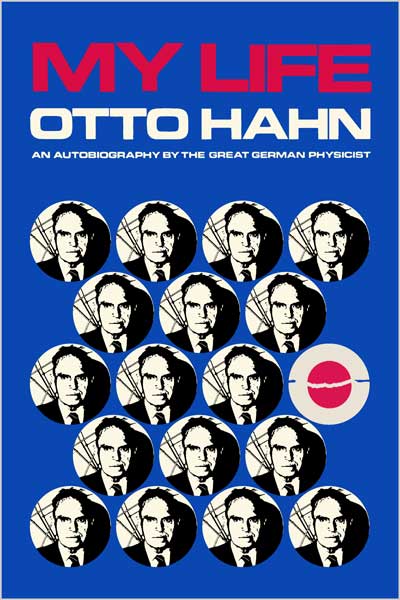
Otto Hahn
#Otto_Hahn
#physical
#chemical
#radioactive
#radioactivity
#Hiroshima
#bomb
#atomic
#atom
#German
Translated by: Ernst Kaiser & Eithne Wilkins
The name of Otto Hahn is known all over the world, not only to scientists but to many of the general public, as the discoverer, with his colleague Dr. Fritz Strassmann, of the fission of uranium, a discovery which has had such profound consequences for us all in the development, first, of a military weapon, the atomic bomb, and, later, in its use as a source of energy for peaceful purposes.
This discovery was the crowning achievement of more than thirty years of research in the subject of radioactivity, during which his many outstanding contributions had already brought him a high reputation.
Hahn's first interest was organic chemistry, and it was purely by chance that he was diverted to radioactivity, through his work in London under Ramsay and in Montreal under Rutherford, which led him to the discovery of new radioactive substances.
On returning to Germany in 1906 Hahn, not without misgiving, committed himself to research in this new field, still at that time regarded as of little import.
A year later he was joined by Dr Lise Meitner, a physicist from Vienna, and there began one of the most fruitful partnerships in the history of science, a partnership which lasted for more than thirty years and which was broken only by political circumstances.
Together, and separately, they made many important investigations, both chemical and physical, on radioactive substances and their radiations. These, briefly mentioned in this book, are described in some detail in Hahn's Vom Radiothor zur Uranspaltung.
Otto Hahn has been called the founder of the atomic age. In 1938, with his co-worker in a Berlin-Dahlem laboratory, he discovered that the nucleus of the uranium atom could be split into two parts. Seven years later an atom bomb was dropped on Hiroshima killing 75,000 people and injuring nearly 100,000. Otto Hahn said, ' I have never worked on atomic weapons and I have nothing to do with it'. For him, nuclear fission had simply been 'a good piece of scientific work'. In this autobiography Otto Hahn describes how, in Germany at the turn of the century, he decided to become a chemist; how he became interested in radioactivity and how this led him to the discovery of radiothorium and mesothelium. His work brought him into contact with the leading German scientists of the day-and, too, with Lord Rutherford and Sir William Ramsay in London. Hahn was the key man in German research during the thirties and forties; yet his account of his work, of the scientific milieu in which he moved, of his friends and many interests, is one of modesty and charm. He refutes all responsibility for the aggressive applications which others have made of his work on nuclear fission; he refutes too the glory associated with the peaceful uses of atomic energy. In spite of this, it is fitting that the first German nuclear merchant ship should have been named Otto Hahn. This is the disarming self-portrait of a most distinguished scientist, a man subject to great controversy in his time.
Jacket design by Patrick McCreeth