ثبت نام / ورود
0
ثبت نام / ورود
0
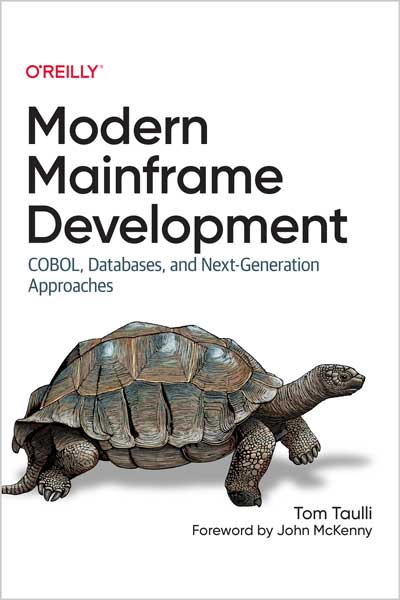
COBOL, Databases, and Next-Generation Approaches
Tom Taulli
#COBOL
#REXX
#JCL
#Db2
#VSAM
#CICS
#DevOps
#AI
Even as spending on digital transformation continues to skyrocket, mainframes nevertheless have major advantages for global enterprises. These systems still process huge amounts of information and allow for highly secure transactions. In this practical book, author Tom Taulli shows software developers how to pursue a hybrid approach by integrating traditional mainframes and applications with modern digital systems.
By the end of this book, you'll have a solid understanding of the mainframe architecture and ecosystem, including core concepts and technologies such as COBOL, REXX, JCL, Db2, VSAM, and CICS. You'll also learn how to blend in newer technologies such as the cloud, AI and machine learning, and microservices. This handbook is indispensable for enterprises looking to thrive in the new digital world.
Table of Contents
Part I. Fundamentals of the Mainframe
Chapter 1. Why Be a Mainframe Developer?
Chapter 2. World of the Mainframe
Chapter 3. The Development Environment
Chapter 4. The COBOL Language
Chapter 5. File Handling
Chapter 6. COBOL Tables and Reports
Chapter 7. Other Languages and Programming Techniques
Chapter 8. Databases and Transaction Managers
Part II. Modern Topics
Chapter 9. DevOps
Chapter 1 0. Artificial Intelligence
Chapter 11. Robotic Process Automation, and Low-Code and No -Code Systems
Chapter 12. Mainframe Modernization Strategies
Chapter 13. The Future
What’s Covered
The topic of mainframe development is expansive. To help readers better understand this, I divided the book into two parts:
Part I
This part covers traditional aspects of mainframe development. We’ll delve into details of the COBOL language as well as how to run programs with Job Control Language (JCL). We’ll also look at the main databases for the mainframe—Db2 and IMS—as well as CICS transaction systems. The book then covers traditional tools for development, such as ISPF and TSO.
Part II
Since mainframes run many critical operations for businesses, these machines have become increasingly important for next-generation technologies. So this book looks at categories including artificial intelligence, DevOps, and robotic process automation. We’ll also cover various strategies for migrating mainframe environments to cloud platforms. These approaches are still in the early phases but represent great opportunities for developers.
Who Is This Book For?
The book is focused at the beginner level. The good news is that mainframe development concepts are not necessarily complicated—although they can be somewhat tedious. In light of this, the book’s intended audience includes the following:
Newbie: Someone who does not have much technical experience but is looking at a new career as a mainframe developer. This book provides the fundamentals.
Experienced developer: Someone who has a background in Java, Python, or another language. This book highlights the major differences between these modern languages and those for the mainframe (like COBOL).
Systems programmer: Someone who works on configuration but may not understand how mainframe development works. This book is a helpful guide for someone who wants to make a transition to being a coder.
Mainframe developer: Since the book covers many areas, even experienced developers can glean insights from it.
Business manager: Some chapters provide nontechnical content about mainframes (Chapter 2), languages (Chapter 4), and emerging trends like DevOps (Chapter 9), artificial intelligence (Chapter 10), robotic process automation (Chapter 11), and mainframe modernization strategies (Chapter 12).
The Approach to This Book
Mainframe topics can be dry. The coding can easily become wordy, and lots of configuration is required. However, I have tried to spice up the material by using real-life use cases, fun facts, and humor. I have also interviewed numerous executives, founders, and experts at companies like BMC, Broadcom, IBM, Rocket Software, Model9, Heirloom Computing, and Advanced, just to name a few.
"Modern Mainframe Development serves as a valuable overview of the platform's history and future while also thoroughly explaining its systems and processes." ―John McKenny, Senior vice president and general manager of Intelligent Z Optimization and Transformation at BMC
"This book is a comprehensive treatment of modern mainframe software development. It is masterfully written and thoroughly researched."—Cameron Seay, mainframe evangelist
"Every chapter speaks in practical terms on how to leverage the strengths of the mainframe platform."—Russ Teubner, cofounder and CEO of HostBridge Technology
"Tom's clearly done his homework on the current and future state of the mainframe. His conviction that hybrid cloud architectures will rule the future lays the foundation for an important and insightful breakdown of the exciting opportunities mainframe modernization presents for enterprise organizations."—Gil Peleg, CEO and founder of Model9
"This book is evidence that as the mainframe is modernizing, it will be critical for the next (and some of the current) generation of "mainframers" to level up faster and cover more ground. This book fast-tracks some of that ground that used to take years."—Paul Gamble, z/OS Systems Programmer—Automation, Shared Services Canada
"The term mainframe has had negative connotations for years. But Tom has done a great job in explaining the technology and how it is a solid option for businesses."—Lionel Dyck, z/OS enthusiast and cofounder of the Zigi open source project
Tom Taulli (@ttaulli) is the author of various books, including Artificial Intelligence Basics and the Robotic Process Automation (RPA) Handbook. He is also the author of mainframe development courses for Pluralsight.com. Besides his writings, Tom is a consultant to tech startups and a frequent speaker at conferences.