ثبت نام / ورود
0
ثبت نام / ورود
0
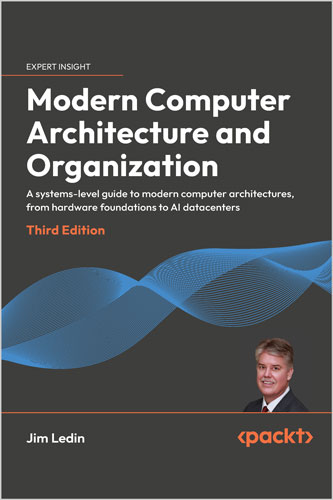
A systems-level guide to modern computer architectures, from hardware foundations to AI datacenters
Jim Ledin
#x86
#ARM
#RISC-V
Explore modern computer architecture from transistors and instruction sets to cloud-scale systems, LLM platforms, and secure computing, with major updates and new chapters reflecting today's cloud and AI-driven computing landscape
Computer architecture now extends far beyond CPUs, forming the foundation of cloud platforms, AI systems, cybersecurity solutions, and emerging computing technologies. Modern Computer Architecture and Organization, Third Edition, provides a clear, end-to-end understanding of how today’s computer systems are built and why architectural decisions matter more than ever.
You’ll begin with the fundamentals of digital logic, processor elements, memory systems, and the hardware–software interface, building a strong grounding that remains essential for every architect and systems engineer. Next, the book explores modern processor and memory architectures, performance-enhancing techniques, virtualization, and mainstream instruction sets, including x86, ARM, and an in-depth treatment of RISC-V.
New and significantly expanded chapters extend this foundation into modern computing domains, including AI and large language model (LLM) computing platforms, GPUs, cloud-scale systems, confidential and security-focused architectures, blockchain and Bitcoin mining systems, self-driving vehicle architectures, and future directions such as quantum computing. This edition reflects today’s AI-driven, cloud-centric, security-aware computing landscape while remaining true to the classical principles that continue to underpin modern computer systems.
This book is designed for software developers, computer engineering and computer science students, system designers, and technical professionals seeking a clear understanding of modern computer architecture. It also suits general readers eager to understand how modern computing devices work. Readers working with PCs, mobile devices, cloud platforms, embedded systems, and AI workloads will gain practical insight to guide better design and performance decisions.
Jim Ledin is the CEO of Ledin Engineering, Inc. Jim is an expert in embedded software and hardware design and testing. He is also an expert in system cybersecurity assessment and penetration testing. He has a B.S. degree in aerospace engineering from Iowa State University and an M.S. degree in electrical and computer engineering from the Georgia Institute of Technology. Jim is a registered professional electrical engineer in California, a Certified Information System Security Professional (CISSP), a Certified Ethical Hacker (CEH), and a Certified Penetration Tester (CPT).