ثبت نام / ورود
0
ثبت نام / ورود
0
H. Paul Williams
#Mathematical
#biology
#statistics
#computer_science
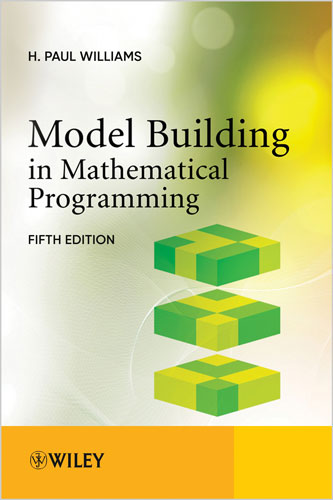
کتاب "مدلسازی در برنامهریزی ریاضی" یک منبع جامع است که به اصول و کاربردهای ساخت مدلهای ریاضی برای حل مسائل گوناگون در زمینههای متنوعی از جمله تحقیق در عملیات، مهندسی سیستمها، کشاورزی، برنامهریزی انرژی، معدن، لجستیک و توزیع، علوم کامپیوتر، مدیریت، آمار، ریاضیات کاربردی و زیستشناسی ریاضی میپردازد.
هدف اصلی این کتاب، ارائه یک پایه قوی در اصول مدلسازی به دانشجویان و همچنین آشنا کردن مدیران با دامنه و محدودیتهای برنامهریزی ریاضی به شیوهای نسبتاً غیرفنی است. برخلاف بسیاری از کتب که بر جنبههای الگوریتمی تمرکز دارند، این کتاب بر اهمیت ساخت و تفسیر مدلها تأکید میکند.
ویرایش پنجم این کتاب شامل بخشهای جدیدی در مورد برنامهریزی تصادفی، تولید ستون و برنامهریزی منطقی محدودیت است و همچنین بهبودهای متعددی در بخشهای قبلی داشته است. این ویرایش شامل 29 مسئله عملی تفصیلی (5 مسئله جدید) است که به خواننده امکان میدهد مدلهای برنامهریزی ریاضی را با استفاده از دادههای عددی بسازد.
نویسنده این کتاب H.P. Williams است. او در مقالهای که لینک آن نیز ارائه شده است، انگیزه و اهداف اولیه خود از نگارش کتاب، تغییرات و بهروزرسانیهای آن در طول سالها و دلایل تداوم محبوبیت و relevance آن را توضیح میدهد. با توجه به بازخوردهای مثبت از ویرایشهای قبلی و محتوای بهروز شده، این کتاب همچنان به عنوان یک منبع آموزشی ارزشمند در زمینه مدلسازی در برنامهریزی ریاضی شناخته میشود.
Model Building in Mathematical Programming covers a wide range of applications in many diverse areas, such as operational research, systems engineering, agriculture, energy planning, mining, logistics and distribution, computer science, management science, statistics, applied mathematics and mathematical biology.
Model Building in Mathematical Programming aims to provide students with a solid foundation in the principles of model building as well as the more mathematical, algorithmic side of the subject which is conventionally taught. It is also intended to provide managers with a fairly non-technical appreciation of the scope and limitations of mathematical programming.
Praise for the 4th Edition:
"Such a text, and this is the only one of this type I know of, should be the basis of all instruction in Mathematical Programming."
Journal of the Royal Statistical Society
"An excellent introduction ... for students of business administration and people who want to see the utility of operations research."
European Journal of Operational Research
This new edition includes:
The 5th edition of Model Building in Mathematical Programming discusses the general principles of model building in mathematical programming and demonstrates how they can be applied by using several simplified but practical problems from widely different contexts. Suggested formulations and solutions are given together with some computational experience to give the reader a feel for the computational difficulty of solving that particular type of model. Furthermore, this book illustrates the scope and limitations of mathematical programming, and shows how it can be applied to real situations. By emphasizing the importance of the building and interpreting of models rather than the solution process, the author attempts to fill a gap left by the many works which concentrate on the algorithmic side of the subject.
In this article, H.P. Williams explains his original motivation and objectives in writing the book, how it has been modified and updated over the years, what is new in this edition and why it has maintained its relevance and popularity over the years: http://www.statisticsviews.com/details/feature/4566481/Model-Building-in-Mathematical-Programming-published-in-fifth-edition.html
Table of Contents
Part I
Chapter 1 Introduction
Chapter 2 Solving mathematical programming models
Chapter 3 Building linear programming models
Chapter 4 Structured linear programming models
Chapter 5 Applications and special types of mathematical programming model
Chapter 6 Interpreting and using the solution of a linear programming model
Chapter 7 Non-linear models
Chapter 8 Integer programming
Chapter 9 Building integer programming models I
Chapter 10 Building integer programming models II
Chapter 11 The implementation of a mathematical programming system of planning
Part II
Chapter 12 The problems
Part III
Chapter 13 Formulation and discussion of problems
Part IV
Chapter 14 Solutions to problems
H. Paul Williams, London School of Economics, UK.