ثبت نام / ورود
0
ثبت نام / ورود
0
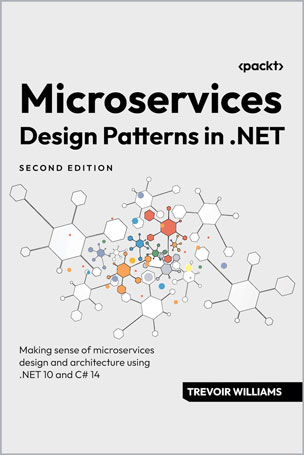
Making sense of microservices design and architecture using .NET 10 and C# 14
Trevoir Williams
#Microservices
#.NET
#C#14
#.NET10
#CQRS
#OpenTelemetry
#IdentityServer
#BFF
Design, build, and scale cloud-native microservices by using proven patterns such as CQRS, Saga, and event sourcing to enhance reliability, observability, and modern deployment
*Email sign-up and proof of purchase required
Are you a developer seeking practical, up-to-date insights into designing scalable and resilient microservices? Microservices Design Patterns in .NET, Second Edition provides a comprehensive exploration of modern microservices using C# 14 and .NET 10.
This edition expands on core patterns such as CQRS, event sourcing, and Saga, while introducing advanced concepts such as observability with OpenTelemetry, zero-trust security, and container-based workflows.
You’ll explore both synchronous and asynchronous communication, apply domain-driven design to define service boundaries, and manage data consistency using proven persistence strategies. The book also guides you through container hosting, serverless functions, and production-ready deployment pipelines.
By the end of this book, you’ll know how to design and deploy secure, maintainable, and resilient microservices that fit perfectly in modern cloud ecosystems.
Free with your book: DRM-free PDF version + access to Packt's next-gen Reader*
This book is ideal for .NET developers, senior developers, software architects, and DevOps engineers who want to explore the pros and cons, intricacies, and overall implementation of microservice architecture. You’ll also get plenty of valuable insights if you’re seeking to expand your knowledge of different design patterns and supporting technologies.
Table of Contents
Part 1: Understanding Microservices and Design Patterns
Chapter 1: Introducing Microservices - the Big Picture
Chapter 2: Applying Domain-Driven Design Principles
Chapter 3: Synchronous Communication between Microservices
Chapter 4: Asynchronous Communication Between Microservices
Chapter 5: Working with the Aggregator Pattern
Chapter 6: Working with the CQRS Pattern
Chapter 7: Applying Event-Sourcing Patterns
Part 2: Database and Storage Design Patterns
Chapter 8: Database Design Strategies for Microservices
Chapter 9: Implementing Transactions across Microservices Using the Saga Pattern
Part 3: Resiliency, Security, and Infrastructure Patterns
Chapter 10: Building Resilient Microservices
Chapter 11: Implementing the API and BFF Gateway Patterns
Chapter 12: Micro Frontends - Extending Microservices to the Frontend
Chapter 13: Securing Microservices
Part 4: Cloud Development Strategies
Chapter 14: Container Hosting and Development Patterns
Chapter 15: Serverless Microservices Development
Chapter 16: Observability and Monitoring with Modern Tools
Chapter 17: Wrapping It All Up
Trevoir Williams, a passionate software and system engineer from Jamaica, shares his extensive knowledge with students worldwide. Holding a Master's degree in Computer Science with a focus on Software Development and multiple Microsoft Azure Certifications, his educational background is robust. His diverse experience includes software consulting, engineering, database development, cloud systems, server administration, and lecturing, reflecting his commitment to technological excellence and education. He is also a talented musician, showcasing his versatility. He has penned works like Microservices Design Patterns in .NET and Azure Integration Guide for Business. His practical approach to teaching helps students grasp both theory and real-world applications.