ثبت نام / ورود
0
ثبت نام / ورود
0
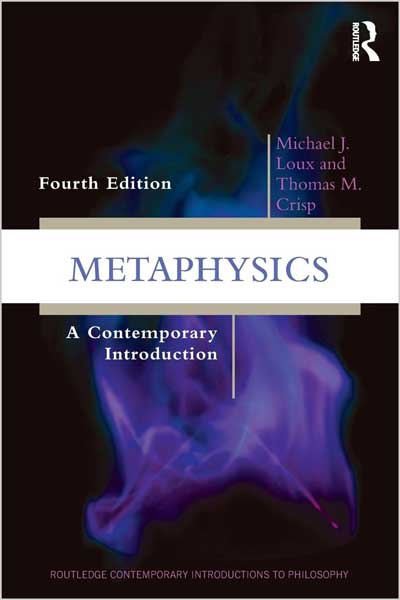
A Contemporary Introduction
Michael J. Loux, Thomas M. Crisp
#Metaphysics
#Philosophy
#Realism
#Anti-Realism
#Modality
Metaphysics: A Contemporary Introduction is for students who have already completed an introductory philosophy course and need a fresh look at the central topics in the core subject of metaphysics. It is essential reading for any student of the subject. This Fourth Edition is revised and updated and includes two new chapters on (1) Parts and Wholes, and (2) Metaphysical Indeterminacy or vagueness. This new edition also keeps the user-friendly format, the chapter overviews summarizing the main topics, concrete examples to clarify difficult concepts, annotated further reading at the end of each chapter, endnotes, and a full bibliography.
Topics addressed include:
Wherever possible, Michael J. Loux and Thomas M. Crisp relate contemporary views to their classical sources in the history of philosophy. As experienced teachers of philosophy and important contributors to recent debates, Loux and Crisp are uniquely qualified to write this book.
"Metaphysics: A Contemporary Introduction more than merits its fourth edition. It is a valuable text for graduate students and advanced undergraduates . . . . After reading Metaphysics: A Contemporary Introduction, I felt wistful for grand designs, for the majesty of an Aristotle or Spinoza. But I also felt excited by the modern effort to clear the conceptual debris that system builders leave behind. When a book of philosophy elicits such complex feelings, it is a testament to its value."
--Dana Delibovi in Teaching Philosophy
Table of Contents
1. The Problem of Universals I: Metaphysical Realism
2. The Problem of Universals II: Nominalism
3. Concrete Particulars I: Substrata, Bundles, and Substances
4. Propositions and Their Neighbors
5. The Necessary and the Possible
6. Causation
7 The Nature of T7. The Nature of Timeime
8. Concrete Particulars II: Persistence through Time
9. Concrete Particulars Ill: Parts and Wholes
10. Metaphysical Indeterminacy
11. The Challenge of Anti-Realism