ثبت نام / ورود
0
ثبت نام / ورود
0
Neil Sclater
#Mechanisms
#Mechanical
#Mechanical_engineering
#3D
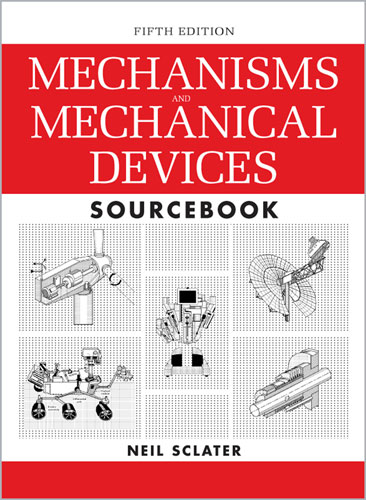
Fully revised throughout, this abundantly illustrated reference describes proven mechanisms and mechanical devices. Each illustration represents a design concept that can easily be recycled for use in new or modified mechanical, electromechanical, or mechatronic products. Tutorials on the basics of mechanisms and motion control systems introduce you to those subjects or act as a refresher.
Mechanisms and Mechanical Devices Sourcebook, Fifth Edition, contains new chapters on mechanisms for converting renewable energy into electrical power, 3D digital prototyping and simulation, and progress in MEMS and nanotechnology based on carbon nanotubes. A new chapter on stationary and mobile robots describes their roles in industry, science, national defense, and medicine. The latest advances in rapid prototyping are also discussed. This practical guide will get you up to speed on many classical mechanical devices as well as the hot new topics in mechanical engineering.
Table of Contents
Chapter 1 Basics of Mechanisms
Chapter 2 Motion Control Systems
Chapter 3 Stationary and Mobile Robots
Chapter 4 Mechanisms for Renewable Power Generation
Chapter 5 Linkages: Drives and Mechanisms
Chapter 6 Gears: Devices, Drives, And Mechanisms
Chapter 7 Cam, Geneva, and Ratchet Drives and Mechanisms
Chapter 8 Clutches and Brakes
Chapter 9 Latching, Fastening, and Clamping Devices and Mechanisms
Chapter 10 Chain and Belt Devices and Mechanisms
Chapter 11 Spring and Screw Devices and Mechanisms
Chapter 12 Shaft Couplings and Connections
Chapter 13 Motion-Specific Devices, Mechanisms, and Machines
Chapter 14 Packaging, Conveying, Handling, and Safety Mechanisms and Machines
Chapter 15 Torque, Speed, Tension, and Limit Control Systems
Chapter 16 Instruments and Controls: Pneumatic, Hydraulic, Electric, and Electronic
Chapter 17 3D Digital Prototypes and Simulation
Chapter 18 Rapid Prototyping
Chapter 19 New Directions in Mechanical Engineering
Neil Sclater switched his career from engineering in the military/aerospace industry to writing and editing in the field of electromechanical and electronic technology. After years as a staff editor for engineering magazines, he set up his own consulting firm in technical communications. Mr. Sclater contributed hundreds of articles to various engineering publications. He has authored or co-authored 11 McGraw-Hill Professional books, including two earlier editions of this book.