ثبت نام / ورود
0
ثبت نام / ورود
0
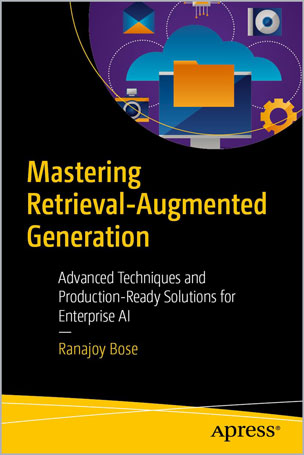
Advanced Techniques and Production-Ready Solutions for Enterprise
Ranajoy Bose
#Retrieval-Augmented
#Generation
#AI
#Enterprise
#Production-Ready
#RAG
#AI/ML
Retrieval-Augmented Generation (RAG) represents the cutting edge of AI innovation, bridging the gap between large language models (LLMs) and real-world knowledge. This book provides the definitive roadmap for building, optimizing, and deploying enterprise-grade RAG systems that deliver measurable business value.
This comprehensive guide takes you beyond basic concepts to advanced implementation strategies, covering everything from architectural patterns to production deployment. You'll explore proven techniques for document processing, vector optimization, retrieval enhancement, and system scaling, supported by real-world case studies from leading organizations.
Key Learning Objectives
Real-World Applications
Whether you're an AI engineer scaling existing systems or a technical leader planning next-generation capabilities, this book provides the expertise needed to succeed in the rapidly evolving landscape of enterprise AI.
What You Will Learn
Who This Book Is For
Primary audience: Senior AI/ML engineers, data scientists, and technical architects building production AI systems; secondary audience: Engineering managers, technical leads, and AI researchers working with large-scale language models and information retrieval systems
Prerequisites: Intermediate Python programming, basic understanding of machine learning concepts, and familiarity with natural language processing fundamentals
Table of Contents
Part I: Foundations
Chapter 1: Introduction to Retrieval-Augmented Generation (RAG)
Chapter 2: Core Concepts of Retrieval-Augmented Generation (RAG)
Chapter 3: Building a Retrieval-Augmented Generation (RAG) Application
Part II: Core Components
Chapter 4: Document Loaders-The Gateway to Knowledge
Chapter 5: Text Splitters in RAG Systems
Chapter 6: Embedding Models: Converting Text to Vectors
Chapter 7: Vector Stores: Organizing and Retrieving Your Knowledge
Chapter 8: Retrievers: Finding the Most Relevant Information
Part Ill: Advanced Implementation
Chapter 9: Prompt Templates: The Communication Experts That Structure Interactions with the LLM
Chapter 10: RAG in Action: Advanced Patterns for Unstructured Data
Chapter 11: RAG for Structured Data: Building Question-Answering Systems for SQL Databases and CSV Files
Chapter 12: Graph RAG: Leveraging Knowledge Graphs for Enhanced Retrieval
Chapter 13: Agentic RAG: Autonomous Information Systems
Part IV: Production and Evaluation
Chapter 14: RAG Evaluation: Measuring Quality and Performance
Chapter 15: Production Deployment and Scaling Strategies
Chapter 16: Security, Privacy, and Ethical Considerations in Enterprise RAG
Ranajoy Bose is a technologist, entrepreneur, and thought leader in the fields of Generative AI, MLOps, and enterprise data systems. As Co-founder and Global Head of Engineering at Morfius, he is at the helm of building cutting-edge AI solutions that power real-world transformation through Retrieval-Augmented Generation (RAG) and large-scale language models.
Before Morfius, Ranajoy held leadership roles at Oracle, where he led the Cloud Engineering organization for North America. His work was instrumental in advancing the adoption of data lakehouse architectures, modern analytics, AI/ML platforms, and cloud-native services for Fortune 500 clients.
Recognized as a 40-under-40 Data Scientist, Ranajoy also led a team ranked among Analytics India Magazine’s Top 10 data science workplaces. Beyond his corporate leadership, he remains a committed advocate for innovation and learning—frequently speaking at global conferences, contributing to academic and industry forums, and mentoring the next generation of AI practitioners.
Driven by curiosity and purpose, Ranajoy continues to push the boundaries of enterprise AI, translating complex technology into impactful solutions for the modern world.