ثبت نام / ورود
0
ثبت نام / ورود
0
Peter J. Edwards, Paulo Vaz Serra, Michael Edwards
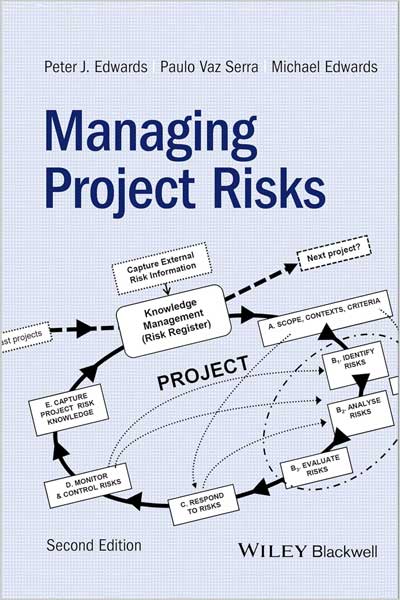
#Managing
#Project
#Risks
#Management
A comprehensive and highly practical overview of project risk management emphasizing pragmatic solutions and user-friendly methods without advanced mathematical techniques
Managing Project Risks provides a comprehensive treatment of project risk management, offering a systematic but easy-to-follow approach. This book explores critical topics that influence how risks are managed, but which are rarely found in other books, including risk knowledge management, cultural risk-shaping, project complexity, political risks, and strategic risk management.
The book commences with foundational concepts, providing an overview of risk, project definitions, project stakeholders, and risk management systems. Subsequent chapters explore the core processes of project risk management, including risk identification, analysis, evaluation, response strategies, and risk monitoring and control. Additional topics include risk knowledge management, the influence of culture on risk, political risks in projects, and relevant software applications. Experienced readers may choose to navigate directly to the later chapters, which focus on strategic risk management and offer recommendations for planning, building, and maturing a project risk management system.
Throughout, the authors impart a practical approach that does not rely on high level expertise or advanced mathematical techniques; the emphasis remains on pragmatic solutions, user-friendly techniques, and reliable communication, enabling readers to seamlessly integrate theory into practice.
Updates to the newly revised Second Edition of Managing Project Risks include:
Managing Project Risks is an essential resource for practitioners of project management across architecture, construction, engineering, and technology disciplines, for undergraduate and postgraduate students, and for public and private sector stakeholders involved in decision-making and policy development. It is useful wherever project-driven activities are undertaken.
Table of Contents
Chapter 1 Introduction
Chapter 2 An Overview of Risk
Chapter 3 Projects and Project Stakeholders
Chapter 4 Project Risk Management Systems and Frameworks
Chapter 5 Project Risk Contexts and Drivers
Chapter 6 Approach to Project Risk Identification
Chapter 7 Project Risk Identification Tools
Chapter 8 Proj ect Risk Analysis and Evaluation
Chapter 9 Risk Response and Treatment Options
Chapter 10 Risk Monitoring and Control
Chapter 11 Proj ect Risk Knowledge Management
Chapter 12 Cultural Shaping of Risk
Chapter 13 Proj ect Complexity and Risk
Chapter 14 Political Risk
Chapter 15 Planning for Crisis Response and Disaster Recovery
Chapter 16 Opportunity Risk Management
Chapter 17 Strategic Risk Management
Chapter 18 Planning, Building and Maturing a Proj ect Risk Management System
Chapter 19 Computer Applications
Chapter 20 Communicating Risk
Chapter 21 Conclusions
Peter J. Edwards, PhD, is an Emeritus Professor at RMIT University in Melbourne, Australia and continues to be active in research and writing in his retirement.
Paulo Vaz Serra, PhD, is a civil engineer with more than 20 years of experience in the construction industry, public and private, and operational research and development in Europe. He is a Senior Lecturer at the University of Melbourne, Australia.
Michael Edwards, BSc, has more than 20 years of experience initiating and managing projects in a large department of the Australian federal government.